Trump envoy warns Israel over Syria border airstrike risk
Trump envoy Tom Barrack warned that Israeli airstrikes near Turkey's border risk reviving Syria's dangerous airspace tensions.
Lauren Collins ·
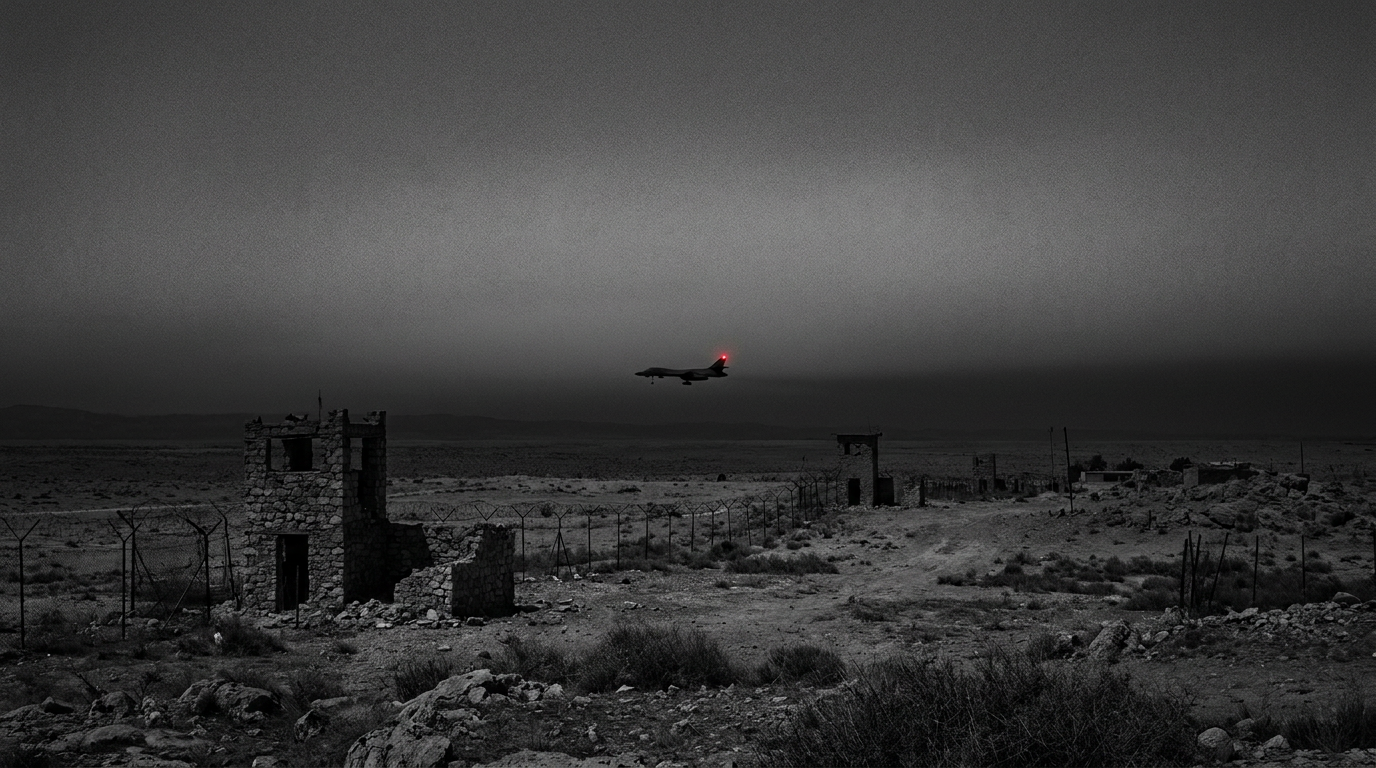
Trump envoy Tom Barrack warned Israel's August 18 airstrikes near Turkey's border risked another Syria airspace crisis with Ankara.
Barrack, President Trump's envoy for Syria and Iraq, made the comments in a YouTube interview with podcast host Mario Nawfal. He raised the possibility that Israel was trying to draw Turkey into a confrontation and called the situation a "dangerous game."
August 18 border strikes
The warning followed Israeli strikes on a long-closed military installation in northern Syria, close to Turkey's frontier. Barrack did not describe the target in further detail in the interview, and the available account did not include a casualty figure or an Israeli operational explanation.
Barrack framed the danger around aircraft operating near a sensitive border without advance coordination. "Very dangerous game, having jets deployed on the border without notification, without some agreement," he said.
The 2015 jet precedent
To explain the risk, Barrack pointed to November 2015, when Turkish F-16s shot down a Russian Su-24 bomber near the Syrian border. "If you remember, the Turks took out a Russian jet under the same kind of circumstances," he said.
That incident became one of the hardest tests of Turkish-Russian relations after the Cold War. Ahmet Davutoglu, Turkey's prime minister at the time, later said he had given the order to shoot down the aircraft and left office less than a year later.
The rupture eased only after President Recep Tayyip Erdogan sent an apology letter to Russian President Vladimir Putin in June 2016. Barrack's use of that episode gave his warning a clear diplomatic anchor: border air operations in Syria have already produced a crisis between major regional players.
Turkey risk narrows Israel's options
The immediate effect is on Israel's freedom to conduct air operations in northern Syria, where proximity to Turkey changes the risk calculation. If Israel keeps operating near the frontier without a notification channel, Barrack's warning suggests Washington may press harder for deconfliction before another sortie.
Turkey is affected in a different way. Ankara has a record of using force when it says its airspace or border security is threatened, and the 2015 case showed how quickly a tactical encounter can become a presidential-level dispute.
For the wider defense aviation sector, the mechanism is procedural rather than commercial. More contested flights near borders increase the value of coordination systems, military hotlines and rules of engagement that reduce the chance of a pilot or air-defense crew making a rapid decision with strategic consequences.
Three paths through Syria airspace
If Israel, Turkey and US diplomats establish clearer notification procedures, the global macro effect would likely be limited to lower geopolitical risk pricing around Syria. Israel would retain more room to operate, while regional militaries and defense planners would treat deconfliction as the main safeguard.
If flights continue without coordination, the risk shifts toward an accidental or disputed encounter. That path would expose Israel to sharper diplomatic pressure, test Turkey's response thresholds and push the regional defense sector toward higher readiness around air-defense systems and border surveillance.
If Ankara responds through diplomacy rather than military action, the pressure would move into talks among Turkey, Israel and Washington. The open question is whether Barrack's warning becomes a one-off rebuke or the start of a more formal US effort to police air operations near Turkey's border.