North Korea missiles test scaled-back US-South drill plan
South Korea said North Korea fired about 10 short-range missiles, intensifying scrutiny of reduced US-South Korea drills.
Mei Lin ·
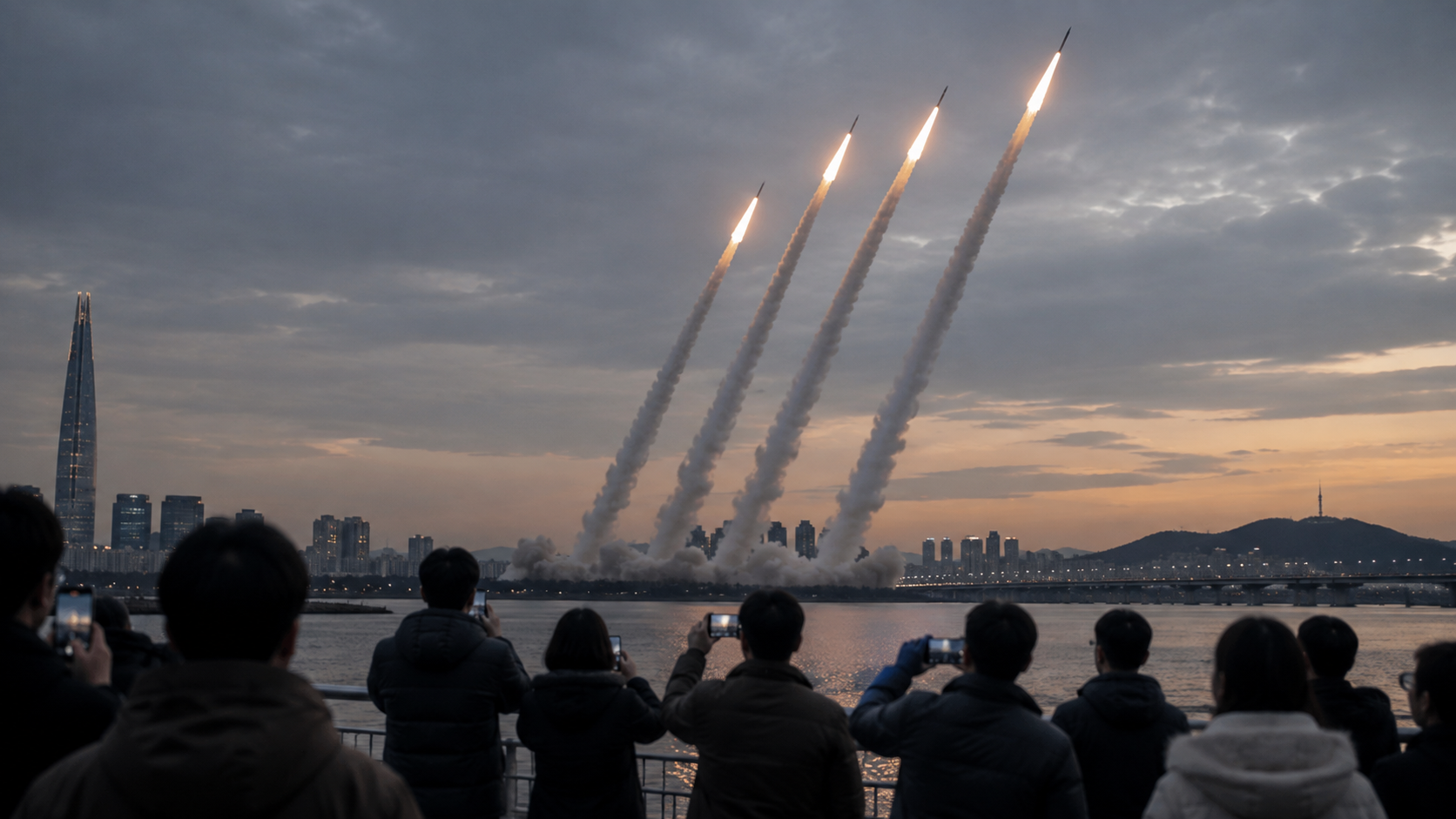
North Korea missiles flew about 300 kilometers toward eastern waters Thursday, testing allied defenses after Washington cut joint drills.
The Joint Chiefs of Staff in Seoul said about 10 short-range ballistic missiles were launched from the North Korean capital region around 5 p.m. local time, or 0800 GMT. Each traveled about 300 kilometers, or 185 miles, before heading toward waters east of North Korea, the military said.
Japan’s prime minister’s office said earlier that it had detected a suspected missile launch. South Korea’s presidential national security council urged Pyongyang to stop ballistic missile activity, while the South Korean military said it had strengthened surveillance and was sharing information with the US and Japan.
Ten missiles from Pyongyang region
The salvo came as the US and South Korea were adjusting Ulchi Freedom Shield, an 11-day exercise that began Monday. President Trump had ordered the Pentagon to "substantially reduce" the drills shortly before they started.
Trump cited what he described as a good relationship with North Korean leader Kim Jong Un and South Korea’s refusal to support him over the war in Iran. On Wednesday, the South Korean and US militaries confirmed that the drills had been shortened by about half and that some field training exercises had been canceled.
The timing leaves Seoul and Washington managing two messages at once: a reduced exercise calendar and an active missile response posture. South Korea’s military statement tied its immediate response to surveillance, information-sharing and coordination with allies, rather than to a new operational step.
Reduced drills test deterrence signals
Ulchi Freedom Shield is the central event in the latest sequence because it was shortened before Thursday’s launches. The reduction altered the duration of the allies’ training plan from 11 days to roughly half that period, according to the militaries’ confirmation.
The policy question is whether a smaller exercise footprint can coexist with the deterrence signal Seoul and Washington want to send. The concern is operational as well as political: canceled field training can reduce visible readiness even when command-level coordination continues.
For South Korea, the immediate burden falls on surveillance units, missile-warning channels and the national security council process. For Japan, the suspected launch detection keeps missile tracking and public-alert systems in focus, even when the missiles are reported to be headed toward North Korea’s eastern waters.
Allied coordination after launch
Washington is now balancing President Trump’s stated interest in reducing the scale of exercises with the need to reassure Seoul and Tokyo after a ballistic missile launch. That balance is harder when the North tests about 10 missiles in one event, rather than a single projectile.
The wider defense sector would read a prolonged cycle of tests through demand for surveillance, missile defense, command systems and joint-training support. That effect is conditional: a single short-range launch event does not by itself establish a procurement trend, but repeated tests can strengthen the case for spending on detection and interception.
The global economic channel is indirect. North Korea’s launches usually matter to markets through regional risk pricing, shipping and insurance assumptions, defense budgets and diplomatic risk, rather than through the country’s own trade weight.
Two paths from Thursday’s salvo
If the launch pattern remains limited to short-range missiles flying about 300 kilometers, the macro effect is likely to stay contained and political. In that scenario, Pyongyang keeps pressure on Seoul and Washington, while the defense industry sees steadier interest in monitoring and readiness systems rather than an abrupt shift in demand.
If the frequency or range of launches increases, the mechanism changes. Seoul, Tokyo and Washington would have stronger grounds to emphasize trilateral coordination; North Korea would face a more unified security response, and the defense sector could see greater attention on missile defense, sensors and joint exercises.
The main open question is whether the shortened Ulchi Freedom Shield schedule holds after Thursday’s barrage. If it does, the allies will have to show that fewer drills do not mean weaker readiness; if it does not, Washington’s diplomatic opening to Pyongyang becomes harder to separate from military planning.