Russian attacks kill civilians as Poland probes missile
Russian attacks killed at least eight civilians in Ukraine as Poland reviewed reports of a Russian cruise missile entering its airspace.
Raj Patel ·
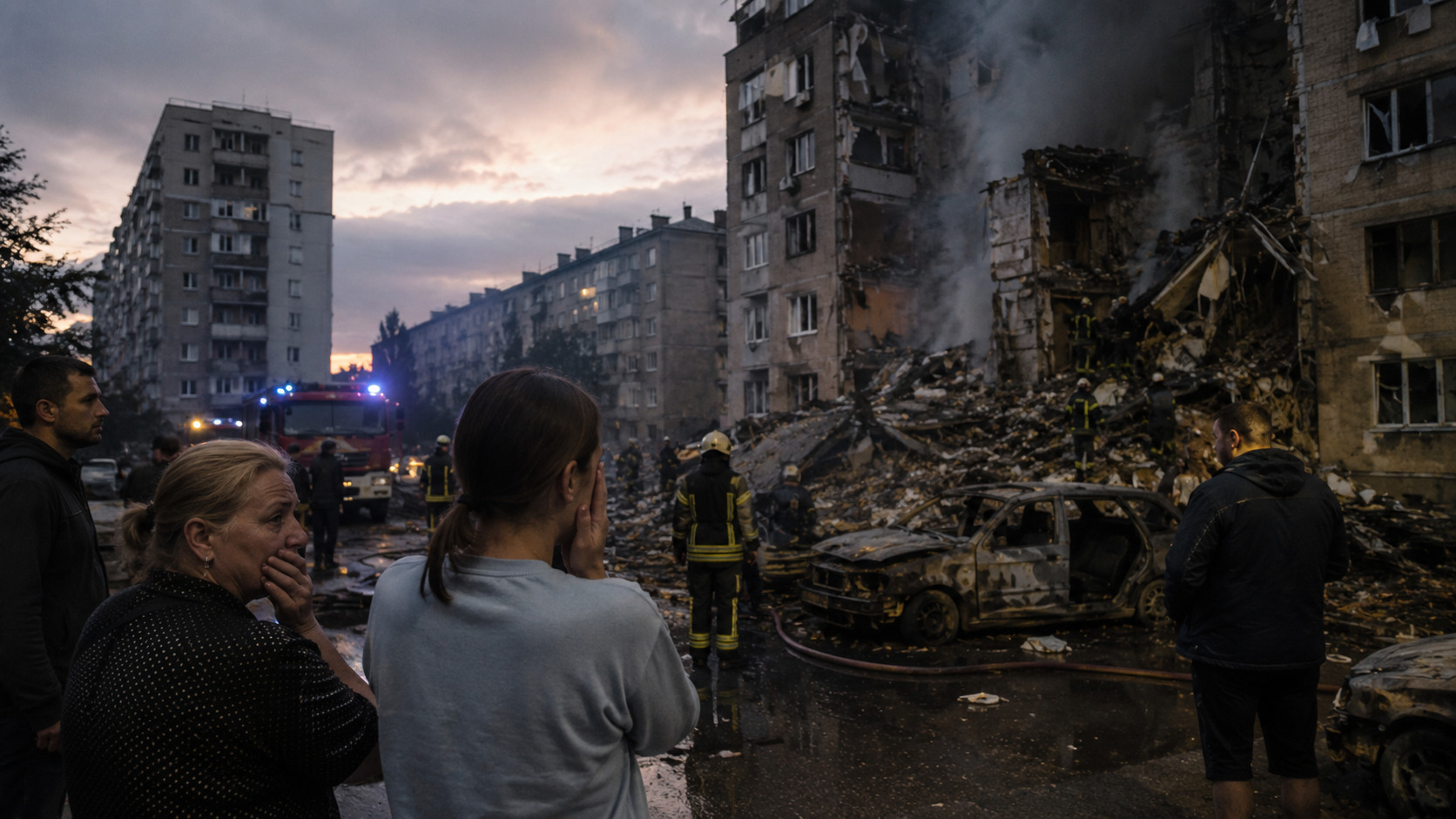
Russian attacks killed at least eight civilians in Ukraine as Poland examined reports that a Russian cruise missile crossed its airspace. Ukrainian officials said children were among the dead after an overnight barrage into Thursday, July 30, 2026.
The strike wave combined ballistic missiles and drones, according to officials, and wounded dozens of people across multiple regions. The reported airspace incident drew in Poland, a NATO member, because even an unconfirmed crossing would widen the security stakes beyond Ukraine’s borders.
Poland reviews missile report
Polish authorities were checking Ukrainian accounts that a Russian cruise missile entered Polish airspace during the assault. The source material did not provide confirmation from Warsaw that a missile crashed or that debris had been recovered.
The distinction matters. An airspace violation can trigger military and diplomatic consultations, while a confirmed impact on Polish territory would raise sharper questions for NATO about deterrence, surveillance and escalation control.
Patriot shortage shapes Kyiv’s defense
The attack came two days after Ukrainian President Volodymyr Zelenskyy met in Washington with President Trump and representatives of U.S. defense companies. Zelenskyy has been pressing for faster and larger deliveries of Patriot air defense systems, which Ukraine sees as its most effective protection against Russian ballistic missiles.
Ukraine’s problem is not only the launcher count. The source account said the Iran war had reduced supplies of U.S.-made interceptors, a constraint that can leave Kyiv with difficult choices over which cities, energy sites, arms facilities and military positions receive coverage.
President Trump has promised to grant Ukraine licenses to manufacture its own Patriot systems, according to the source account. Such a step could eventually reduce reliance on foreign deliveries, but setting up production would take time and would not answer the immediate shortage of interceptors.
Zelenskyy framed the latest attack as evidence that air defense is now the central civilian protection issue. “Given the critical shortage of air defense missiles from our partners, our warriors are accomplishing truly incredible things, demonstrating a very high level of professionalism,” he said on social media.
He added: “This Russian terror once again proves that protection against the Russian missile threat is the most important task when it comes to saving the lives of our people.” The comments underline Kyiv’s effort to turn each large barrage into a case for faster Western supply decisions.
Western Ukraine draws fire
The barrage reached regions close to Poland and far from the eastern front, according to officials. Those areas are important because Ukraine is believed to store and produce weapons there, making them both rear-area logistical hubs and civilian population centers exposed to long-range strikes.
The wider pattern is a contest over distance. Russia has used missiles and drones against Ukrainian cities and infrastructure, while Ukraine has used long-range systems against Russia’s oil sector, which the source account said has contributed to a fuel crisis there.
If Russia can sustain heavy salvos while Ukraine’s interceptor supply remains tight, the global macro effect would be higher geopolitical risk around Eastern Europe and potentially renewed pressure on energy and insurance markets. For Ukraine, the immediate company-level equivalent is its defense-industrial base: factories and storage sites would face higher disruption risk, and the broader air defense sector would see stronger demand for interceptors, radars and layered systems.
If Patriot deliveries accelerate or licensed production becomes credible, the mechanism shifts. Ukraine could reserve scarce interceptors for ballistic threats, reduce damage to rear-area production and give defense companies clearer demand signals for multiyear manufacturing, while the global effect would be a modest reduction in spillover risk around NATO’s eastern border.
If Polish authorities confirm a Russian missile crossed into national airspace, the consequences would move beyond Ukraine’s battlefield. NATO would face pressure to tighten air policing, Ukraine would gain a stronger argument for air defense support near its western regions, and European defense manufacturers could see faster procurement decisions tied to missile detection and interception.
The open questions are specific: whether Poland verifies the Ukrainian report, how quickly additional interceptors can be supplied, and whether licensed Patriot production can move from political promise to industrial capacity. Until those points are clearer, Ukraine’s civilian toll will remain tied to the pace at which air defense supply can match Russia’s long-range strike campaign.