US Forces Deflect Massive Iranian Missile Barrage
US intercepts Iranian missile barrage on Tuesday, CENTCOM said, as coordinated US-Saudi strikes hit militia sites in Iraq amid renewed tensions.
Atlas Newsdesk ·
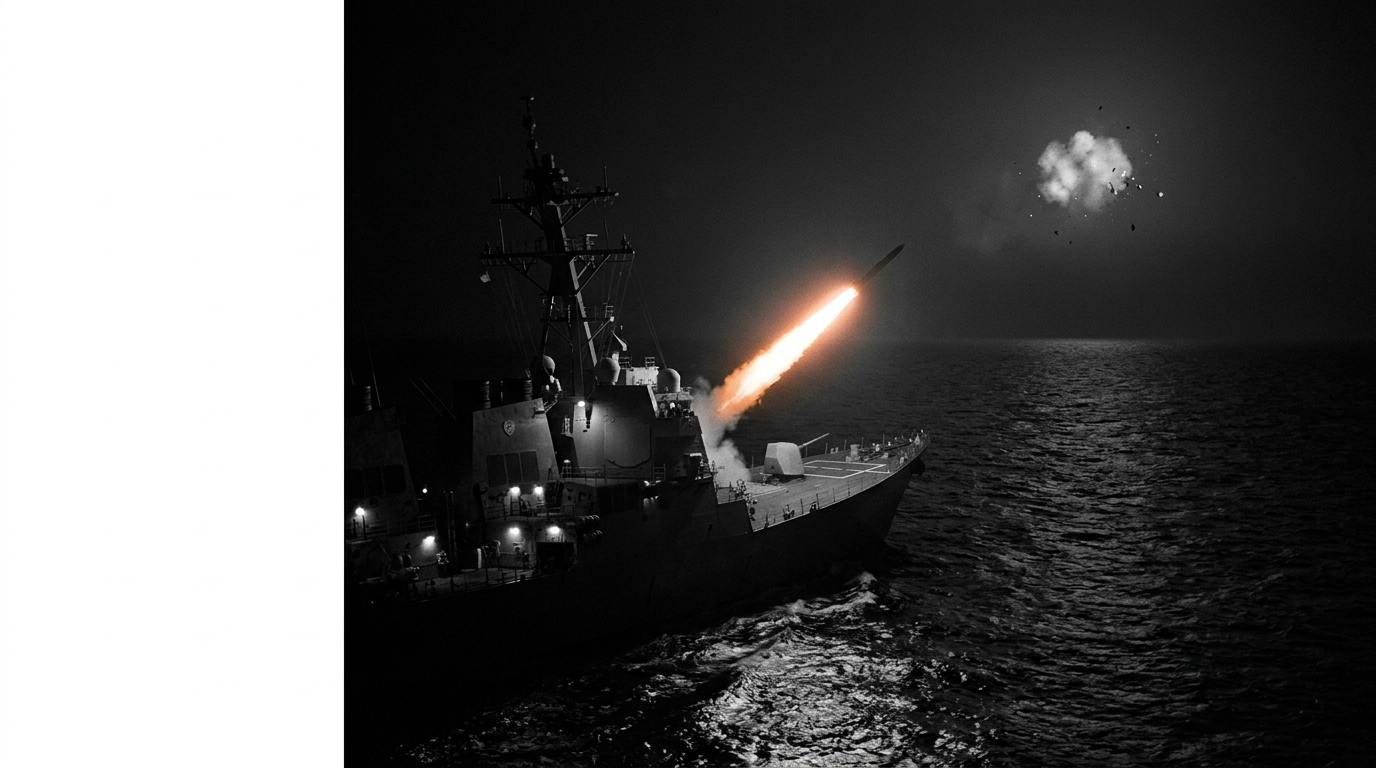
United States forces intercepted a barrage of ballistic missiles launched by Iran on Tuesday, according to US Central Command (CENTCOM). The command said all incoming projectiles were neutralized, ending a short-lived pause in fighting in the Middle East.
Officials described the Iranian launch as a surprise attack and said it represented a break from recent efforts aimed at reducing tensions. The interception, as presented by Washington, restored immediate force protection after the cease in hostilities was disrupted.
US Central Command details interception and follow-on action
CENTCOM said its forces not only intercepted the CENTCOM said its forces not only intercepted the missiles but also carried out coordinated strikes alongside Saudi forces. Officials said the strikes targeted militia sites in Iraq that were linked to the Iranian offensive. No casualty figures or damage assessments were provided in the information released, and officials did not specify the number of missiles involved or the precise locations of the interceptions. The statements focused on the operational outcome that all projectiles were stopped. Escalation coincides with Netanyahu’s Washington visit The escalation unfolded during a high-level diplomatic visit by Israeli Prime Minister Benjamin Netanyahu to Washington. During the trip, Netanyahu held discussions with President Donald Trump.
Officials did not draw a direct causal link
Officials did not draw a direct causal link between the visit and the missile launch, but the timing placed the flare-up alongside active diplomacy in the US capital. The episode also underlined how quickly a reported pause in fighting can be overtaken by new military action.
Regional stability questions remain as tensions rise
Washington framed the military response as a tactical deterrent designed to support regional security after the breach of the fighting pause. Officials said the immediate missile threat had been mitigated, while acknowledging that the regional setting remained volatile.
Analysts were described as watching for additional retaliatory steps that could extend the confrontation. They flagged risks to global supply chains and maritime security if the situation escalates, with particular attention to the Strait of Hormuz.
Officials said the broader geopolitical implications were still fluid as the United States manages multiple security fronts. For now, the key uncertainty is whether the exchange remains contained or triggers further cycles of action and response in the coming days.