

Qatar-led mediators press 7-day plan for Iran-US deal
The Financial Times reported the push as Tehran welcomed Republican losses in U.S. midterms while warning against assuming Washington’s policy will soften.
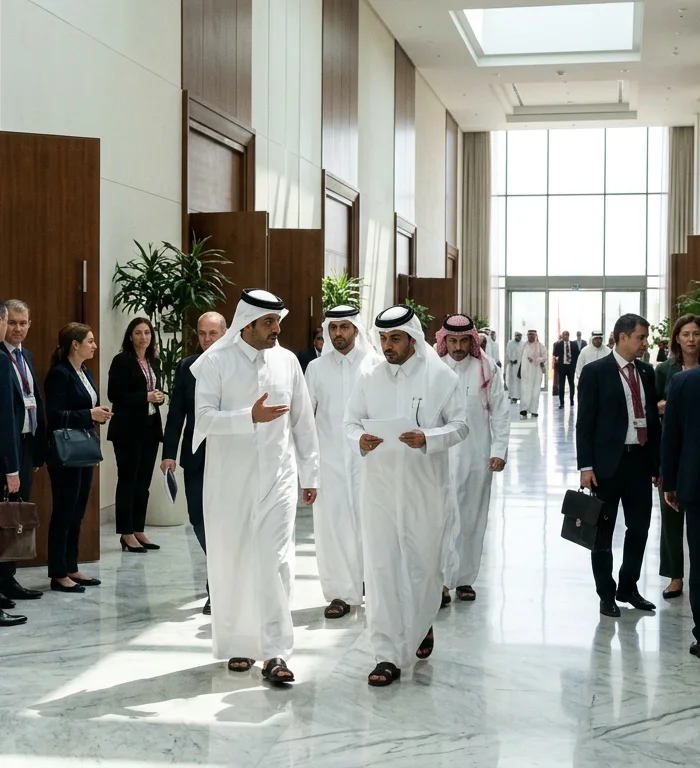
Qatar-led mediators have intensified efforts in recent weeks to broker an interim agreement between Washington and Tehran over a war now nine months old, the Financial Times reported in a Nov. 6 article.
The push carries stakes for energy supplies: the proposal draws on a 7-day Iranian plan from September and covers the Strait of Hormuz, where about a fifth of global oil and gas passed before the war.
Iranian officials publicly welcomed Republican losses in the U.S. midterm elections, casting them as evidence that the conflict has raised political costs for President Donald Trump.
“The Iranian nation handed Trump a strategic defeat on the battlefield and in the Hormuz — and a political defeat in Washington,” Mohsen Rezaei, Iran’s top security official, wrote on X, according to the FT. “Anyone who takes on Iran will pay the price.”
The FT also cited Vice President JD Vance as saying “the reason we lost is the war.” Mohammad-Sadegh Javadi-Hesar, a reformist politician in Mashhad, told the newspaper: “This is certainly a victory for Iran. A US that threatened to destroy Iran’s civilisation can now see that we are standing tall.”
The diplomatic track remains fragile. Diplomats told the FT that both sides want an agreement, while a person briefed on the talks said Washington and Tehran were separately studying the latest mediator suggestions aimed at narrowing their differences.
In the version described by the FT, shipping in the Strait of Hormuz would move freely again. In return, Washington would lift its blockade on Iranian ports, permit Iranian oil exports and give Tehran access to some frozen assets held overseas; the parties would then reopen talks on a final settlement.
The war has tightened pressure on Iran’s economy through sanctions and the U.S. naval blockade, the FT reported. The newspaper also said Iran has attacked shipping in the Strait of Hormuz and targeted oil and gas facilities across the Gulf, actions it said helped push up global energy prices.
Iran’s leadership also signalled caution about reading too much into U.S. domestic politics. Supreme Leader Ayatollah Mojtaba Khamenei said in a written message on Wednesday that any “slightest inclination towards surrender” would encourage further attacks.
“Those who harbour the slightest hope that partisan and factional shifts could result in a different approach or who imagine that by giving concessions to the US, they can make it abandon its hostility towards Iran, are seriously mistaken,” Khamenei said, according to the FT.
Iranian hardliner Hamid-Reza Taraghi told the FT he hoped Democratic control of Congress could constrain Trump’s ability to keep funding the war, but he warned the election setback might push Trump to seek a short-term victory. “Trump has no choice but to accept Iran’s conditions,” Taraghi said.
Sanam Vakil, director of the Middle East and North Africa programme at Chatham House in London, told the FT that Tehran could misjudge the leverage created by the midterms. “There’s a risk the Iranians might feel triumphant and ask for more, overestimating what the midterms really mean, and that will leave them in a stalemate,” she said.
The FT reported that mediators fear Trump could open a more forceful campaign against Iran after the midterms, and that there is suspicion he could target Iranian infrastructure.
More stories
- AfCRA faces investor trust test with Africa debt service at $163bn
- Häkkänen blames US politics for Ukraine Patriot delay
- Cape Town faces appeal over Equinix data-centre zoning
- War-zone water attacks triple to more than 135 incidents in 2025
- Lulu Retail posts 2% Q3 revenue gain with 53% online sales growth
- Hoax bomb threats disrupt 25 Europe flights
- Lula wins fourth term in Brazil with 51.8% vote
- Singapore studies geothermal power after 60-times resource estimate
Latest news
- Wheaton revenue rises 62% on higher precious-metals prices
- The Week in Games: Hardware math gets harsher
- Trump Media investors face losses as shares hit new lows
- Raman wins Los Angeles mayor race as Bass concedes defeat
- AI trade steadies as Nasdaq futures climb after tech rout
- Gold prices retreat as markets await key US labor statistics