

Singapore studies geothermal power after 60-times resource estimate
EMA said preliminary survey findings point to deep high-temperature resources, but extraction costs, dense urban siting and safety questions remain unresolved.
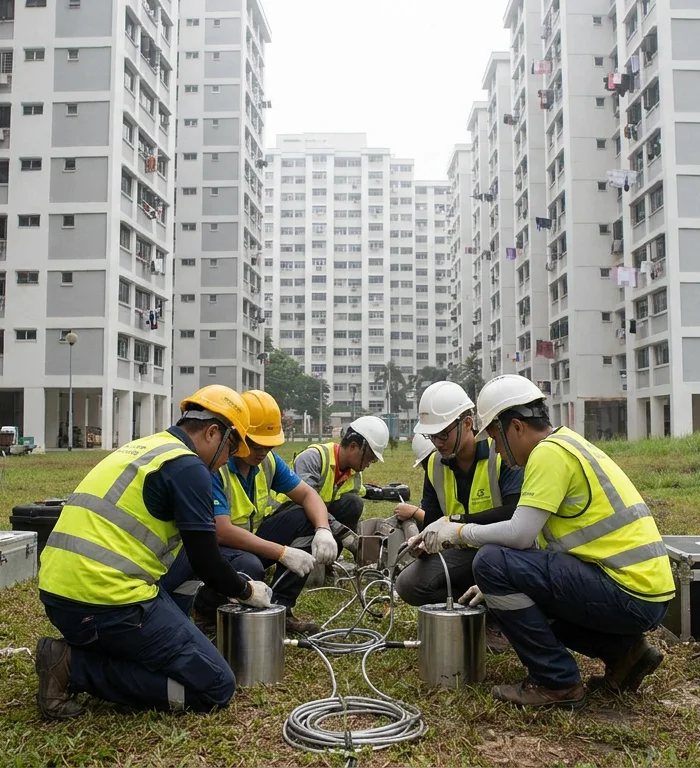
Singapore’s Energy Market Authority said on Oct. 26 that a 2024-to-2026 geophysical survey put the city-state’s geothermal resources at more than 60 times its yearly power use, Channel NewsAsia reported.
The preliminary estimate matters because Singapore uses about 60 terawatt-hours of electricity a year, according to the report. Atlas360 reported on Oct. 26 that peak demand could rise from 8.6 gigawatts in August to as much as 13 gigawatts by 2031.
The survey identified hot geothermal resources several kilometres below ground that may be usable for power generation, EMA said. It assessed resources as deep as 10 kilometres and did not involve invasive exploration.
Minister Tan See Leng, speaking at Singapore International Energy Week 2026, called the findings “a very good start”, according to the report. He said that if the resources can be harnessed, geothermal energy could power Singapore for roughly the next 60 years.
The work was carried out by a consortium that included Chevron, Metatek Group and Surbana Jurong. Metatek handled data collection and processing, while Chevron used the processed data to build three-dimensional geological and heat-resource models of Singapore.
The consortium also assessed that lower-temperature resources at shallower levels could potentially support industrial heating and cooling. Those uses would involve heat pumps and absorption chillers, technologies that move or use heat for cooling and temperature control.
EMA said it would move to another phase of studies to test whether geothermal energy can be used for power generation, cooling and heating. The agency appointed a Surbana Jurong and GLJ Ltd consortium to study next-generation geothermal plants in Singapore.
That study is scheduled to begin by the end of 2026 and take about 15 months, according to the report. It will examine safety, technical viability and production costs, all central to whether deep geothermal resources can be turned into usable electricity.
Tan cautioned that development would not be simple because the resources are far underground. “Our dense urban environment will also affect how many geothermal power plants we can eventually or feasibly deploy, and most importantly, we must keep safety as a top-of-mind consideration,” he said.
EMA chief executive Puah Kok Keong said geothermal energy was an “indigenous source of clean energy that can provide constant power, and can potentially play an important role in our energy mix”. He said viable geothermal power would strengthen energy resilience and support power-sector decarbonisation.
Singapore has not decided whether to deploy geothermal power, Tan said. “It could take many years before we get to that decision. But nevertheless, as I've said many times before, no option is off the table for us here in Singapore.
We will therefore explore this option seriously,” he said.
By the end of 2026, EMA’s appointed Surbana Jurong and GLJ Ltd consortium is scheduled to start the next geothermal study. Over the roughly 15-month study period, the checkable outputs are assessments of safety considerations, technical viability and the cost of geothermal energy production.
After the study, the unresolved question is whether Singapore can extract deep geothermal resources safely and economically enough to support electricity generation, cooling or heating.
Source: news report, ChannelNewsAsia, Oct. 26, 2026
More stories
- Bolsonaro reaches Miami after defeat and fleeing Brasil
- South African parties split over Cape Town's 30,000-home annual gap
- Ruto seeks Russian investment in Kenya's $380m trade push
- Sudan teachers seek 20% budget share with 8m children outside school
- Spain rail network faces scrutiny after 64 killed near Toledo
- Spain reports at least 30 dead in high-speed train crash
- Singapore sets five-year power buildout for up to 13GW demand
- Lula wins fourth term in Brazil election upset result
- Wolfspeed faces dilution risk in $1.5bn Pentagon loan
- Iran targets Starlink with jail terms of up to 5 years
Latest news
- Cyclone Arnab kills at least three on India's east coast
- EU rules bar Nord Stream return under 2027 gas phaseout
- Investors weigh OpenAI strengths against Anthropic growth
- Clariane posts 4.7% organic revenue growth
- GE Vernova lifts 2026 free-cash-flow outlook to $16bn-$17bn
- Kinross Gold faces Q3 test after 2%-3% output cut