

Iran targets Starlink with jail terms of up to 5 years
Tehran frames satellite internet as a security threat while officials weigh selective access and possible platform reopenings.
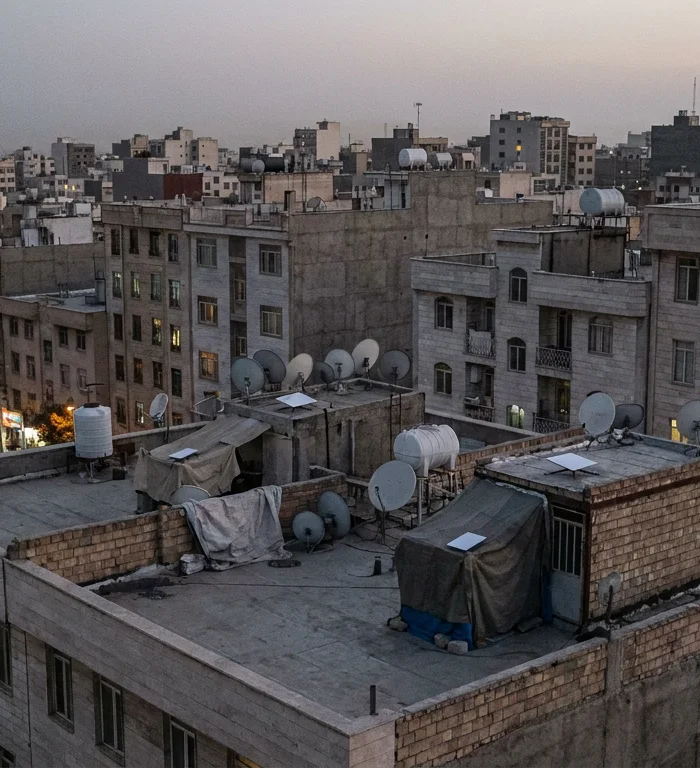
Iranian authorities pledged on Oct. 14 to continue their crackdown on Starlink, which carries jail terms of up to five years for importing or distributing terminals, Al Jazeera reported.
The pressure matters because Iran’s 90 million people have faced two cutoffs from the global internet in 2026, including an 88-day wartime blackout, far longer than a three-week shutdown in January.
Mohammad Amin Aghamiri, secretary of Iran’s Supreme National Cyberspace Council, described Starlink as a military and intelligence threat. Starlink, owned by Elon Musk’s SpaceX, provides satellite internet service that can bypass domestic filtering.
“It is a tool used for command and control by the enemy, for espionage and information gathering,” Aghamiri said, according to Al Jazeera. “We have several systems for cutting off Starlink satellite terminals.”
Aghamiri did not identify the systems Iran says it uses. He said one system was used during January protests and that Iran was prepared to share the technology with allied countries, according to the report.
Iran bans Starlink on national-security grounds. The report said baseline penalties for using or possessing a terminal range from six months to two years in prison, while importing or distributing devices can bring sentences of up to five years. If prosecutors add national-security or espionage charges, defendants can face the death penalty, according to Al Jazeera.
The crackdown sits within a broader effort to control online access during unrest and war. Al Jazeera reported that U.S. and Israeli strikes on Feb.
28 led to a prolonged conflict that has hurt Iran’s economy and brought repeated restrictions on global internet services.
A Tehran-based internet and telecommunications expert, speaking anonymously to Al Jazeera, said Iranian authorities use jammers, false GPS signals and monitoring of Starlink-linked internet protocols when devices connect to local services. The expert also said authorities try to seize terminals through patrols, drone searches and raids on sellers.
Iran has also pursued the issue internationally. Since 2023, it has raised Starlink at the International Telecommunication Union’s Radio Regulations Board, seeking pressure on the U.S. and Norway over transmissions.
On Oct. 4, Iran’s Foreign Ministry summoned Norway’s ambassador in Tehran to protest what it called inaction over unauthorised Starlink operations.
Deputy Technology Minister Mohammad Hafez Hakami warned at a governance meeting in late September that Starlink could undermine Iran’s internet-control model if it spreads widely. He said Iran blocked Telegram after 2017-18 cost-of-living protests, imposed a weeklong internet shutdown in 2019, blocked WhatsApp and Instagram after 2022-23 protests, and moved to a near-total shutdown during January 2026 protests.
“If this trend continues, in the next crisis we will have to cut electricity, because Starlink, as a new tool of evading state governance, is fundamentally not even dependent on our network,” Hakami said.
The scale of Starlink use remains unclear. Al Jazeera reported that tens of thousands of terminals are believed to have entered Iran since 2022, but exact figures are unknown. Most Iranians still lack access because of enforcement risks, limited supply and cost.
Government spokesperson Fatemeh Mohajerani said at a Tuesday news conference that authorities deliberately slow or disrupt internet service to protect databases and online services from cyberattacks. “It is obvious that due to the importance of our databases and internet-based services, decision-making bodies are sometimes forced to bring down internet speeds,” she said. “We don’t deny this issue.”
State-linked media late Tuesday released a policy framework that Aghamiri said had been under review for nearly two years and kept confidential for security reasons. The document gives no timetable for unblocking platforms. It says Google Play and WhatsApp could potentially reopen, while YouTube and Telegram would need to negotiate with Iran and accept official conditions, according to Al Jazeera.
More stories
- Wolfspeed faces dilution risk in $1.5bn Pentagon loan
- Iran changes Hormuz attack tactics, senior officials say
- Russian hybrid threat stretches MI5 after 1,000 expulsions
- Sharjah Islamic Bank profit rises 9% as financing expands
- Russia outreach tests Trump's divided base, Mead argues
- Turkey's $1.1 trillion energy bill spotlights deficit
- Trump at the UN: Iran Faces a Choice Between a Deal and "Annihilation
- China military purge removes Xi’s two senior commanders
Latest news
- Natacha Polony joins France's 2027 presidential race
- Publicis beats Q3 forecasts with 5% organic revenue growth
- Türkiye Desk: Tencent’s Flow Games move tests Türkiye’s mobile thesis
- IMF urges US deficit cuts as debt costs strain economies
- Lagarde urges France to tackle debt through fiscal consolidation
- Nifty IT jumped 5.2% after HCLTech profit beat
- Fusion CX IPO to cut promoter stake to 80%
- Nasdaq falls 0.15% as chipmakers extend losses