

Iran changes Hormuz attack tactics, senior officials say
Hormuz shipping faces renewed risk after five or more incidents within 48 hours, according to maritime security data and reported alerts.
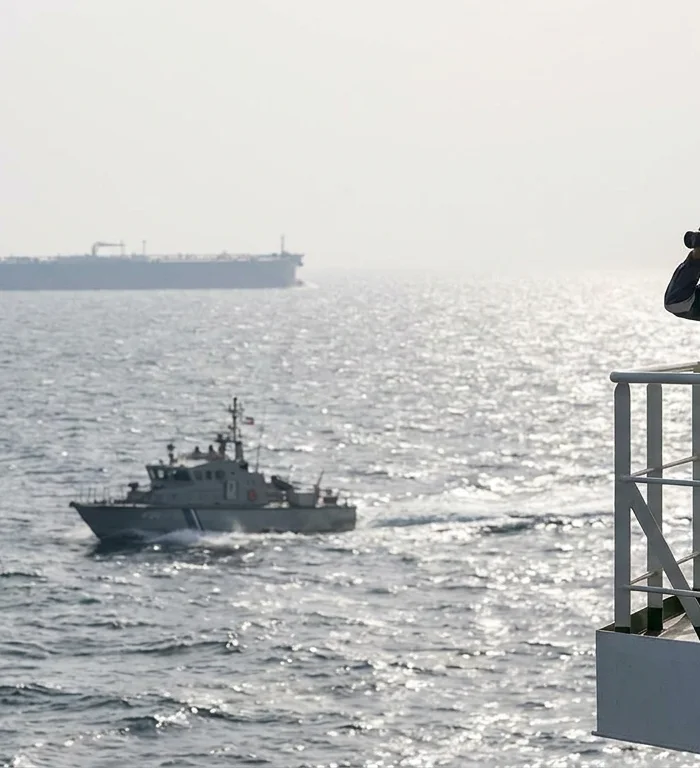
Hormuz shipping faces renewed risk after five or more incidents within 48 hours, according to maritime security data and reported alerts.
The incidents involved commercial vessels, including tankers, and included drone attacks, according to maritime security analysis and reports submitted to United Kingdom Maritime Trade Operations (UKMTO). International Maritime Organization records indicate a comparable frequency during October 3–5, suggesting renewed pressure on vessels still using the route.
Iranian officials describe election pressure
Two Iranian officials described a change in operations intended to frustrate efforts to lower oil prices before November’s US congressional elections. The senior officials, who were not named, said Iran’s leadership had approved the approach and coordinated it across the governing system.
One official placed the start of the revised operations roughly 10 days before the account was published. Both declined to explain the operational details, but described changes in attack methods and frequency against vessels Iran regards as breaching its passage restrictions.
Their account presents disruption as a means of influencing Washington, rather than solely controlling maritime access. That stated political objective does not establish whether the attacks will affect either energy prices or voting behavior.
The conflict began with US and Israeli strikes on February 28, after which Tehran sought to control passage through Hormuz. Washington has also enforced a blockade against Iranian ports and expanded sanctions while seeking an agreement to end the fighting.
Small boats replace damaged radar
An unnamed US military official separately described a tactical adjustment: Islamic Revolutionary Guard Corps personnel were using observers aboard small, unarmed boats to locate possible targets, including American warships. The official attributed that change to US attacks that had damaged much of Iran’s radar network.
The official said American forces last week identified a dhow whose occupants were relaying targeting information to the IRGC. US personnel ordered those aboard to leave before destroying the vessel; the official reported no deaths or injuries.
That account supports a narrower finding than the Iranian officials’ description of a coordinated campaign. It identifies a targeting method, but does not independently establish Tehran’s election-related intentions or corroborate every reported attack.
The US official also disputed Iran’s ability to halt increasing oil shipments, saying Tehran was reluctant to expose its surviving fast boats following damage to its navy. Neither Iran’s Foreign Ministry nor the Pentagon had provided a response to requests for comment when the supplied report was published.
Threats extend beyond Hormuz passage
The Iranian officials said operations would reach into the Gulf of Oman and more distant waters. Maritime security assessments of reported incidents suggest activity already extends beyond Hormuz, including waters near Qatar and the United Arab Emirates.
In its Sunday assessment, the US Navy-led Joint Maritime Information Center retained its second-highest threat classification for merchant vessels in Hormuz. It reported continuing attacks, attempted strikes, surveillance and harassment involving the IRGC.
If attacks extend farther from the strait, shipping operators would face security exposure beyond the passage itself, with implications for routing and insurance costs. If export volumes continue increasing despite those threats, as the US official claimed, Iran’s ability to translate maritime disruption into sustained oil-price pressure would remain uncertain.
The Iranian officials threatened to prevent all passage by vessels violating Tehran’s restrictions, but the account does not establish that capability. The distinction between their stated objective and the US assessment of continued exports remains central to judging the campaign.
More stories
- Russian hybrid threat stretches MI5 after 1,000 expulsions
- Sharjah Islamic Bank profit rises 9% as financing expands
- Russia outreach tests Trump's divided base, Mead argues
- Turkey's $1.1 trillion energy bill spotlights deficit
- Egypt construction consulting may hit $10.06 billion by 2031
- Kazakhstan plans gold sales to reduce reserve dependence
- UN Iran report accuses US over 150 school strike deaths
- Trump says Iran war may near end as Yemen risks widen again
Latest news
- IMF urges US deficit cuts as debt costs strain economies
- Lagarde urges France to tackle debt through fiscal consolidation
- Nifty IT jumped 5.2% after HCLTech profit beat
- Fusion CX IPO to cut promoter stake to 80%
- Nasdaq falls 0.15% as chipmakers extend losses
- Fed rate outlook splits as Williams sees limited tightening
- US ETF issuers add nearly 1,100 funds in leveraged push
- Workday widens AI controls with C1.ai deal and Claude link