UN Iran report accuses US over 150 school strike deaths
A UN Iran report alleged US war crimes in two February strikes and accused Tehran of crimes against humanity during protests.
Lauren Collins ·
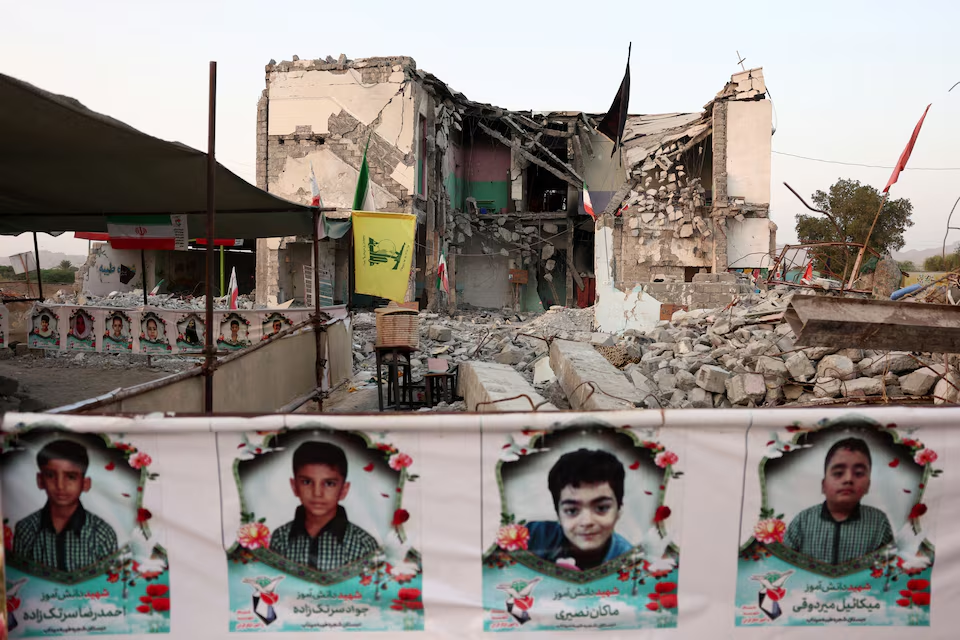
A UN Iran report linked US forces to two February strikes, including a school attack killing more than 150 people, and alleged war crimes.
The Independent International Fact-Finding Mission on Iran said Iranian authorities also committed crimes against humanity during the state response to nationwide protests that began in late December. Its report is to be submitted to the UN Human Rights Council in Geneva.
Minab toll anchors findings
The mission said it had reasonable grounds to believe US forces struck Shajareh Tayyebeh Primary School in Minab, where Iranian officials said more than 150 people were killed, including around 120 schoolchildren. The experts described the school as a clearly identifiable civilian site.
According to the report, US targeting relied on intelligence that placed a senior Iranian military commander at the location. The mission said the United States did not adequately update or verify that intelligence before the strike.
The investigators concluded that the Minab attack was indiscriminate and caused civilian deaths and damage to civilian infrastructure, amounting to a war crime under international law. They said they found no evidence that the school was being used for military purposes.
President Trump said in June that nobody intentionally attacked a girls' school in Iran in February, citing an investigation into the incident. The Pentagon later elevated its probe, according to the source material, but has not published preliminary findings.
Lamerd strike adds second allegation
The mission reached a similar conclusion on a strike at a sports center in Lamerd. Its report said the attack damaged residential buildings and a school nearby, and killed and injured 22 civilians.
US Central Command said in March that US forces did not conduct strikes into Lamerd on the day in question. That denial leaves the Lamerd finding as a contested allegation attributed to the UN mission, rather than an independently established account.
Tehran crackdown draws charges
The report also accused Iranian authorities of a widespread and systematic attack against civilians during anti-government protests. The mission cited unlawful killings, torture, arbitrary detention, enforced disappearances and restrictions on freedom of expression.
Rights groups have said bystanders were among those killed during the largest crackdown since clerics took power in the 1979 revolution. Tehran has blamed terrorists and rioters backed by exiled opponents and foreign adversaries, including the United States and Israel.
The mission said it could not independently verify the death toll. Official figures cited in the report put the number killed at 3,038 and the number injured at 25,000, but investigators said the real toll was likely higher.
The report said the state's response, including violence, killings, internet shutdowns and the use of the death penalty, marked an escalation from earlier patterns of suppressing dissent. Iran has consistently denied allegations that its security forces carried out systematic rights violations.
Council pressure sets paths
If the Human Rights Council treats the report as a basis for follow-up action, the immediate pressure would fall on US military targeting reviews and Iranian security institutions. The wider defense sector would face closer scrutiny of intelligence validation, strike approval and civilian-harm assessments.
If Washington and Tehran instead reject the findings without further disclosures, the report is likely to deepen the evidentiary dispute rather than settle it. The macro effect would work through diplomatic friction, sanctions pressure and risk pricing around Gulf security, while leaving investigators dependent on future access, documents and witness protection.