China military purge removes Xi’s two senior commanders
China expelled Zhang Youxia and Liu Zhenli from the party and military, escalating Xi Jinping’s campaign inside the top command.
Mei Lin ·
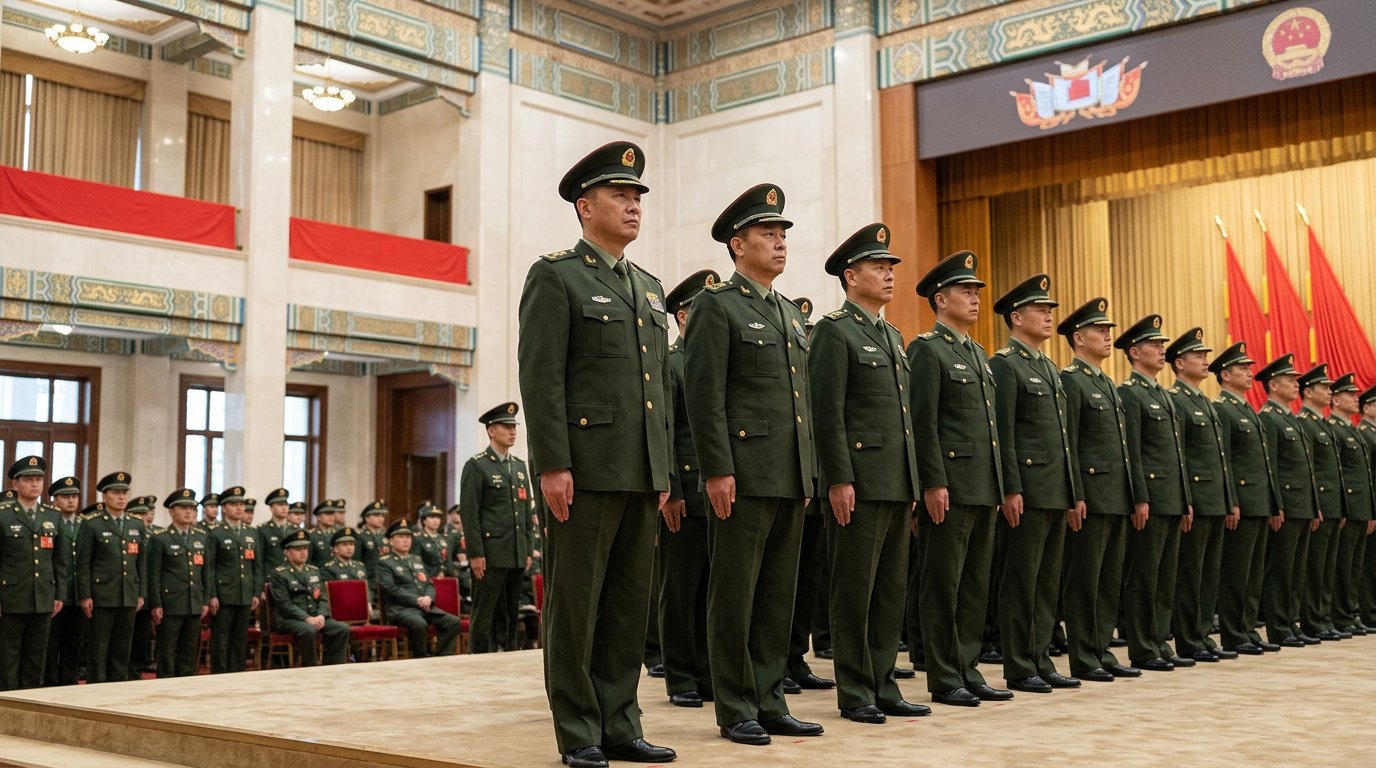
China military purge removed two top commanders from the Communist Party and armed forces, exposing strain near Xi Jinping’s command.
An official announcement on Monday said Zhang Youxia and Liu Zhenli were expelled over alleged disloyalty, corruption and other discipline breaches. Zhang had been vice-chairman of the Central Military Commission, the top command body, while Liu was a CMC member and chief of its Joint Staff Department.
Xi’s command body narrows
Zhang’s rank made him the second-ranking military figure under President Xi Jinping, who chairs the CMC. He had also served on the Communist Party’s Politburo and was regarded for years as one of Xi’s closest military allies.
Probes into Zhang and Liu were announced in January, and both were removed from the state Central Military Commission in late August. The Monday expulsions were approved at a Politburo meeting chaired by Xi, according to state media accounts of the decision.
Their suspected criminal cases will be transferred to military prosecutors for examination and prosecution, state media reported, citing official documents. The sequence moves the case from party discipline into the military legal system, where the next visible step would be a prosecutorial decision.
Disloyalty charge marks escalation
The accusations went beyond conventional graft language. Chinese authorities accused the two officers of violating political discipline, forming cliques and factions, failing to supervise staff and family members, and being disloyal and dishonest to the party.
Official documents said Zhang and Liu crossed political and disciplinary limits, with alleged economic misconduct tied to dereliction of duty and abuse of office. The documents described the sums involved as exceptionally large and the impact as extremely damaging, without giving a verified monetary figure.
Dennis Wilder, a former CIA China analyst and senior fellow at Georgetown University, said corruption allegations against senior People’s Liberation Army officers are not rare, but the political wording was different. "What is unprecedented is the charges of disloyalty that include forming cliques and factions," Wilder said.
Wilder said the disloyalty allegations "harkens back to the days of Mao" and, if substantiated, could indicate that Xi saw the matter as a serious challenge to his authority. "It sends a sharp message to both the elders and the military about challenging Xi," he added.
October conclave frames timing
The announcement came days before Xi is set to travel to the US for talks with President Donald Trump. It also landed weeks before a key October party conclave focused on internal governance and discipline, placing the military case inside a broader political calendar.
Since Xi took power in 2012, China’s anti-corruption and discipline campaign has investigated millions of officials across the bureaucracy, according to official campaign accounts cited in the source material. Scores of senior party, government and military figures have been purged during that period, with the armed forces becoming a more visible target in recent years.
The CMC had previously been a seven-member body; recent investigations and expulsions have left two active figures, including Xi. That narrowing matters because the commission sits above the military chain of command, and vacancies at that level can shift the balance between political loyalty, operational continuity and promotion planning.
For the PLA, the immediate question is whether the leadership fills senior command seats before or after the October conclave. If appointments come quickly, Beijing can signal that discipline cases will not stall command management; if vacancies persist, the purge may keep attention on loyalty screening rather than routine institutional turnover.
The global macro channel is indirect unless the case changes China’s foreign-policy signaling, defense posture or talks with Washington; no trade or financial measures were announced with the expulsions. For China’s defense sector, the wider effect runs through procurement oversight and personnel risk: deeper investigations could slow decision-making, while a closed case could let the leadership reset command lines.