

Lula wins fourth term in Brazil election upset result
Lula won a fourth term in Brazil, defeating Flavio Bolsonaro and checking a right-wing electoral wave in Latin America.
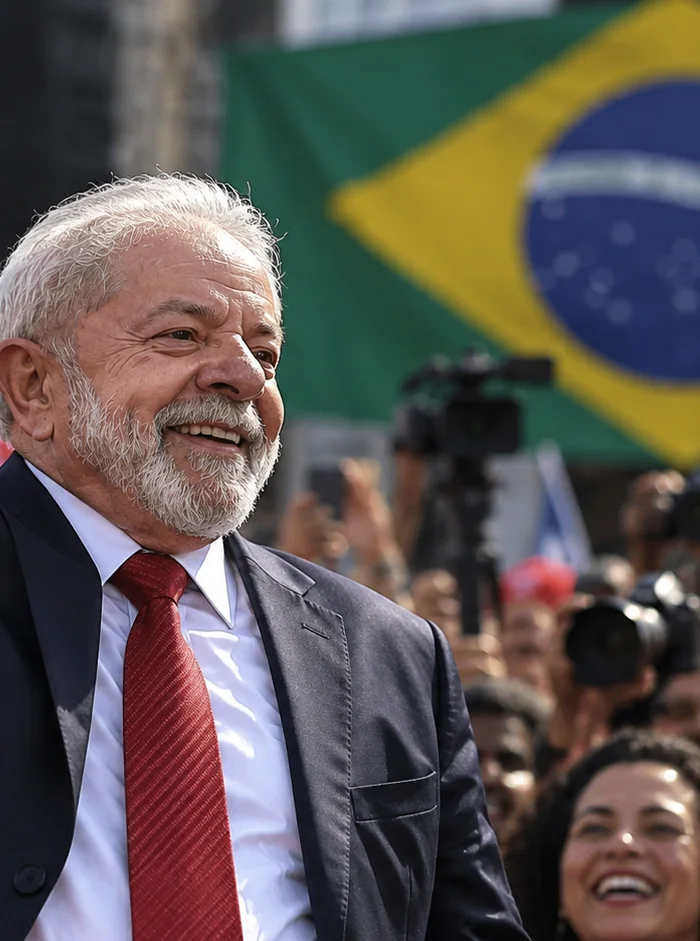
Luiz Inacio Lula da Silva won a fourth term in Brazil on Sunday, the electoral court said, slowing Latin America's rightward electoral streak.
The result defeated Senator Flavio Bolsonaro, the eldest son of Jair Bolsonaro, after the senator had led the election's first round. His campaign had sought to restore the political force built around his father's far-right movement.
A fourth mandate at 80
Lula's win is unprecedented in modern Brazilian politics, giving the 80-year-old another comeback in a career already defined by reversals. He has been the most durable figure on the Brazilian left this century, moving from labor organizing and metalwork into the presidency and back again.
The victory came after a campaign in which his reelection prospects appeared weak. Voters had turned against Lula and the Workers' Party after years of corruption scandals and rising prices, while Brazil's labor market changed around the app-based economy and a larger pool of informal workers.
Those shifts had left Lula exposed to criticism that a politician formed in the union politics of the industrial workplace no longer spoke naturally to many younger or more precarious workers. The result suggests that weakness did not prevent him from rebuilding a winning coalition when the vote was counted.
Bolsonaro movement faces a test
Flavio Bolsonaro entered the final stage with momentum from the first round and the name recognition of Brazil's most prominent right-wing family. His defeat leaves the movement associated with Jair Bolsonaro without the presidential return it had sought through the senator's campaign.
The election also interrupts a series of right-wing victories across Latin America, according to the account of the race supplied. For parties in the region, Brazil's vote will be read through two competing frames: the continuing reach of anti-incumbent politics and the ability of a known leftist incumbent to survive it.
Lula's own vulnerabilities were central to that tension. He was jailed from 2018 to 2019 on corruption charges that were later overturned, a legal reversal that allowed him to return to national politics and defeat Jair Bolsonaro in the 2022 election.
Leftist federal lawmaker Erika Hilton, who was with Lula in Sao Paulo during the vote count, framed the win in personal and historical terms. "He is a statesman, a giant," Hilton said.
Workers' Party gets another chance
The immediate institutional beneficiary is Lula's Workers' Party, which retains control of the presidency despite the political cost of corruption scandals and inflation complaints. Its challenge is now less about proving Lula's electoral resilience than about governing a country whose work patterns and political identities have moved since his first rise.
If Lula can hold together support among traditional left constituencies while reaching informal and app-based workers, the Workers' Party could blunt the appeal of the Bolsonaro family among voters who feel detached from older labor institutions. If that effort fails, the election may look less like a broad renewal for the left than a personal victory by its best-known figure.
For the wider political sector in Latin America, the mechanism to watch is whether Brazil changes the story other campaigns tell about incumbency. If Lula's win is treated as evidence that economic grievance can be offset by organization, biography and anti-right mobilization, left-leaning parties may study it as a defensive template.
If Flavio Bolsonaro's defeat instead becomes a rallying point for the right, the movement around his family may shift from presidential restoration to opposition pressure. The main open questions are the final margin, the composition of Lula's coalition and whether voters who backed him against Bolsonaro will support the next governing agenda.
More stories
- South African parties split over Cape Town's 30,000-home annual gap
- Ruto seeks Russian investment in Kenya's $380m trade push
- Sudan teachers seek 20% budget share with 8m children outside school
- Spain rail network faces scrutiny after 64 killed near Toledo
- Spain reports at least 30 dead in high-speed train crash
- Villa Vie disembarks 203 passengers in Cambodia over fuel costs
- SpaceX’s AI buildout adds $40 billion in GPU debt
- South Africa records 76,922 HIV prevention jab initiations
- Greece plans 15% homebuyer tax for non-EU investors
- Rama faces sixth day of Albania protests with 272 injured