

SpaceX’s AI buildout adds $40 billion in GPU debt
Musk linked the financing to SpaceX’s investment-grade status and Starlink and launch revenue, while warning weaker AI infrastructure firms face pressure.
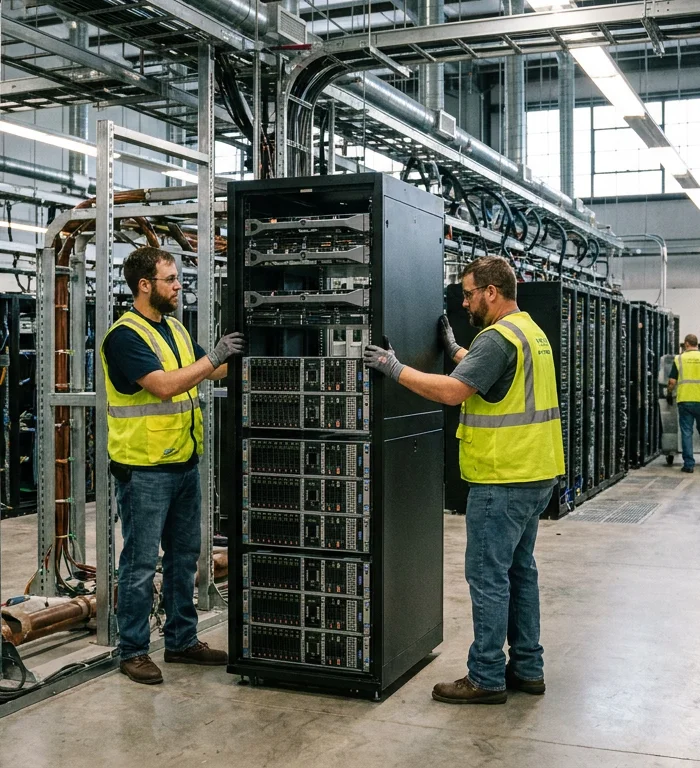
Elon Musk said in an X post on Sunday that SpaceX closed $40 billion in debt financing to buy graphics processing units, according to a Reuters report published by Channel NewsAsia.
The financing matters because SpaceX expects $35 billion to $40 billion of capital expenditure in the fourth quarter, Chief Financial Officer Bret Johnsen said, matching the size of the reported debt raise.
Musk attributed the raise to SpaceX’s investment-grade status and revenue from its Starlink satellite internet and launch businesses. "This is primarily callable debt for GPU purchases that will arrive in Q1 and Q2. Not a major factor this quarter," Musk said in the post.
Callable debt allows the borrower to repay the debt before maturity under specified terms. Graphics processing units, or GPUs, are advanced chips used to train and run artificial-intelligence systems.
The post left open whether “closed” meant final investor commitments, agreed pricing or another stage of the transaction, the Reuters report said. Reuters reported earlier this month that SpaceX was speaking with banks and asset managers about raising $40 billion to buy Nvidia artificial-intelligence chips.
The debt plan points to the scale of spending needed to secure processors and build computing infrastructure for AI development. Musk said debt markets "have almost entirely shut off access to money for any company that doesn’t have substantial revenue independent of AI data centers."
Musk predicted consolidation and failures among neocloud companies. Neoclouds such as Nebius and CoreWeave largely serve technology customers and sell AI-focused computing capacity, unlike larger cloud providers with broader customer bases.
Musk later said SpaceX would not buy neocloud companies, calling such a move “pointless.” Reuters said investors have begun betting against U.S. neocloud and data-center companies after concerns that debt-funded AI expansion was becoming unsustainable contributed to a selloff.
SpaceX’s revenue climbed 161% from a year earlier to $14.58 billion for the three months ended Sept. 30, while AI revenue rose almost tenfold to $7.56 billion, according to Reuters. The shift broadens a company long anchored by Starlink satellite internet and launch services, while its longer-term plans still depend on putting Starship rockets into regular service.
Terafab, the chip-manufacturing joint venture between SpaceX and Tesla in Austin, should produce its first test chip around May or June 2027 and aims to reach volume production by the third quarter of 2028, Reuters reported. Musk told investors in a conference call last week that a merger of SpaceX and Tesla would be "a good idea," citing greater overlap between the companies.
Musk said the GPU purchases financed by the callable debt will arrive in the first and second quarters. He said the debt would not be a major factor in the current quarter.
Terafab is expected to produce its first test chip around May or June 2027, according to Reuters. The same joint venture aims to reach volume chip production by the third quarter of 2028.
Source: Reuters report published by Channel NewsAsia, Oct. 25, 2026
More stories
- Bolsonaro reaches Miami after defeat and fleeing Brasil
- South African parties split over Cape Town's 30,000-home annual gap
- Ruto seeks Russian investment in Kenya's $380m trade push
- Sudan teachers seek 20% budget share with 8m children outside school
- Spain rail network faces scrutiny after 64 killed near Toledo
- Spain reports at least 30 dead in high-speed train crash
- South Africa records 76,922 HIV prevention jab initiations
- Three Elections Today. A Global Political Test Ahead.
- US envoy Tom Barrack presses Gulf allies to rely less on US
- India leads IBSAMAR with cooperation across oceans in view