

South Africa records 76,922 HIV prevention jab initiations
Spotlight reported the Oct. 8 tally as nurses adapt clinic workflows and injection technique for lenacapavir, a six-monthly HIV prevention shot.
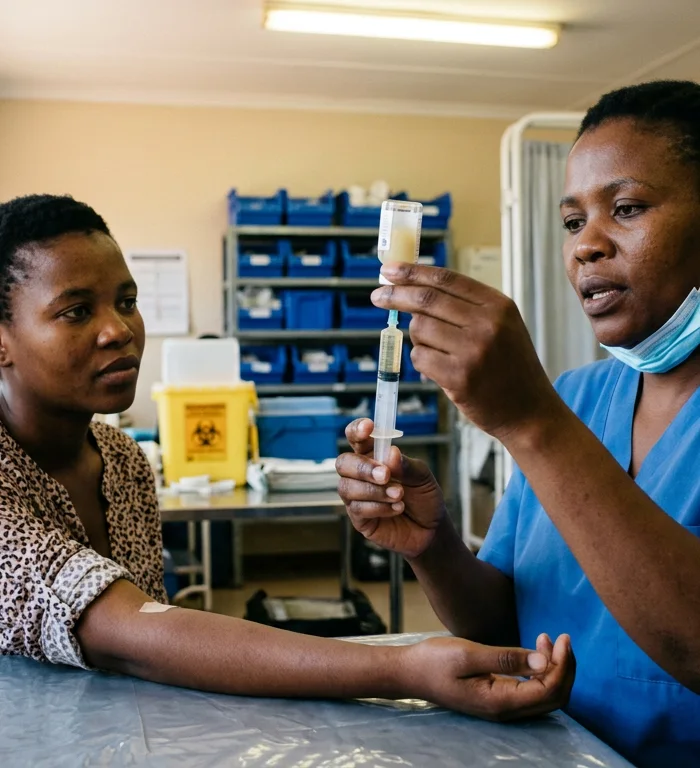
South Africa’s lenacapavir rollout reached 76,922 initiations nationally by Oct. 8, Spotlight reported in an Oct. 23 news article, as public clinics adapted to the six-monthly HIV prevention injection.
The operational test is large: South Africa had an estimated 140,000 new HIV infections in 2025. Modelling said 1.4 million to 2.1 million yearly initiations by 2030 could avert an average of 32,200 to 51,700 infections a year.
Sister Keitumetse “Tumi” Senokwane, a professional nurse and site manager in Tshwane, said practical training was needed even for experienced staff. “You know, lenacapavir is different,” she said. “Because we were not used to it, the practical training helped us to get used to it.”
The national launch began on June 5 at 360 public health facilities across six provinces. By Oct. 8, Gauteng had recorded 36,733 initiations in 133 facilities, according to health department spokesperson Foster Mohale, Spotlight reported.
Senokwane works at Maria Rantho Community Health Centre and Phedisong 1 Clinic, which are taking part in the Wits RHI Len4PrEP study. Dr Catherine Martin, a study investigator, said the project is examining delivery outside tightly controlled trial conditions: “LEN4PrEP is an implementation research study, so looking at how we can deliver the product in a real-world setting.”
The study recruited 1,544 participants from November 2025 to June 2026, with follow-up continuing until June 2027. Of 1,538 participants whose method choices were reported, 85.8% chose lenacapavir, 13.7% chose oral prevention pills and 0.5% chose no PrEP.
Pre-exposure prophylaxis, or PrEP, uses antiretroviral medicines to prevent HIV infection. Oral PrEP has been widely available in South Africa’s public system for several years, but uptake was about 350,000 people in mid-2025, according to Thembisa estimates reported by Spotlight.
Lenacapavir administration is more involved than a single jab. Patients receive two injections at the first visit, take two tablets that day and another two tablets 24 hours later, then continue with injections every six months.
The method has forced nurses to adjust technique. Senokwane said the needle differed from the subcutaneous injections nurses were used to, and the solution was thick. “I wish I knew that you can’t inject it fast,” she said, referring to slower administration used to reduce leakage.
Patients also raised concerns about pain and nodules at the injection site. In one clinical trial, about 64% of 2,140 lenacapavir recipients developed subcutaneous nodules, or small lumps under the skin, at the injection site.
Clinics in the study also reorganised patient flow. Senokwane said visits that initially took about an hour and a half later took about an hour or less as nurses gained experience and navigators used waiting time to explain PrEP and related services.
Mohale said feedback from early rollout clinics, nurses and patients would help the health department refine training and guidelines. Researchers are also examining why men and women prefer different injection sites.
June 2027 is the next dated study milestone, when follow-up in the Wits RHI Len4PrEP implementation study is scheduled to continue until. Researchers may then report retention, injection-site preferences, clinic workflow lessons and patient experience after rollout.
By 2030, the scale question is whether South Africa approaches the modelled range of 1.4 million to 2.1 million lenacapavir initiations a year. That range is the level associated with an estimated average of 32,200 to 51,700 infections averted annually.
Source: news article, Spotlight via AllAfrica, Oct. 23, 2026
More stories
- Three Elections Today. A Global Political Test Ahead.
- Rayner backs Burnham over UK-EU free-movement debate
- Machado returns to Venezuela, testing Rodríguez’s opening
- Portugal police remove 171 housing protest structures
- Serbia records higher turnout as students challenge Vucic
- French unions call more protests after nationwide marches
- South Africa shootings kill 27 around its biggest cities
- EU hybrid defense plan tests NATO role on Russia threats