USS Abraham Lincoln concerns face Trump rebuff at sea now
President Trump dismissed concerns over USS Abraham Lincoln conditions as the Navy prepares to replace the carrier with USS George Washington.
Lauren Collins ·
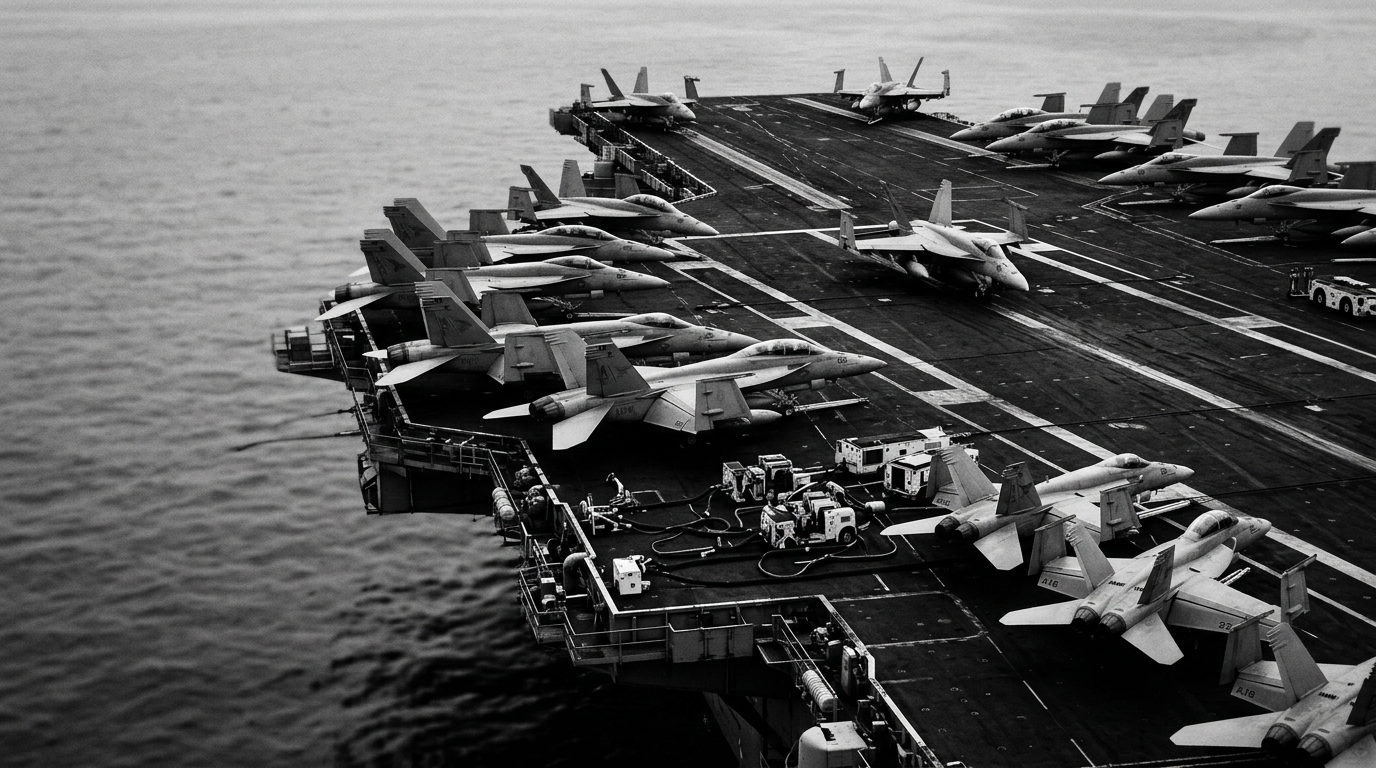
USS Abraham Lincoln conditions drew a public dismissal from President Trump as the Navy prepares to rotate in the USS George Washington.
The exchange put shipboard conditions, family concerns and carrier availability into the same policy frame. Trump treated the issue as an operational handoff rather than as a broader warning about life aboard the carrier.
Trump rejects family concerns
Asked by a reporter today about concerns from families of servicemembers assigned to the Lincoln, Trump rejected the premise. No they’re not. That ship is moving right now or very shortly, and it’s being replaced with another very similar ship, he said.
The answer matters because it came from the commander in chief while the Navy is managing a carrier transition in the Middle East. Trump’s response gave priority to continuity of deployment, with the replacement ship presented as the immediate remedy.
The source did not provide a date for the Lincoln’s departure or for the George Washington’s arrival. It also did not state how long the Lincoln has been deployed, beyond describing the mission as lengthy.
George Washington carrier handoff
The U.S. military is preparing to replace the USS Abraham Lincoln with the USS George Washington as part of a scheduled Middle East deployment. Trump said the Lincoln was moving immediately or would do so soon, placing the timing of the rotation at the center of his response.
The replacement is important for two separate reasons. It preserves an aircraft carrier presence in a region where the U.S. military has kept naval assets on station, and it offers a practical answer to complaints tied to the Lincoln itself.
For the Navy, the handoff separates the mission from the ship carrying it out. If the George Washington takes over as planned, the Middle East deployment continues while attention shifts to whether the Lincoln’s crew receives relief after its assignment.
Congress tracks sailor conditions
Conditions aboard the Lincoln have drawn increasing attention from members of Congress, according to the source material. The concerns include accounts of food shortages, limited personal supplies and plumbing problems, along with wider questions about sailors’ mental health.
Those reports remain attributed to the accounts cited in the source; no independent Navy findings, inspection records or named congressional statements were provided. That limits what can be stated as established fact, but it does not erase the oversight issue.
Congressional attention changes the incentives around the deployment. Lawmakers can press the Navy for documentation, families can keep pressure on military leadership, and the White House can argue that the carrier rotation addresses the most urgent operational problem.
The sailors are the group most directly affected. If the complaints reflect conditions aboard the ship, then the burden falls on crew members who have had to serve through problems involving basic supplies, sanitation and mental strain.
Rotation carries wider stakes
The immediate global effect is strategic rather than economic: the planned carrier swap is designed to maintain U.S. military presence in the Middle East. If the handoff proceeds without delay, the macro picture is one of continuity in American force posture.
If the condition reports gain more support from Navy records or congressional inquiries, the issue could move from a single carrier’s deployment to a broader readiness debate. In that scenario, the Lincoln becomes the case study, while the wider Navy faces questions about how it sustains crews during long missions.
If the Navy documents that the problems were limited, resolved or overstated, Trump’s argument gains force: the rotation becomes the operative fact, and the complaint cycle narrows. The effect on the Lincoln would be a faster move out of the spotlight once the George Washington assumes the deployment.
The main open questions are concrete: when the Lincoln leaves the mission, when the George Washington assumes it, and whether the Navy provides a formal account of conditions aboard the ship. Until then, the story sits between an operational transition and a personnel issue that Congress has begun to track.