Pope Leo XIV convenes cardinals amid EU law dispute
EU sanctions drew Vatican criticism as Pope Leo XIV convened cardinals to reassess just-war doctrine and the Church’s response to modern conflict.
Atlas Newsdesk ·
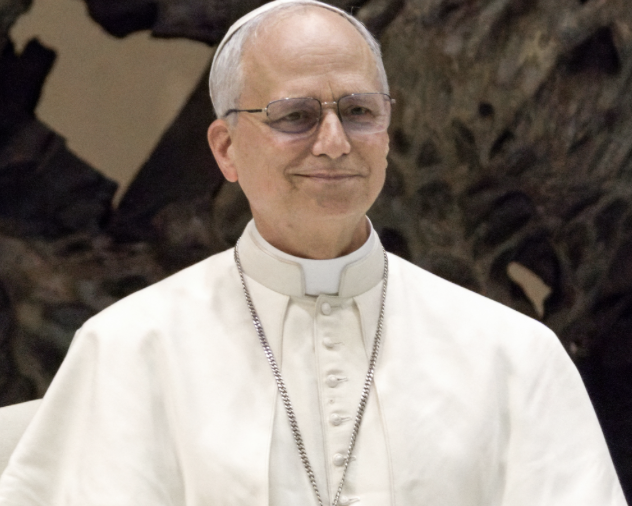
EU sanctions came under fresh Vatican scrutiny as Pope Leo XIV opened an unusual closed-door meeting of cardinals dedicated to the ethics of war and peace.
In introductory remarks, Cardinal Víctor Manuel Fernández, the Vatican’s doctrinal chief, argued that European governments too often treat international rules as flexible tools, punishing adversaries while overlooking violations by partners.
Vatican doctrine office faults uneven enforcement
Fernández, prefect of the Dicastery for the Doctrine of the Faith, said moral and legal standards are being applied in ways shaped more by alliances than by universal principles. His comments singled out what he described as a double standard in how states judge democracy, rights, and freedom of expression.
He contrasted the swift condemnation and penalties imposed on “enemy” countries with the muted response when comparable shortcomings appear among allies. The cardinal framed the issue as a credibility problem for the international order, where the same conduct can trigger starkly different consequences depending on who commits it.
The remarks were delivered at the start of a rare conference of the world’s cardinals, convened specifically to discuss war in the modern era. The meeting was held behind closed doors, underscoring the sensitivity of both the geopolitical topic and the doctrinal questions under review.
Pope Leo XIV pushes a reappraisal of “just war”
The Vatican said Leo called the gathering to assess what he has described as a worldwide “culture of power” that, in his view, drives contemporary conflict. Participants were asked to consider how the Church should respond pastorally and doctrinally as warfare, alliances, and military technologies evolve.
A core theme of the discussions was Leo’s effort to reconsider the Catholic “just war” tradition. The pope has argued that the concept has repeatedly been used to offer religious cover for armed action, rather than to constrain it.
In Catholic teaching, just-war reasoning historically sought to set limits on when force may be used and how it should be conducted. Leo’s critique, as presented in the meeting’s framing, focuses on how the doctrine can be invoked in public debate to justify escalation, especially when governments claim necessity or self-defense.
Tensions spill into politics after Iran strikes dispute
The pope’s approach has already produced political friction, most notably with U.S. Vice President JD Vance. Vance publicly challenged Leo’s interpretation of Catholic teaching after the pontiff questioned whether U.S.-Israeli strikes in Iran could satisfy just-war criteria.
That dispute highlights how Vatican moral language can intersect with allied military planning and domestic politics. When a pope signals skepticism about the moral legitimacy of specific operations, it can sharpen debates among Catholic voters and policymakers, particularly in countries where the Church remains influential.
Fernández’s critique of selective legal and moral enforcement adds another layer to that tension. By linking the legitimacy of sanctions and condemnation to consistent standards, the Vatican is implicitly pressing governments to justify not only military actions but also the broader system of punitive measures that often accompanies conflict.
The meeting’s agenda also suggests an institutional challenge for the Church: updating how it speaks about war without appearing to endorse one bloc’s narrative. If Leo’s reassessment of just-war language leads to clearer guidance, it could affect how bishops, diplomats, and Catholic humanitarian groups frame conflicts and respond to appeals for support.
Next steps will depend on whether the closed-door discussions produce a public doctrinal statement, pastoral guidance, or changes in Vatican diplomatic messaging. Observers will watch for any formal text that clarifies how the Church evaluates modern strikes, alliances, and sanctions—especially when international law is applied unevenly.