Supreme Court lets third-country deportations restart now
The Supreme Court let President Trump resume third-country deportations while it reviews whether the policy violates immigration law and due-process…
Lauren Collins ·
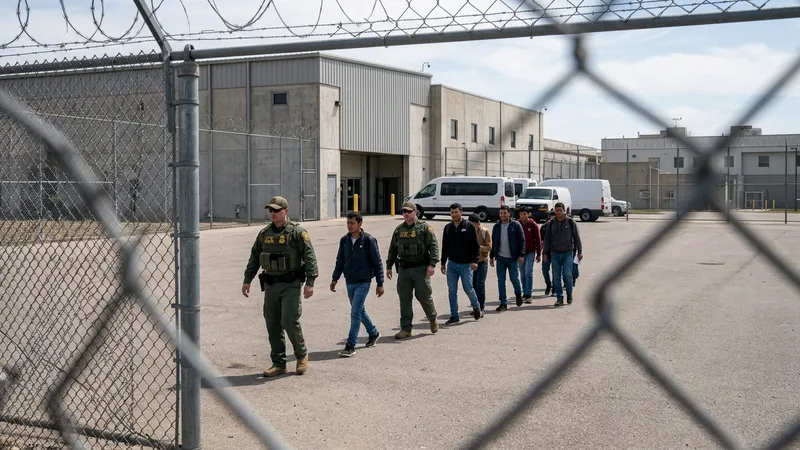
Third-country deportations can resume after the Supreme Court paused a lower-court ruling blocking President Trump’s policy.
December review follows stay
The justices granted the Justice Department’s emergency request on September 29, putting on hold a ruling by US District Judge Brian Murphy in Boston. The court also agreed to hear arguments in December, with a formal decision on the Department of Homeland Security policy to follow.
The order gives President Trump’s administration a working immigration tool while the case proceeds. The 6-3 court’s three liberal justices dissented from allowing the removals to restart before the final ruling.
Murphy had ruled that the policy was unlawful in a class-action case brought by immigrant rights groups on behalf of migrants facing removal. The plaintiffs argued that the government cannot send people to countries other than their own without notice and a chance to raise claims of persecution or torture.
Murphy ruling centered on process
In February, Murphy found that the policy violated immigration procedures and the Fifth Amendment’s due-process protections. Due process generally requires notice and an opportunity to be heard before the government takes certain adverse actions.
The Boston-based 1st US Circuit Court of Appeals upheld most of Murphy’s decision on September 18. The Supreme Court’s latest order does not settle the legal merits, but it shifts the interim balance toward DHS while the justices consider the case.
The administration says the policy applies to migrants who cannot be returned to a country listed on their deportation orders. In its emergency filing, the Justice Department called third-country removal “an essential tool to remove certain aliens, including some of the worst criminal aliens.”
Human rights groups said more than 25,000 migrants have been removed to 29 countries under the policy implemented last year, with most sent to Mexico. That tally is central to the case because the challenged procedure is no longer a pilot effort; it has become a recurring enforcement channel.
DHS gains speed, plaintiffs lose pause
Under the policy described in court filings, migrants may be removed quickly to third countries that provide credible diplomatic assurances against persecution or torture. Where those assurances are absent, deportees are told their destination and US officials assess danger only if the individual raises a fear claim.
DHS General Counsel James Percival welcomed the order in a social media post. “A bad day for criminal illegals and open-borders activists alike,” Percival wrote, using the administration’s framing of the dispute.
Trina Realmuto, a lawyer for the plaintiffs at the National Immigration Litigation Alliance, said the order permits removals before migrants can challenge the risk. The court has “allowed the administration to resume sending people to third countries where they face persecution or torture,” she said.
The record before Murphy included removals or planned removals to South Sudan, Uganda, Equatorial Guinea, Liberia and the Central African Republic. The State Department urges Americans to avoid South Sudan because of crime, kidnapping and armed conflict, an advisory the plaintiffs cited in challenging the policy.
The plaintiffs also said some deportees were later transferred by third countries back to home countries from which the US had already granted them protection. Others were beaten, sexually assaulted, detained or disappeared, the plaintiffs said in a court filing, claims that remain contested in the litigation.
Removal policy reaches December
If the Supreme Court upholds the policy, DHS gains a faster path for cases where home-country removal is blocked, and the White House strengthens a central part of President Trump’s immigration agenda. Receiving countries would face added diplomatic and administrative pressure as the US uses bilateral assurances to move people elsewhere.
If the justices narrow or reject the policy, the administration would have to restore more notice and review before removals, slowing some deportations and increasing the workload for immigration officers and courts. The main legal question is whether speed can coexist with individualized fear screening under immigration law and the Fifth Amendment.