

2026 midterms squeeze GOP margins across deep red states
The 2026 midterms narrowed Republican margins in several red states despite GOP spending advantages and past statewide strength.
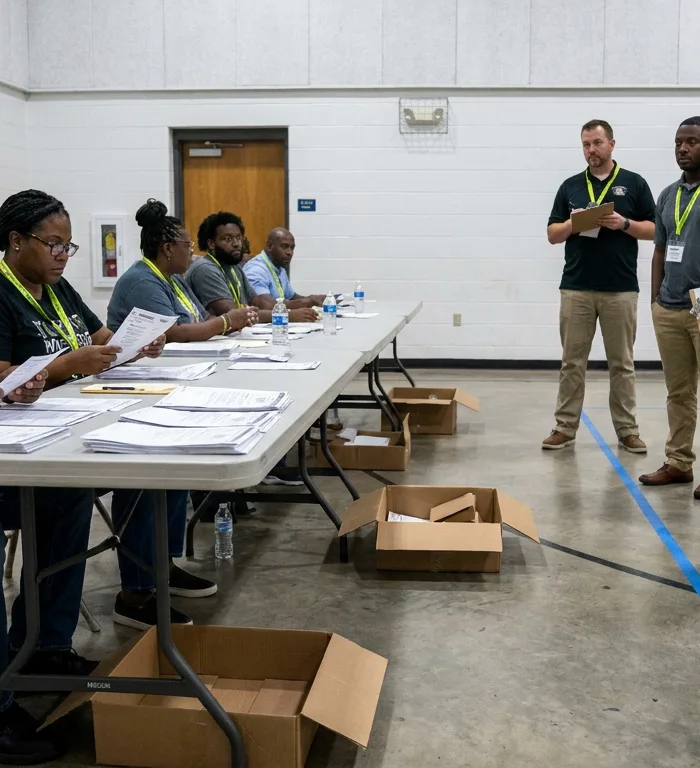
2026 midterms cut Republican margins in four red states, leaving Tennessee, Louisiana, Florida tight and Mississippi unresolved.
The results showed how several Republican candidates survived races that had looked safer under recent voting patterns. They also gave Democrats a wider map of near-misses and gains as the next class of lawmakers and governors prepares to take office early next year.
Tennessee narrows under Blackburn
In Tennessee, Democratic gubernatorial nominee Jerri Green spent just over $2 million, compared with nearly $13 million from Republican nominee Sen. Marsha Blackburn. Outside groups spent millions more supporting Blackburn, according to the supplied campaign-spending figures.
Blackburn defeated Green by less than three points in a state that favored Republicans by almost 30 points in 2024. The nearly 6-to-1 spending gap made Tennessee one of the clearest examples of Republican money failing to translate into a wide margin.
Louisiana and Florida tighten
Louisiana’s Senate race followed a similar pattern. Republican Rep. Julia Letlow and her allies spent about $9.4 million, while Democrats spent roughly $3.89 million, and Letlow won by just under two points.
The Louisiana margin contrasted with President Trump’s roughly 22-point win in the state in 2024. That gap matters because statewide races in long-held party territory often shape where national committees decide to spend in the next cycle.
Florida also stayed Republican, but by narrower margins than recent history suggested. Republicans outspent Democrats by about five-to-one in the governor’s race and won by less than two points, while Gov. Ron DeSantis had carried the state by nearly 20 points in 2022.
The Republican Senate candidate in Florida won by a similar margin after the GOP spent millions more than Democrats. The state’s result left Republicans with the offices, but not with the type of cushion that has defined Florida’s recent statewide contests.
Mississippi and Kansas shift assumptions
Mississippi remained undecided as of publication, with only dozens of votes separating Republican Sen. Cindy Hyde-Smith and Democratic challenger Scott Colom. The race had been treated by most political forecasters as one of the safer Republican Senate seats.
Kansas produced a clearer Democratic gain. Adam Hamilton defeated Republican Sen. Roger Marshall, ending a 94-year period without a Democratic Senate victory in the state.
Texas added another upset to the Democratic column, with James Talarico defeating Ken Paxton in a Senate race. The result flipped a seat in a state President Trump carried by double digits in 2024.
The pattern extended below statewide races. Multiple House and state legislative seats that Republicans won by double digits in 2024 moved to Democratic control, according to the supplied results.
Spending map faces a reset
Democratic strategists and observers cited in the material said the party may have underinvested in long-shot races that ended close or flipped. Their argument is straightforward: if underfunded candidates can move red-state margins this far, early money could change the next map.
For Republicans, the immediate risk is strategic as well as political. A blame fight inside the party has already begun and could carry into the 2028 Republican presidential primary, according to the supplied account.
If Republican committees treat the results as a durable warning, they may have to spread money into states once considered defensive afterthoughts. If they instead view the night as a cycle-specific backlash, Democrats may face a harder test proving that narrow losses can become repeatable wins.
The next indicators are Mississippi’s final count, post-election spending filings and the way Republican presidential contenders describe the losses. Each will show whether the 2026 results become a temporary warning or a broader reordering of the party’s defensive map.
More stories
- Democrats hold Michigan Senate seat with El-Sayed victory
- Democrats face limits on gains as midterm voting arrives
- Midterm elections 2026: Final hours of voting
- Stevens backs Rogers for Senate after a Democratic defeat
- Senate contests put Trump's remaining agenda on the line
- Rubio says Trump remains open to another meeting with Kim
Latest news
- Chesky's AI lab adds a new layer to Airbnb's travel plans
- China may test US resolve as Kagan flags military strains
- Newsom announces California clemency for 548 on death row
- Switch 2 price holds at $499 as Nintendo sales fall 37.4%
- Tundu Lissu faces Nov. 6 treason ruling in Tanzania
- AVPA sees Africa risk-capital gap despite $4tn in assets
- Frankfurt violence splits Merz coalition after 100 police injured
- Eisenkot wins 67 endorsements for Israel mandate