

Eisenkot wins 67 endorsements for Israel mandate
United Torah Judaism withheld support from Benjamin Netanyahu, reducing his recommendation tally to 46 seats after Israel’s Oct. 27 election.
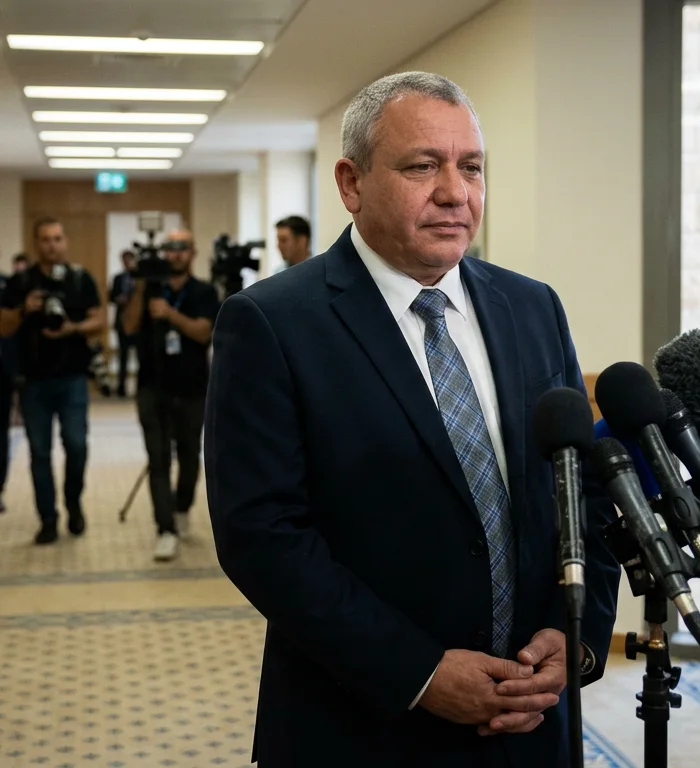
Gadi Eisenkot secured 67 Knesset endorsements on Nov. 5 to seek Israel’s next government mandate, The Economic Times reported, citing The Times of Israel.
The tally puts Eisenkot above the 61-seat majority threshold in the 120-seat Knesset, while Prime Minister Benjamin Netanyahu received 46 endorsements after United Torah Judaism’s seven lawmakers abstained.
Eisenkot’s backing came from a 48-seat Jewish-led opposition bloc made up of Yashar, Together, The Democrats and Yisrael Beiteinu, plus eight seats from Ra’am and 11 from the Arab-led Joint List, according to the account.
Netanyahu’s right-wing bloc won 53 seats in the Oct. 27 legislative election, but UTJ’s decision not to recommend him reduced his formal support during President Isaac Herzog’s consultations. Herzog is expected to give Eisenkot the first attempt to assemble a government.
The Joint List said its recommendation did not mean it would enter an Eisenkot coalition. It said its decision reflected a “public demand to prevent Netanyahu and his government from returning to power,” while also citing disagreements with parts of the Jewish opposition’s platform.
“Although Eisenkot has received more recommendations than Netanyahu, we believe it is important to widen the gap between them,” the Joint List said, according to The Times of Israel. The party argued that a wider gap could improve prospects for replacing the government and reduce the chance of a unity government that keeps Netanyahu in power.
UTJ’s abstention marks a break with its long alliance with Netanyahu. Its Degel HaTorah and Agudat Yisrael factions received spiritual directives not to endorse any candidate, reflecting frustration over Netanyahu’s failure to pass legislation protecting military-service exemptions for yeshiva students, ultra-Orthodox religious seminary students.
UTJ representatives told Herzog that any future support would depend on securing those exemptions. The issue has become central to ultra-Orthodox parties after Shas fell from 11 seats to six in the election, its weakest performance since 1992.
Rabbi Moshe Maya, a senior member of Shas’s Council of Torah Sages, urged Eisenkot to join Netanyahu in a rotation government with ultra-Orthodox parties and Religious Zionism. “The only solution is a unity government, and this is Eisenkot's real moment of truth,” Maya said in an interview cited by The Times of Israel.
A recommendation majority does not itself create a cabinet. Eisenkot would still need agreements with parties that differ sharply on policy, including Arab-led factions whose outside support may be decisive but politically contested.
Opposition parties are also seeking to replace Knesset Speaker Amir Ohana at the 26th Knesset’s opening session on Nov. 10. Ohana, a Likud lawmaker, said he would schedule an early discussion on electing a successor if at least 61 lawmakers formally requested it.
On Nov. 10, Israel’s newly elected 26th Knesset is due to convene for its inaugural session after the Oct. 27 legislative election. At that same session, the checkable step is whether opposition parties formally gather at least 61 lawmakers to request an early discussion on replacing Ohana as speaker, and whether they can agree on a successor.
Herzog’s expected decision on whom to task with forming the government will determine whether Eisenkot’s 67 recommendations become a formal coalition-building mandate before the next Knesset session.
Source: news report, The Economic Times, Nov. 5, 2026
More stories
- AVPA sees Africa risk-capital gap despite $4tn in assets
- Frankfurt violence splits Merz coalition after 100 police injured
- Guinea-Bissau halts hepatitis B trial involving 14,000 babies
- Burnham's G20 plans exclude Putin from Manchester summit
- Emirates profit falls 66% as fuel costs rise
- Repeated bomb threats disrupt flights across Europe again
- Xizang earthquake blocks highway as crews build shelters
- Typhoon Champi weakens but keeps Taiwan largely shut down