

Democrats win Congress as household costs test new power
Democrats’ reported congressional win opens a fight over household costs, with President Trump retaining leverage over taxes and trade.
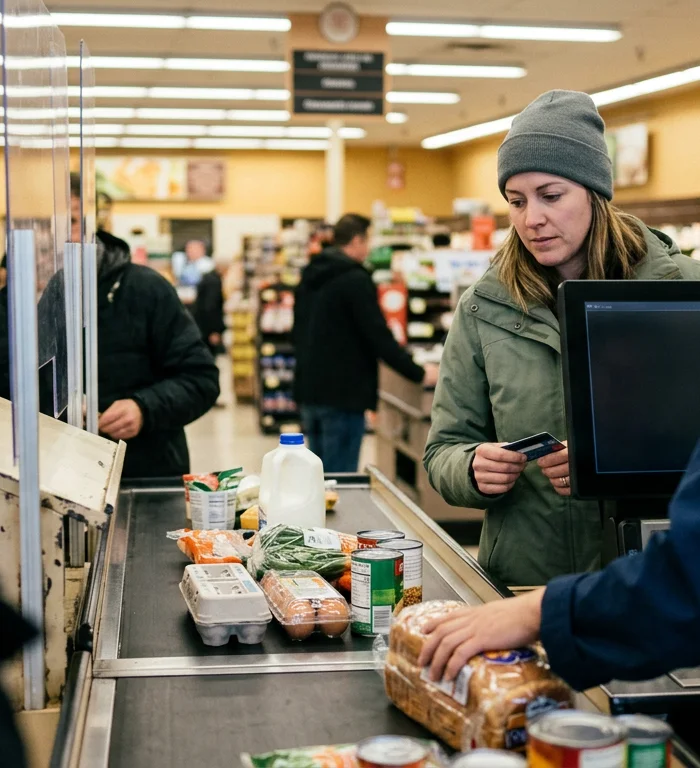
Democrats' reported congressional win opens a fight over household costs, with President Trump retaining leverage over taxes and trade.
The reported majorities would give Democrats greater influence over legislation and scrutiny of federal agencies. They would not give the party direct control over grocery bills, borrowing costs or fuel prices, and Trump's veto remains an obstacle to reversing his policies.
Tax deadlines create bargaining opportunities
Some opportunities for agreement concern temporary deductions rather than wholesale changes to the tax system. Alvina Lo, head of advice, planning and fiduciary services at BNY Wealth, identifies provisions in the One Big Beautiful Bill Act that Democrats might support extending.
These cover eligible earnings from tips and overtime, plus an extra deduction available to people 65 and older. Lo's assessment points toward negotiations over individual provisions, rather than an attempt to dismantle Trump's signature tax legislation.
The state and local tax deduction presents another negotiating point. Its ceiling is scheduled to fall to $10,000 after 2029, compared with $40,000 currently, according to the tax-policy account; Democrats representing New York and New Jersey include advocates of removing the ceiling altogether.
Retirement policy offers a separate legislative opening. Representative Richard Neal, a sponsor of the Secure 2.0 Act passed in 2022, is expected to regain leadership of the House Ways and Means Committee, positioning him to help shape proposals covering workplace savings.
Possible measures include broader automatic enrollment and access for gig workers and employees working part time. Those proposals concern who can save through retirement arrangements; they do not themselves resolve Social Security's financing problem, where Democrats have favored collecting more revenue from higher earners.
AI construction faces an oversight test
For investors, the consequences may differ across businesses even within the same industry. Omar Qureshi, managing director at Hightower Signature Wealth, identifies tighter scrutiny of data-center construction as a potential constraint on chipmakers, electrical-equipment suppliers and companies renting AI computing capacity.
If approvals become harder to secure, Qureshi's assessment suggests that operating facilities with electricity already available could gain relative value. He also sees scope for investment to favor Microsoft Corp., Alphabet Inc. and Amazon.com Inc., whose AI revenue opportunities extend beyond accelerating infrastructure construction.
Health care presents another split. Lale Akoner, global market strategist at eToro, says efforts to preserve Medicaid and reinstate Affordable Care Act subsidies could support hospitals through broader insurance coverage, while pharmaceutical companies and insurers could face pressure from drug-pricing initiatives and stricter Medicare Advantage requirements.
Cheaper fuel cannot resolve housing shortages
Households have already seen some relief at gasoline pumps. GasBuddy put the national average at $4.12 per gallon, a weekly decline of 12 cents; its head of petroleum analysis, Patrick De Haan, said prices could move below $4 within a week.
Housing has constraints that extend beyond congressional control. Mark Zandi, chief economist of Moody's Analytics, identifies ending the Iran war as the most direct route to easing affordability pressures, while Susan Wachter, a real estate professor at the University of Pennsylvania's Wharton School, emphasizes additional affordable construction.
If financing becomes cheaper without a corresponding increase in available homes, buyers could still face competition for limited supply. Wachter's assessment points to a slower adjustment: legislation intended to encourage construction takes time to produce homes, leaving affordability dependent on both borrowing conditions and building activity.
Latest news
- DoorDash curbs Instacart LinkedIn ties during $17bn review
- Emirates profit falls 66% as fuel costs rise
- Brent crude rebounds as chip shares extend their retreat
- Repeated bomb threats disrupt flights across Europe again
- NRDC accuses Trump administration of 500 cancer-protection rollbacks
- Channel 4 ends 10-year Married at First Sight UK run
- French MPs reject 2027 budget revenue plan 458-0
- Arctic route saves South Korean ships at least 10 days to Europe