

Arctic route saves South Korean ships at least 10 days to Europe
A trial voyage through waters controlled by Russia offers Seoul a faster trade link but raises diplomatic risks with Kyiv’s backers.
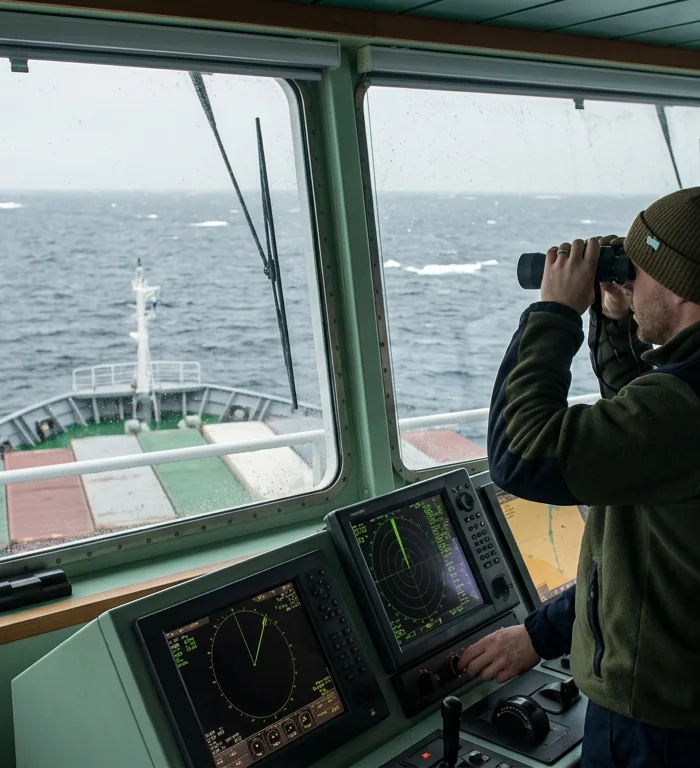
South Korea’s PanStar Acro completed a 50-day Busan-Rotterdam round trip via Russia’s Arctic coast in October, Deutsche Welle reported on Nov. 5, testing a route at least 10 days faster than Suez.
The voyage shows the commercial appeal of the Northern Sea Route, which Deutsche Welle reported is about 7,000 kilometers shorter than the Suez Canal route and bypasses Middle East shipping risks.
PanStar Acro left Busan on Aug. 22, called at Felixstowe in the U.K., Rotterdam in the Netherlands and Gdansk in Poland, then returned along the same Arctic corridor, according to the Deutsche Welle article. The vessel is not an icebreaker, but it has ice-resistant design features, the report said.
The Northern Sea Route runs along Russia’s Arctic coastline. Ice conditions long limited commercial use, but Deutsche Welle reported that retreating polar ice has made navigation more feasible, though ships may still need icebreaker support during parts of the year.
The Arctic Council, whose members include the U.S., Russia, Canada, Norway, Sweden, Finland, Denmark and Iceland, recorded 1,812 vessels operating in the Arctic last year, Deutsche Welle reported. That was 40% more than in 2013.
Joseph Kristanto, a maritime security analyst at Singapore’s S. Rajaratnam School of International Studies, told Deutsche Welle the route “presents significant economic potential” for South Korea. “In addition to potentially lowering shipping costs and transit times, the route's development could strengthen Busan's position as a regional maritime hub and create opportunities for South Korea's shipbuilding sector,” he said.
Seoul’s interest is not only commercial. Analysts cited by Deutsche Welle said South Korean President Lee Jae-myung’s government may be trying to keep channels open with Moscow to influence Russian President Vladimir Putin’s dealings with North Korea, including weapons-related support.
That creates tension with Ukraine and its Western allies, which have sought to isolate Russia since its invasion of Ukraine. Kristanto said deeper reliance on the route “could introduce a new form of strategic dependency on Russia as Moscow exercises considerable control over navigation along its Arctic coastline.”
“From the European perspective, closer economic engagement with Russia risks undermining efforts to isolate Moscow over its invasion of Ukraine,” Kristanto told Deutsche Welle. He said Moscow could exert leverage through navigation rules and “the provision of icebreaker assistance.”
Kristanto also told Deutsche Welle that European diplomatic concerns extend beyond the Arctic route and include the alleged delivery of about 165,000 tons of fuel to Russia in August aboard sanctioned Russian tankers. The report did not include a South Korean government response to that allegation.
Andrei Lankov, a professor of history and international relations at Seoul’s Kookmin University, told Deutsche Welle that the route “makes perfect economic sense” for South Korea as climate change opens a previously unusable passage. He also said Seoul is “trying to send signals to the Russian government that it is willing to manage relations.”
The Lee government has set out plans for regular commercial service on the Northern Sea Route by 2030, according to Deutsche Welle. The PanStar Acro voyage was described as a logistics test rather than the start of scheduled operations.
More stories
- Emirates profit falls 66% as fuel costs rise
- Repeated bomb threats disrupt flights across Europe again
- Tinubu seeks $7.7bn external loan for Nigeria deficit
- Oil companies face EU tax calls over Iran-linked margins
- Singapore links 4 aid groups to strengthen Gaza relief
- Israel coalition talks loom as rivals fall short of power
- Serbia, Georgia and Turkey face EU accession limits over alignment
Latest news
- Democrats win Congress as household costs test new power
- DoorDash curbs Instacart LinkedIn ties during $17bn review
- Brent crude rebounds as chip shares extend their retreat
- NRDC accuses Trump administration of 500 cancer-protection rollbacks
- Channel 4 ends 10-year Married at First Sight UK run
- French MPs reject 2027 budget revenue plan 458-0