

Repeated bomb threats disrupt flights across Europe again
European airlines faced a second wave of bomb threats this week on Thursday, prompting diversions and security precautions across several countries.
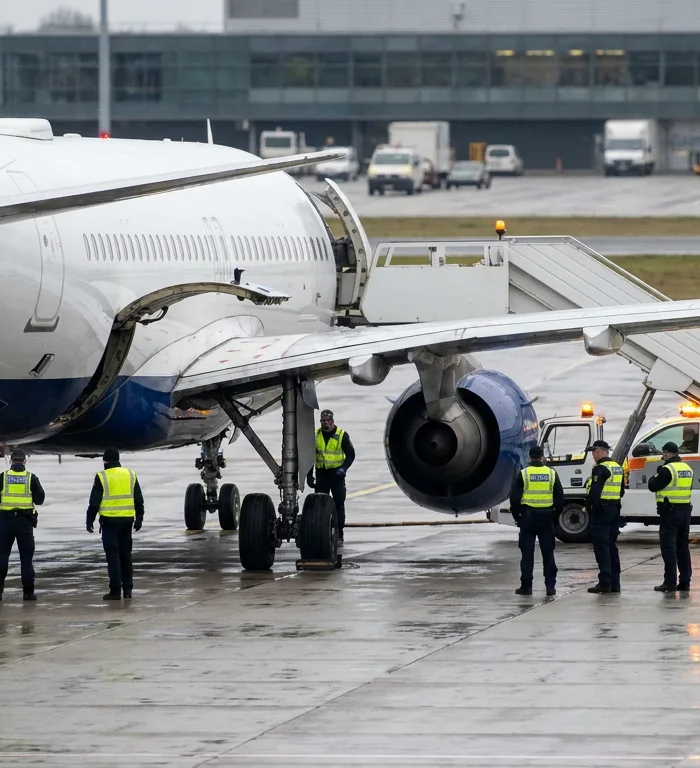
European airlines faced a second wave of bomb threats this week on Thursday, prompting diversions and security precautions across several countries.
None of the warnings had immediately been confirmed as genuine. The November 5 incidents produced different operational responses: some crews changed airports, others completed their routes, and one aircraft was stopped before departure. Safe arrivals did not, by themselves, establish whether every security check had been completed.
Airlines divert flights and replace aircraft
Aer Lingus said its EI402 service, traveling between Dublin and Rome, touched down without incident at Evreux in France after a precautionary diversion. The aircraft landed west of Paris rather than continuing to the Italian capital; the airline characterized the change as a security measure.
LOT reported that its Brussels-bound service departing Warsaw arrived safely following a warning, with subsequent checks finding nothing suspicious. A separate Paris-bound LOT aircraft was halted during taxiing, and the carrier moved its passengers onto a replacement plane. The two incidents required different precautions, one after arrival and the other before departure.
Finnair said a Vienna-bound service originating in Helsinki received a threat but completed its journey without changing its destination. Jettime operated that flight. Its arrival contrasted with the Aer Lingus diversion, illustrating that the warnings did not produce a uniform response across the affected routes.
Prague prepares as Bulgaria receives aircraft
Czech police reported threats involving four Prague-bound aircraft and said preparations were underway to receive them. Police considered the warnings to have low credibility, an assessment that accompanied, rather than replaced, the landing preparations. Their statement did not establish the outcome of checks on those aircraft.
Bulgarian officials reported three emergency landings linked to threats. The interior minister said services arriving from Copenhagen and Madrid reached Sofia without incident. Those arrivals added Bulgaria to the countries handling aircraft affected by the morning's warnings.
The earlier disruption, on Tuesday, involved threats against at least seven flights as well as a cruise ship. No explosive devices were found in those incidents. Thursday's recurrence extended the disruption within the same week, although the supplied account did not establish a common origin for the two episodes.
Responsibility for threats remains unassigned
No country had assigned responsibility for Thursday's warnings. European officials have separately accused Russia and Iran of sabotage and activities they describe as "hybrid attacks"; both governments deny conducting such campaigns. Those broader accusations do not establish a connection between either country and these aviation threats.
If further warnings require diversions or aircraft substitutions, affected carriers could face additional interruptions even when searches find no device. If services instead continue to their scheduled destinations, the operational consequences could be more limited. The unresolved issues are who issued the threats, whether the incidents were connected, and what the remaining security checks establish.
More stories
- Emirates profit falls 66% as fuel costs rise
- Arctic route saves South Korean ships at least 10 days to Europe
- Tinubu seeks $7.7bn external loan for Nigeria deficit
- Oil companies face EU tax calls over Iran-linked margins
- Singapore links 4 aid groups to strengthen Gaza relief
- Israel coalition talks loom as rivals fall short of power
- Thailand cuts biofuel taxes for three months
- Deadlock hits Israel election as coalition math tightens
Latest news
- Democrats win Congress as household costs test new power
- DoorDash curbs Instacart LinkedIn ties during $17bn review
- Brent crude rebounds as chip shares extend their retreat
- NRDC accuses Trump administration of 500 cancer-protection rollbacks
- Channel 4 ends 10-year Married at First Sight UK run
- French MPs reject 2027 budget revenue plan 458-0