

China may test US resolve as Kagan flags military strains
Robert Kagan warns that US military commitments against Iran could give China room to act as Washington weighs diplomacy and support for Taiwan.
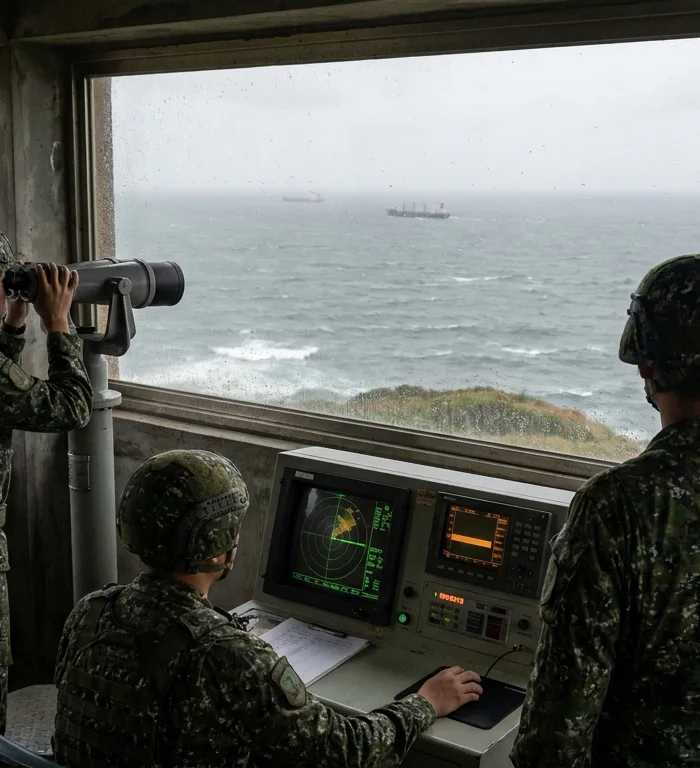
Robert Kagan warns that US military commitments against Iran could give China room to act as Washington weighs diplomacy and support for Taiwan.
The Brookings Institution senior fellow argues that weapons availability and naval deployments matter alongside presidential authority. His assessment links the demands of defending against Iran to Washington’s ability to discourage military action elsewhere, particularly around Taiwan.
Kagan also suggested that Russia and China might take greater risks if their leaders judge President Donald Trump’s political influence to be declining. He framed the coming two years as a possible opening for action, not an established timetable or evidence that either government had decided to act.
Iran commitments test Asian deterrence
Kagan pointed to American missile and interceptor inventories as a constraint on operations in Asia. He also said sending three American aircraft carriers to the Middle East had left fewer naval resources available for the Asian region.
Those observations underpin his warning about China, but they do not establish Beijing’s intentions. His argument is conditional: if Chinese leaders interpret American deployments as limiting Washington’s options, they may become more willing to press their interests.
Kagan, a senior fellow at the Brookings Institution, described the inventory issue directly: “Everybody can see how much our stocks are depleted in terms of interceptors and missiles, which are of vital interest in the Asian theater.” That assessment does not specify how many weapons remain available for a separate contingency.
Taiwan weapons enter China bargaining
Taiwan sits at the intersection of the military and diplomatic issues Kagan identified. Trump approved a Taiwan weapons sale valued at $11 billion in December, then withheld another proposed package of approximately $14 billion, which he described as a “bargaining chip” for negotiations with China.
Beijing asserts sovereignty over Taiwan, which governs itself. Washington has no reciprocal defense treaty with Taiwan, although American law obliges it to furnish defensive capabilities to the island.
Kagan characterized Trump as prioritizing commercial agreements with Beijing over confrontation, an assessment of presidential motives rather than an announced policy. If weapons transfers remain part of that bargaining, the immediate uncertainty is whether negotiations change the timing or availability of Taiwan’s military support.
Military readiness also requires a distinction from political intent. William Burns, then CIA director, said in 2023 that Xi Jinping had ordered invasion readiness for 2027; Burns cautioned that the instruction did not establish a decision to attack Taiwan.
Proposed summit leaves participation unresolved
Diplomatic discussions offer a separate route for managing these tensions. Chinese Foreign Ministry spokesperson Mao Ning said Beijing was communicating with other parties about a possible meeting involving Trump, Xi and Vladimir Putin at the Asia-Pacific Economic Cooperation leaders’ gathering in Shenzhen.
No agenda has been announced for the proposed encounter. Whether a meeting occurs, which disputes it addresses and whether Taiwan’s pending weapons package advances would help distinguish diplomatic bargaining from a lasting change in American commitments.
More stories
- Newsom announces California clemency for 548 on death row
- Store closes after Fairfield shooting; six people wounded
- Store closes after Fairfield shooting; six people wounded
- Judge dismisses Trump’s $10 billion Epstein letter lawsuit
- Cyclone Arnab kills at least three on India's east coast
- Trump midterm convention draws candidates to GOP push
Latest news
- Chesky's AI lab adds a new layer to Airbnb's travel plans
- 2026 midterms squeeze GOP margins across deep red states
- Switch 2 price holds at $499 as Nintendo sales fall 37.4%
- Tundu Lissu faces Nov. 6 treason ruling in Tanzania
- AVPA sees Africa risk-capital gap despite $4tn in assets
- Frankfurt violence splits Merz coalition after 100 police injured
- Eisenkot wins 67 endorsements for Israel mandate
- Guinea-Bissau halts hepatitis B trial involving 14,000 babies