

Stephen Miller succeeds Wiles as White House chief of staff
President Donald Trump names Stephen Miller to replace Susie Wiles as chief of staff following Republican losses in both chambers of Congress.
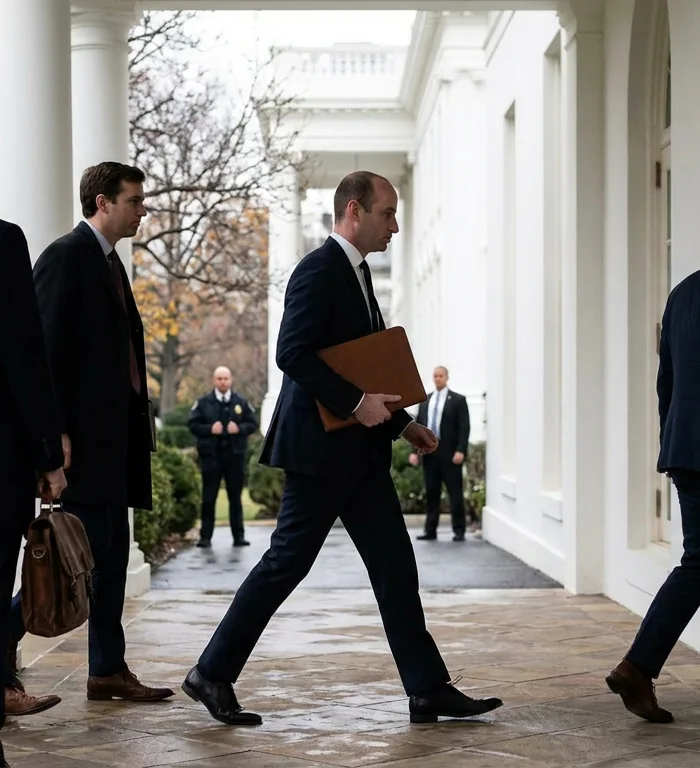
President Donald Trump named Stephen Miller to replace Susie Wiles as chief of staff following Republican losses in both chambers of Congress.
Trump announced the appointment Friday through social media and said Miller would start Monday. The personnel change comes as Democrats prepare to control the House and Senate, putting the administration’s legislative plans and conduct under opposition scrutiny.
Miller moves from policy to management
Miller takes over the staff leadership role after serving as Wiles’ deputy since Trump returned to office in 2025. He also worked in the administration during Trump’s first term, from 2017 to 2021.
His influence under Wiles extended across domestic policy, with immigration enforcement among his principal responsibilities. The promotion places an adviser already closely associated with the president’s agenda in charge of coordinating the White House as its relationship with Congress changes.
In announcing his choice, Trump described Miller as “one of my most trusted advisors,” while crediting Wiles with doing “an outstanding job.” Those public comments emphasized confidence in the incoming chief without criticizing his predecessor.
Wiles resigned Thursday evening and is set to join the president’s political organization, an unnamed White House official said. That account describes a transfer to another part of Trump’s operation rather than a complete departure from his team.
Democratic control changes congressional stakes
The appointment follows an election setback that leaves Trump facing opposition leadership in both congressional chambers. Congressional investigations are also expected, although the supplied account identifies no announced inquiry, investigative timetable or specific subject.
White House officials characterized Miller’s selection as an indication that the administration would pursue a more confrontational political and domestic-policy approach. That interpretation is the officials’ assessment, not a policy commitment contained in Trump’s announcement.
Trump had expressed dissatisfaction with political strategy and communications before Tuesday’s vote, according to a person briefed on the discussions. The same person said Wiles’ supporters inside the administration began voicing concern Wednesday that she might be replaced.
An unnamed White House official presented the decision as continuity rather than a reconsideration of the president’s agenda. The official said: “He’s rewarding those most loyal to him. He’s not changing course.”
Immigration record shapes Miller’s promotion
Miller’s policy record includes setting a daily immigration-arrest goal of 3,000. That figure is a target, not a reported enforcement result; no comparable arrest total or measure of progress toward it was provided.
The distinction matters when assessing what his promotion changes: a staffing decision does not establish that enforcement activity has increased. Trump’s announcement also supplied no replacement immigration target or new legislative proposal.
If the administration seeks legislation, Democratic control would make congressional agreement central to its prospects. If lawmakers instead prioritize investigations, Miller’s responsibilities would include coordinating a White House facing demands for information alongside its policy work.
Monday’s handover is the next stated step. The announcement leaves unresolved how Miller will organize the staff, who will take over his deputy responsibilities and whether Wiles will receive a defined role in Trump’s political operation.
More stories
- Raman wins Los Angeles mayor race as Bass concedes defeat
- 2026 midterms squeeze GOP margins across deep red states
- Democrats hold Michigan Senate seat with El-Sayed victory
- Democrats face limits on gains as midterm voting arrives
- Midterm elections 2026: Final hours of voting
- Stevens backs Rogers for Senate after a Democratic defeat
- SNAP losses hit 3.5 million as Trump law takes effect widely
- Trump Administration Moves to Force Most Green-Card Applicants Overseas
Latest news
- Thomas Markle faces child abuse material charge in US case
- AfCRA faces investor trust test with Africa debt service at $163bn
- Qatar-led mediators press 7-day plan for Iran-US deal
- Wheaton revenue rises 62% on higher precious-metals prices
- The Week in Games: Hardware math gets harsher
- Trump Media investors face losses as shares hit new lows
- AI trade steadies as Nasdaq futures climb after tech rout
- Gold prices retreat as markets await key US labor statistics