

Iran crisis prompts UAE call for a diplomatic resolution
UAE adviser Anwar Gargash called for a diplomatic exit from the Iran crisis as Gulf states weighed the risks of renewed regional fighting.
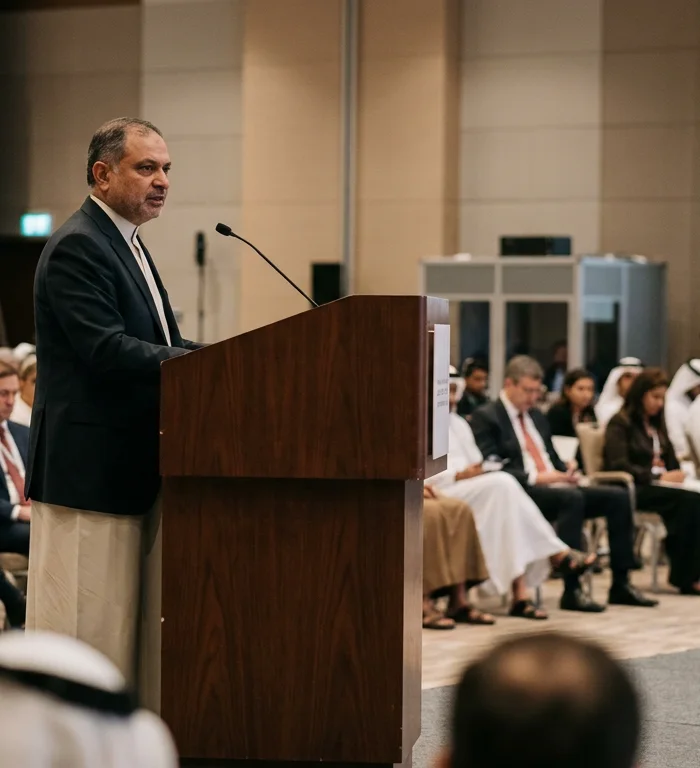
UAE adviser Anwar Gargash called for a diplomatic exit from the Iran crisis as Gulf states weighed the risks of renewed regional fighting.
Speaking Sunday at the IISS Manama Dialogue in Bahrain, Gargash, diplomatic adviser to the UAE’s president, described a crisis his government had sought to prevent. His appeal puts the Gulf’s preference for negotiations alongside President Donald Trump’s warnings that further military action remains possible.
UAE presses for a negotiated exit
Gargash said diplomatic efforts had failed to keep the UAE outside the crisis. He described the government’s objective directly: “We are clearly seeking a political off-ramp.”
Gulf states fear a further US-Israeli assault against Iran would encounter a country better prepared for another confrontation. Their concern is that renewed fighting would spread damage across the region, leaving neighboring governments with the economic consequences and the task of reconstruction.
That concern is a regional assessment, not an established outcome. Whether Iran is better prepared, how it would respond to another attack and which countries would face retaliation remain uncertainties rather than a settled sequence of events.
Trump leaves further strikes open
Trump has repeatedly said Washington and Israel would “finish the job” against Iran. Although he has ruled out additional strikes before Tuesday’s US midterm elections, he has not excluded military action afterward, while peace negotiations remain stalled.
The distinction matters for Gulf governments seeking a negotiated settlement: a temporary exclusion of strikes is not a commitment to end the confrontation. Trump’s stated position leaves diplomacy and renewed military action as separate possible paths, without establishing which will follow the election.
Gargash’s comments identify the UAE’s preferred course but do not establish that Washington, Israel or Iran has accepted it. A political exit would require movement beyond the current negotiating impasse; his appeal alone does not demonstrate that such movement is underway.
Gulf economies face further exposure
The International Monetary Fund forecasts a 3.3% contraction in Saudi Arabia’s economy this year, with deeper declines projected for Kuwait and Qatar. Those forecasts describe an already difficult regional economic position, rather than measuring the additional cost of a new round of attacks.
If negotiations produce an agreement that prevents further strikes, Gulf governments would avoid another round of war-related disruption, though existing damage would still require attention. For regional businesses and the wider economy, that scenario would remove one source of additional uncertainty without establishing how quickly activity would recover.
If attacks resume and damage energy or transport infrastructure, the consequences could extend through interrupted operations, repair spending and disrupted trade. Gulf governments and businesses would face direct costs, while any wider global effect would depend on the facilities affected and the duration of interruptions.
The immediate diplomatic test is whether the stalled talks yield an agreement that changes the parties’ stated positions. Trump’s position after the election and any response to the UAE’s appeal would help distinguish a temporary pause from a negotiated end to the confrontation.
More stories
- Bulgaria vote gives Yotova victory in preliminary count
- Bulgaria vote gives Yotova victory in preliminary count
- Russian state-affiliated media raise UK posts 15% in September
- Delhi protests demand election chief quit over voter rolls
- US tip-off in Moscow case points to security cooperation
- US tip-off in Moscow case points to security cooperation
- France school protests spur crisis meeting after two fires
- Turkey hosts Syria-Hezbollah talks to cool border tensions
Latest news
- U.S. economy grows 3.4% as household finances lag behind
- Stevens backs Rogers for Senate after a Democratic defeat
- Julius Baer CEO warns AI bubble tops market risks
- Indian banks cite up to 50% gains from AI systems
- Acemoglu urges Democrats to rebuild working-class appeal
- Senate contests put Trump's remaining agenda on the line
- Rubio says Trump remains open to another meeting with Kim