France school protests spur crisis meeting after two fires
France school protests escalated with fires at two schools and an injured headteacher, drawing a crisis meeting as officials weighed remote classes.
Lauren Collins ·
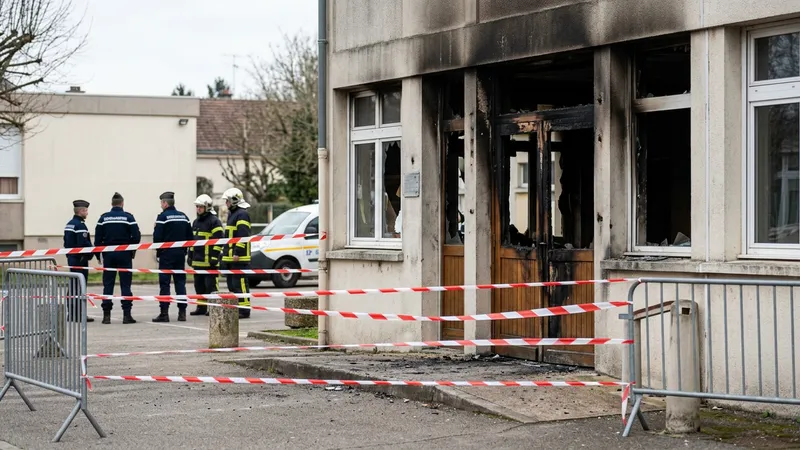
France school protests turned violent Thursday as attackers set at least two schools ablaze and injured a headteacher, prompting a crisis meeting.
The incidents centered on Marseille, where police said a fire truck was burned at Saint-Exupery high school and prosecutors reported an attack at Victor Hugo high school. Fire crews also responded to a blaze at Nelson Mandela high school in Nantes.
Marseille fires harden response
Police said hundreds of young people gathered around a fire truck that had arrived at Saint-Exupery high school to tackle a morning blaze. The group forced firefighters away from the vehicle before it was set on fire, according to police.
Officials said a headteacher was doused in petrol during the unrest. The Marseille prosecutor's office said the Victor Hugo headteacher was injured, but did not give further details on the condition of the victim or any arrests tied to that attack.
Budget week meets classroom anger
The demonstrations and blockades began last week, with students protesting staff shortages and deteriorating school buildings. The unrest widened on the same day the government announced spending cuts in its 2027 budget, putting education conditions into a broader fight over public spending.
Prime Minister Sebastien Lecornu's office held a crisis meeting Thursday afternoon after officials said dozens of people had been injured since the protests began. Hundreds of people have been arrested, most of them teenagers, officials have said.
In Saint-Denis, a Paris suburb, young people faced a line of police while one student held a sign reading, "Can we explain ourselves without being teargassed?" Students have accused police of using heavy-handed tactics, including teargas; the government has condemned violence at some protests while saying problems in high schools should be recognized and addressed.
Remote classes enter the plan
Interior Minister Laurent Nunez said some violence was being driven by troublemakers moving from one school to another. Education Minister Edouard Geffray told schools to switch to remote classes where protesters were blocking access.
"Violence will not keep our students from their fundamental right to an education," Geffray said in a post on X. The instruction gives school leaders a way to keep lessons going, but it also acknowledges that physical access to some campuses is no longer assured.
In Nantes, Olivier Chateau, a deputy to the mayor, said the fire at Nelson Mandela high school was under control and that no injuries had been reported. People inside the building were evacuated, and students arriving for classes were turned away, he said.
Three paths for schools and state
If blockades ease and classes resume, the immediate effect would be concentrated in France's education system, with Lecornu's government still facing pressure to show how it will address staffing and buildings. In that path, the macro effect would remain mainly domestic: budget politics, not a disruption to wider European activity.
If violence spreads, the government would face a harder balance between public order and keeping schools open. Remote teaching would protect some instruction, but repeated closures would weigh on families, local services and the broader education sector through missed classes, security costs and pressure on teachers.
If budget anger and school grievances merge, the protests could become a larger test of Lecornu's spending plan. The main open questions are whether arrests reduce the blockades, whether student groups keep control of demonstrations, and how quickly the Education Ministry can offer practical repairs or staffing relief.