Russia drone attack kills Uzbek citizens in Tatarstan city
A drone attack in Tatarstan killed seven Uzbek citizens, according to the Uzbek consulate, as local authorities reported at least 13 total deaths.
Amira Hassan ·
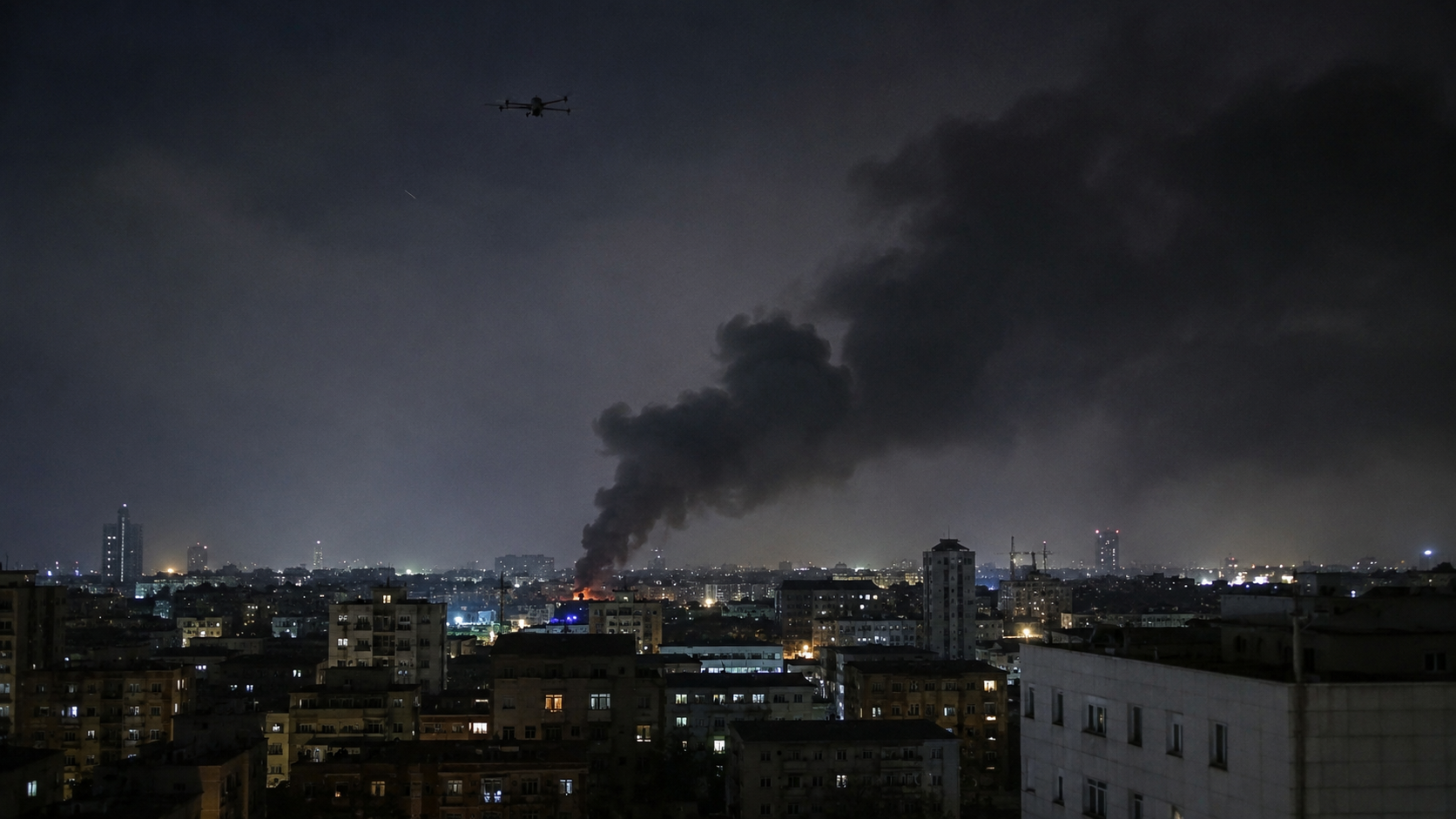
A drone attack in Tatarstan killed seven Uzbek citizens and at least 13 people overall, exposing migrant workers’ risks inside Russia.
The Uzbek consulate in Kazan said on Monday that seven nationals had died in the attack, but it did not identify the victims or describe their work, age or location at the time of impact. Local authorities in Tatarstan separately said at least 13 people, including a child, were killed and 39 were injured.
Officials in the region attributed the strike to Ukraine and said industrial and civilian sites in Nizhnekamsk were hit. That attribution was made by local authorities; no independent account of responsibility was provided in the source material.
Seven Uzbek deaths confirmed
The consulate’s statement turns a regional security incident inside Russia into a consular matter for Uzbekistan, whose citizens form a large part of Russia’s migrant labor force. The absence of victim details leaves open whether those killed were employed at affected facilities, living nearby or passing through the city.
Nizhnekamsk is in Tatarstan, a Russian region far from the front line in Ukraine but within the range of drone attacks that have increasingly reached infrastructure and industrial areas. The local account described both industrial and civilian targets, a distinction that matters for insurance, labor safety and diplomatic follow-up.
For Uzbek authorities, the immediate task is identification, notification of families and coordination with Russian officials on the return of remains. Those steps can take longer when victims are migrant workers, especially if employment status, residence registration or next-of-kin records are incomplete.
Migrant labor under strain
Between 2 million and 3 million Uzbek citizens work in Russia, according to the source account, a scale that makes Russia one of the central labor markets for Central Asia’s most populous country. Remittances from those workers are described as a partial foundation of Uzbekistan’s economy, tying household incomes to Russian labor demand and security conditions.
That exposure is not only economic. Migrant workers can be concentrated in construction, services, logistics and industrial roles, placing them near transport hubs and production sites that may face operational disruption after attacks.
If the casualties are confirmed as workers at or near targeted sites, Uzbek officials may face pressure to seek stronger workplace safety assurances from Russian employers and regional authorities. If the victims were outside those locations, the case would point to a broader civilian risk for migrants living in Russian cities affected by the war.
Tashkent’s diplomatic balance
Uzbekistan has kept close ties with Russia while also stating support for Ukraine’s territorial integrity. The deaths complicate that balance by placing Uzbek citizens among the casualties of an attack that Russian regional officials have blamed on Ukraine.
Tashkent’s room for maneuver is shaped by two linked interests: protecting citizens abroad and preserving access to Russia’s labor market. A public confrontation with Moscow could threaten the second interest, while a muted response could draw domestic criticism if families seek accountability.
The wider industry effect is likely to fall first on employers that rely on foreign labor in exposed Russian regions. If workers perceive greater risk in industrial cities, recruiters may need to offer higher pay, safer housing or clearer evacuation procedures to maintain staffing.
At the macro level, the main channel is remittances rather than trade in goods. If security fears discourage Uzbek workers from taking Russian jobs, household income flows into Uzbekistan could weaken; if migration continues at current levels, the economic effect may remain localized to affected families and firms.
Consular checks shape next steps
If the official death toll holds and the Uzbek victims are identified quickly, the issue may remain a consular case centered on repatriation, compensation and family support. In that scenario, the global macro effect would be limited, the Uzbek government would manage a narrow diplomatic file, and Russian employers would face scrutiny over worker safety at exposed sites.
If more Uzbek victims are found or attacks continue near industrial centers, the mechanism changes. Repeated incidents could alter migrant risk calculations, pressuring labor supply in parts of Russia while forcing Uzbekistan to balance remittance dependence against public demands for stronger protection abroad.
If responsibility for the strike remains contested, the diplomatic impact is likely to depend on how Tashkent frames its response. The main open questions are who the victims were, whether they were connected to the targeted sites, and whether Russian investigators release evidence supporting the regional attribution to Ukraine.