Turkey hosts Syria-Hezbollah talks to cool border tensions
Syrian officials and Hezbollah representatives held at least one secret meeting in Turkey as both sides sought to reduce tensions.
Omar Farouk ·
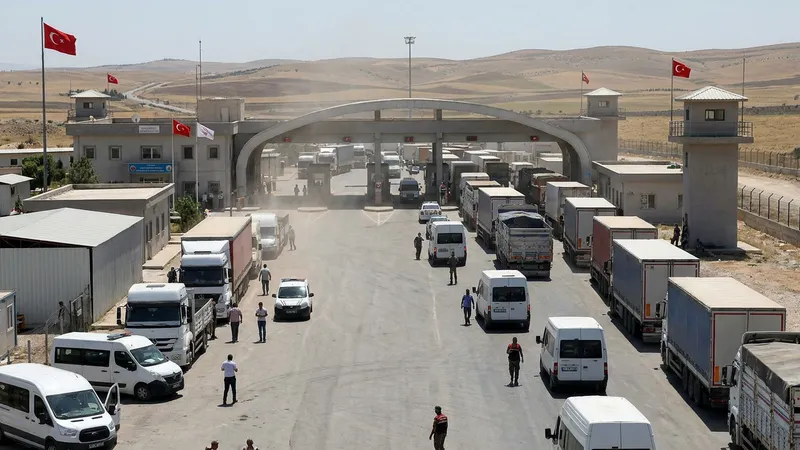
Syria-Hezbollah talks in Turkey included at least one secret meeting last month, as both sides sought to contain rising tensions. The effort drew Turkish mediation.
The contact brought together Syrian intelligence and foreign ministry officials with representatives of the Iran-aligned Lebanese group, according to six people briefed on the discussions. The people included two Syrian officials, a US official and a senior Lebanese security source close to Hezbollah.
Turkey convenes discreet contact
The meeting took place at the invitation of Turkish security and intelligence agencies, the people said. Its stated purpose was de-escalation between a new Syrian government and a group that had been one of Damascus's key opponents since Bashar al-Assad was removed from power.
No public agreement was described by the people briefed on the talks. The significance lies in the format: direct, face-to-face contact between sides that had been moving toward deeper confrontation after years of Hezbollah military involvement inside Syria.
The talks followed a change in Syria's political order after a rapid rebel offensive ousted Assad in late 2024. Hezbollah had sent fighters into Syria for years to support Assad's forces during the civil war, placing the group on the opposite side of many of the forces now tied to Damascus.
Assad's fall reshapes border risks
The new Syrian authorities have accused Hezbollah of moving weapons through Syrian territory, according to the people briefed on the matter. Hezbollah's position was not described in the accounts provided, leaving one side of the allegation publicly untested.
The same people said the United States had encouraged Syrian military action against Hezbollah inside Lebanon. That claim is consequential and remains attributed to the people briefed on the discussions; no public US confirmation was described in the material provided.
The border issue is sensitive because Syria and Lebanon share security, trade and militia networks that predate Assad's fall. Any confrontation across that frontier would risk pulling in Lebanese institutions, Syrian forces and Iran-aligned groups at a time when regional security calculations remain unsettled.
Turkey's role also matters. Ankara has emerged as a central external actor in post-Assad Syria, with security interests tied to border control, refugee flows and the shape of the new Syrian state.
Scenarios hinge on armed routes
If the Turkey-backed channel holds, the immediate macro effect would be a reduction in one regional risk premium tied to the Levant, especially for governments and investors watching energy routes, aid flows and Iran-linked networks. For Damascus, it would buy time to build state control without opening a Lebanese front; for Hezbollah, it could preserve room to negotiate over movement and logistics.
If the weapons-transfer allegations intensify instead, the mechanism would be different: Syria could increase deployments near cross-border routes, Hezbollah could harden its positions, and Lebanon's security sector could face pressure from both sides. That path would raise regional risk, complicate reconstruction planning in Syria and test groups operating in border trade, transport and humanitarian delivery.
A third path depends on external pressure. If Washington and Ankara press Damascus toward a firmer stance, Syria's new government may calculate that confronting Hezbollah strengthens its international standing; if that pressure eases, Turkey's mediation could become a channel for limiting incidents rather than settling the dispute.
The main open question is whether the September contact becomes a continuing channel or remains a one-off effort to prevent a near-term clash. The answer will shape not only relations between Damascus and Hezbollah, but also how regional powers manage the armed networks left behind by Syria's civil war.