Denmark puts Danish conscripts into Greenland's cold test
Danish conscripts arrived in Greenland under a new Arctic program as Copenhagen strengthens defense posture after President Trump's acquisition demands.
Claire Dubois ·
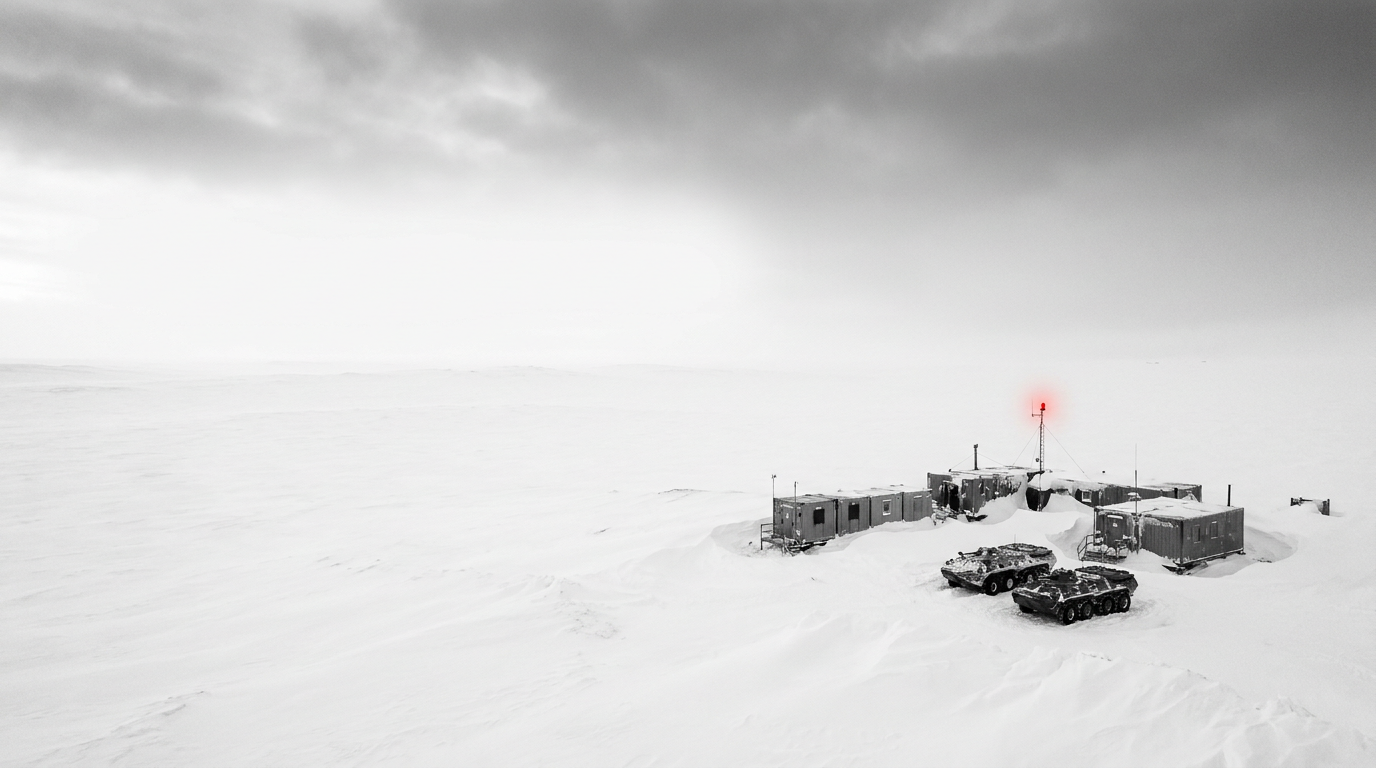
Denmark deployed Danish conscripts to Greenland for the first time in recent history, testing Arctic readiness after President Trump sought the island.
Greenland drill tests recruits
The soldiers are part of the first cohort under Denmark's extended conscription program, introduced in February 2026 to prepare recruits for service in harder operating environments. Their deployment places young troops near Kangerlussuaq, where training took place on August 28, 2026, north of the Arctic Circle.
The exercise, called Arctic Endurance, trains soldiers for combat and survival in extreme cold-weather conditions. It sits inside Arctic Sentry, a NATO mission launched in 2026 to strengthen the alliance's Arctic presence following Trump's public remarks about Greenland.
Trump demand alters Danish posture
President Trump has repeatedly sought to acquire Greenland, citing US national security and accusing Copenhagen of neglecting Arctic defense. Denmark and Greenland have rejected the proposal, leaving Copenhagen to show control of a territory central to the kingdom's northern defense policy.
Denmark has pledged billions of dollars for Arctic defense after its defense minister acknowledged years of underinvestment in the region. The deployment adds personnel to that spending effort and gives Copenhagen a more visible military presence on the semi-autonomous Danish island.
Captain Laura Jepsen, a company commander, said the mission was still centered on training soldiers and gaining experience in Arctic terrain and climate. The framing keeps the deployment tied to readiness even as Greenland's political value has grown inside NATO debates.
Conscripts carry a visible signal
The presence of conscripts changes the message from distant planning to soldiers operating on Greenlandic ground. David, a 19-year-old conscript, said: "It shows presence that we're here and not just thinking of our own skin. And also thinking of the people in Greenland."
The terrain gives the exercise much of its practical value. Soldiers moved through bare rock and open stretches with no trees, conditions that test navigation, endurance and logistics rather than only weapons handling.
Another conscript, 22-year-old Anton, described the deployment as a sign of longer-term preparation. "I think it sends a message that Denmark is reinforcing itself for the future," he said.
Arctic rivals shape the stakes
Russia has criticized NATO's growing Arctic activity, describing it as a direct security threat that increases confrontation risk. China has also increased activity in the mineral-rich region, mostly in partnership with Moscow.
Those pressures make Greenland more than a domestic Danish defense issue. If NATO activity expands, the macro channel would run through higher defense budgets, greater attention to Arctic routes and stronger demand for surveillance, communications and cold-weather logistics.
If Denmark keeps the rotations regular, its armed forces would gain repeat experience in terrain where failure is often logistical before it is tactical. The wider defense sector would see more emphasis on maritime patrol, resilient communications, winterized equipment and infrastructure that can operate across long distances.
If diplomatic friction over Greenland eases, Copenhagen can frame conscript training as routine readiness and lower the political cost for Denmark and Greenland. If Trump's demands remain active, the same exercises may carry more signaling value for Denmark, NATO and rivals watching the Arctic military balance.