

Delhi protests demand election chief quit over voter rolls
Delhi protests drew thousands on November 1 as Rahul Gandhi demanded election chief Gyanesh Kumar resign over disputed voter revisions.
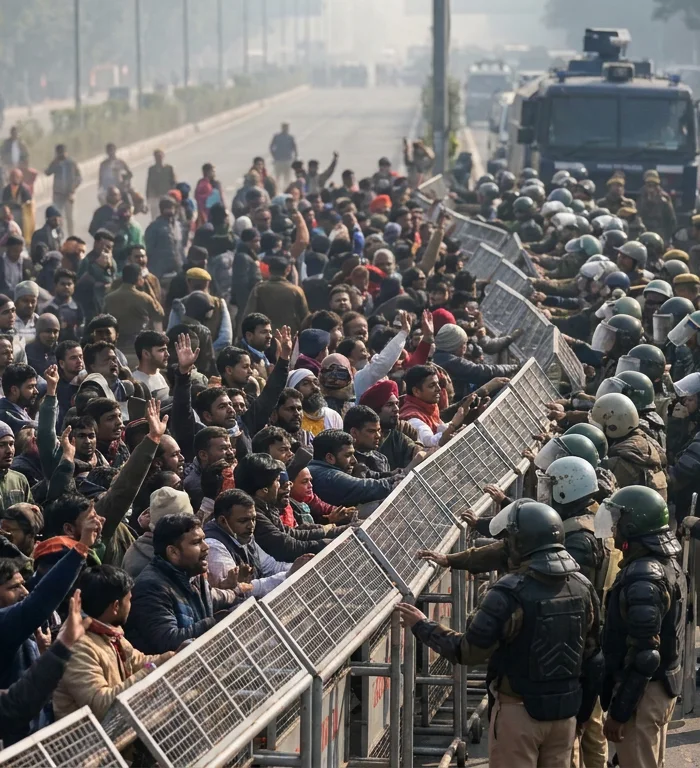
Delhi protests drew thousands on November 1 as Rahul Gandhi demanded election chief Gyanesh Kumar resign over disputed voter revisions.
The Congress Party leader accused election authorities of stripping citizens of their political voice. Demonstrators alleged that changes to registration lists favored Prime Minister Narendra Modi's Bharatiya Janata Party (BJP), an accusation the Election Commission rejects.
The confrontation centers on whether an exercise presented by election officials as routine list maintenance has excluded eligible voters. It has brought opposition parties and student groups into repeated street demonstrations, although Modi's administration remains stable and the next nationwide election is scheduled for 2029.
Voter eligibility divides opposing sides
The Election Commission says its revision is intended to eliminate duplicate registrations and entries belonging to people who are ineligible to vote. It denies partisan favoritism and says eligible citizens removed in error can register again.
Opposition parties allege that Muslims and other minority communities have borne a disproportionate share of the deletions. They contend that these groups are less likely to vote for the BJP; the allegation of unequal treatment remains contested.
For Congress student-wing member Reena Mahto, the dispute concerned her household's registration. She said four relatives had lost their entries after records incorrectly classified them as having relocated, despite the family continuing to live in Jagdalpur, Chhattisgarh.
Mahto called for officials to answer for those changes. Her account illustrates the complaint protesters are advancing, but does not by itself establish how frequently eligible voters were removed or whether particular communities were targeted.
Ramlila Maidan becomes protest focus
Security forces deployed around Ramlila Maidan as marchers traveled from central Delhi toward the gathering. Authorities had announced possible traffic rerouting, while officers equipped with shields and batons stood near vehicles intended for crowd control.
Opposition leaders rode in an uncovered jeep, and participants carried Indian flags alongside party banners. Addressing the crowd, Gandhi made Kumar's departure a central demand and characterized the registration changes as an attack on citizens' rights.
The demonstration extended a campaign that has involved almost daily gatherings since late September. Participants have included opposition organizations, student associations and the youth-led Cockroach Janta Party, with demands focused on replacing the election chief.
Election Commission faces accountability demands
The BJP accuses its opponents of weakening democracy by challenging electoral procedures it considers legitimate. Health Minister Jagat Prakash Nadda described the rally as a “carefully orchestrated drama” and alleged that its organizers sought disorder rather than democratic accountability.
The parties' competing positions leave the treatment of disputed registrations at the center of the institutional argument. The commission points to re-registration as a remedy; protesters are demanding accountability for deletions they say should never have occurred.
If eligible voters regain their registrations, that would address the immediate exclusion alleged by affected households without necessarily settling accusations of partisan treatment. If those complaints persist, the opposition's demand for Kumar's departure would remain distinct from the commission's stated objective of correcting registration records.
More stories
- Russian state-affiliated media raise UK posts 15% in September
- US tip-off in Moscow case points to security cooperation
- US tip-off in Moscow case points to security cooperation
- Türkiye seeks 30% OIC trade share after $108bn nine-month flow
- Turkey's OIC trade reaches $108bn in first nine months
- Mojtaba Khamenei warns US, Israel after meeting 3 commanders
- Three Elections Today. A Global Political Test Ahead.
- Rayner backs Burnham over UK-EU free-movement debate
Latest news
- Acemoglu urges Democrats to rebuild working-class appeal
- Senate contests put Trump's remaining agenda on the line
- Rubio says Trump remains open to another meeting with Kim
- Binance withdrawals resume after $6 billion-plus cyber theft
- AI-displaced workers face one-month rehiring lag
- Disabled fans press U.S. venues as 70m adults seek access