

Disabled fans press U.S. venues as 70m adults seek access
Rolling Stone cited 2024 CDC data showing nearly 70 million disabled adults as advocates said ADA compliance still leaves gaps at shows.
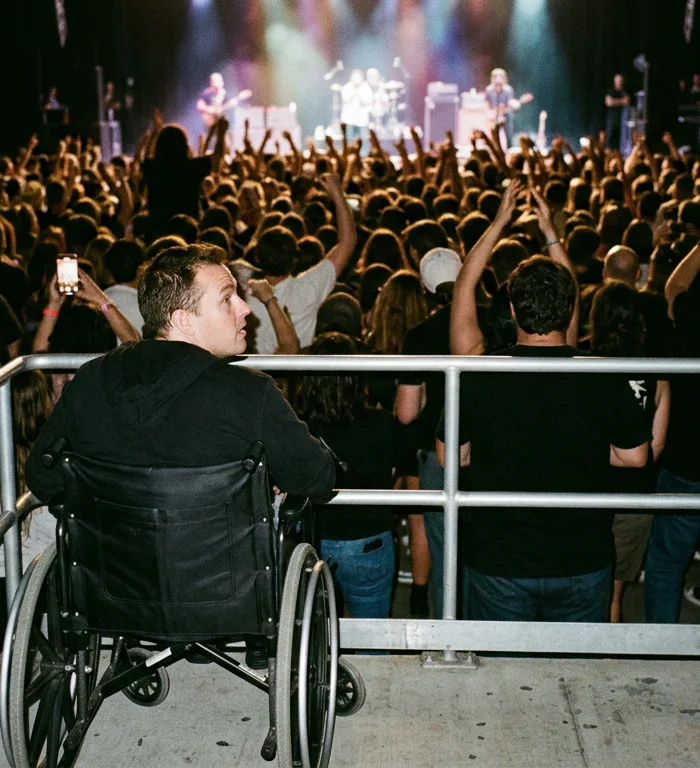
Disabled concertgoers and advocates pressed U.S. live-music venues to improve access in a Rolling Stone feature published Nov. 1, citing 2024 CDC data showing nearly 70 million disabled American adults.
The stakes extend beyond compliance: one in four Americans lives with a disability, the Rolling Stone feature said, while federal rules for temporary events were last updated in 2010.
Rolling Stone said the Americans With Disabilities Act, signed in 1990, helped improve access at shows. But fans and advocates interviewed by the magazine said disabled patrons still face unclear ticketing, remote drop-offs, limited seating, poor sightlines and inconsistent staff support.
Kelsey Peterson, a Wisconsin writer, dancer and podcaster who uses a wheelchair after a 2012 spinal cord injury, described a Milwaukee Riverside Theater show last October. “Thirteen years ago, I’d be in the balcony raging with a beautiful view and better sound. Now I’m stuck under the balcony because there’s literally nowhere else for me.”
Peterson said the strain is not limited to physical access. “You’re not just going to a show to experience joy. You’re going to a show to overcome all the microaggressions.
And then try to get to the joy.”
The feature’s author said she attended an outdoor Southern California concert last October after cancer, a spinal issue and three surgeries changed her mobility and balance. She wrote that Goldenvoice, the AEG Presents subsidiary managing the tour, allowed one companion per disabled attendee in the accessible area.
At that event, the author said the accessible rideshare drop-off was nearly a mile from the ADA viewing platform, across grass, gravel and sand. She said the accessible area was full when she arrived and that staff placed her at the back of an overflow area.
The article said the author later filed complaints with the City of Pasadena and California’s Civil Rights Department.
The legal backdrop is Title III of the ADA, which applies to public-facing businesses such as concert venues and festivals. The feature said those businesses must remove architectural and communication barriers and provide reasonable modifications so disabled customers can buy tickets, enter, move through a site and experience a show.
Advocates quoted by Rolling Stone said technical compliance often falls short of equal access. Jim LeBrecht, a Bay Area filmmaker, Deadhead and wheelchair user who co-directed the 2020 documentary Crip Camp, said the industry should look beyond minimum standards. “We [disabled people] are not a pain in the ass,” he said.
“We live in a world that wasn’t built for us. If you choose to be in this business, it’s your responsibility to make sure everybody has a good experience. And I mean everybody.”
Rolling Stone said the author spoke with more than 50 people across the disabled community and the entertainment industry over the past year.
More stories
- Sanjay Gupta dies at 59, ending Hindi crime-thriller career
- K2 Pictures $32m fund seeks 50-film Japan slate
- TCM faces uncertainty under Paramount Skydance's $80bn debt
- California court upholds Danny Masterson's 30-year rape sentence
- Sam Fender seeks cuts to 2027 tour ticket prices
- Macklemore repeats Palestine call in 17-song Red Rocks set
Latest news
- Acemoglu urges Democrats to rebuild working-class appeal
- Senate contests put Trump's remaining agenda on the line
- Rubio says Trump remains open to another meeting with Kim
- Russian state-affiliated media raise UK posts 15% in September
- Binance withdrawals resume after $6 billion-plus cyber theft
- Delhi protests demand election chief quit over voter rolls
- US tip-off in Moscow case points to security cooperation
- US tip-off in Moscow case points to security cooperation