

K2 Pictures $32m fund seeks 50-film Japan slate
Japan’s film financiers are testing pooled capital and completion-guarantee models as production committees strain budgets and overseas investor access.
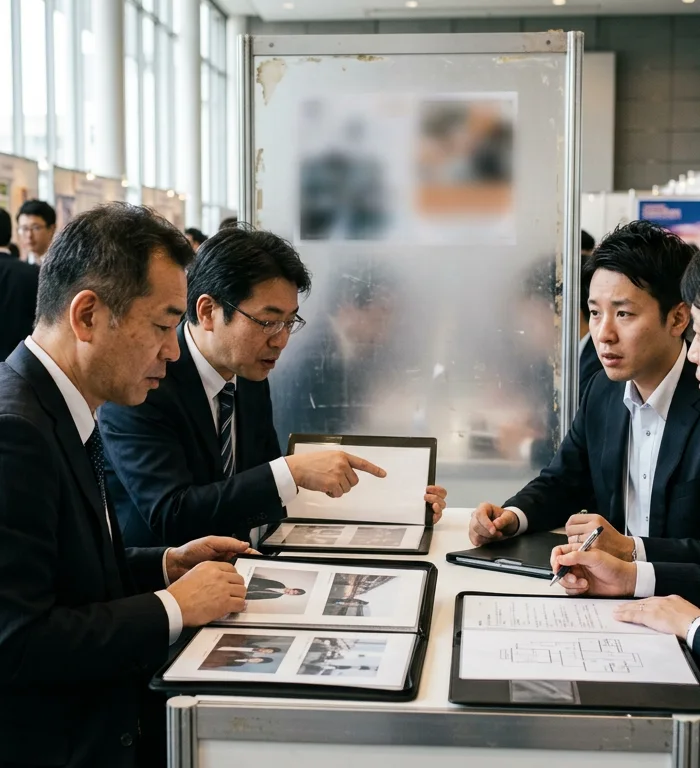
K2 Pictures’ K2P Film Fund I closed in February at about $32 million and seeks to back around 50 films over seven years, Variety reported in an Oct. 31 trade-press article.
That implies about $640,000 per title if capital were divided evenly, according to Atlas360 calculations, compared with Japan’s usual project-by-project production committee financing, where each film assembles its own rights holders.
The discussion took place at TIFFCOM, the content market attached to the Tokyo International Film Festival. The panel, titled “Film Funds in Japan: What Works, What Doesn’t, and What Comes Next,” examined whether fund structures can fit Japan’s industry without losing the risk-sharing that committees provide.
Production committees remain central to Japanese film financing. Under that model, several companies invest in a title and divide the rights, limiting individual exposure but also tying budgets to what domestic partners can assemble and requiring agreement among rights holders.
Kii Muneyuki, chief executive and producer at K2 Pictures, presented K2P Film Fund I as one alternative. The fund’s investors include MUFG, the Development Bank of Japan and other financial institutions and companies, and a greenlight committee reviews project approvals, Variety reported.
The fund is a blind pool, meaning investors provide capital before the individual films are selected. That differs from committee financing built around a specific project and could make it easier to plan a slate, though the report did not say how returns will be allocated among investors and creators.
Kii said the harder question is how creators receive income from later windows, including streaming, after theatrical release. He also said Japanese companies cannot depend on foreign box-office performance alone and need businesses beyond distribution.
The panel also discussed financing tools used elsewhere. In the U.S., producers use presales and completion guarantees to help obtain bank loans; a completion guarantee covers delivery of a film within budget and schedule, not whether it earns money.
South Korea’s model includes public-private support, with government-backed guarantees helping productions secure bank financing. The comparison underscored how Japan’s debate is not only about raising more money, but about who absorbs production risk.
Nakagawa Keita, managing director at MUFG Bank, presented a feasibility study commissioned by Japan’s Ministry of Economy, Trade and Industry. MUFG was selected on March 31 to carry out the work, which runs through February 2027.
The study will use real-world data to build valuation and completion-guarantee models and test steps from application review to contract drafting, Variety reported. The exercise does not ensure that financing or guarantees will become available.
Speakers identified four priorities: regulation, capital, creators and cross-border business. They also pointed to language and tax barriers for foreign investors, including “permanent establishment” rules that can expose international participants to Japanese tax liability.
By February 2027, the METI-commissioned feasibility study is due to complete its work on valuation and completion-guarantee models. The checkable outcome is whether the process produces usable models from application and review through contract drafting.
After K2P Film Fund I’s February close, the observable test is how the roughly $32 million pool is allocated across its planned seven-year, around 50-film slate. Variety reported that five films had reached theaters in 2026.
The next industry signal is whether regulators and financiers clarify how debt, subsidies, completion guarantees and creator returns can be combined. The panel did not give a date for regulatory changes or new financing products.
Source: trade-press article, Variety, Oct. 31
More stories
- Sanjay Gupta dies at 59, ending Hindi crime-thriller career
- TCM faces uncertainty under Paramount Skydance's $80bn debt
- California court upholds Danny Masterson's 30-year rape sentence
- Sam Fender seeks cuts to 2027 tour ticket prices
- Macklemore repeats Palestine call in 17-song Red Rocks set
- Ronson and Remi gather 11 acts for Amy Winehouse tribute
Latest news
- Khamenei orders unrestricted response to any US or Israeli attack
- Trump administration widens Alaska election investigation
- COUP in Poland? Tusk accused of power grab as riot cops swoop on Constitutional Court
- Analysts' top S&P 500 picks trail least-recommended stocks by 13%
- EU countries pledge 20.5m diesel barrels for winter supply
- p-tau217 blood test flags 38% five-year Alzheimer’s impairment risk
- Nigeria minister seeks clean-cooking finance for 2060 plan
- ICN warns on misinformation after Congo Ebola nurse killing