

EU countries pledge 20.5m diesel barrels for winter supply
The stock release aims to add short-term fuel supply while governments press Brussels to monitor delivery volumes and refinery capacity.
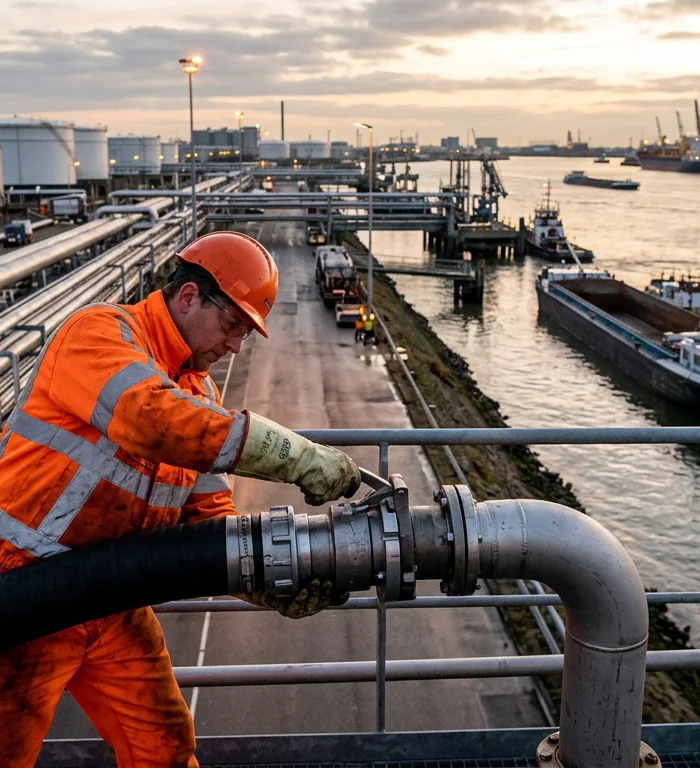
Eleven EU countries pledged on Oct. 30 to release 20.5 million barrels of diesel from strategic reserves by end-January 2027, according to a joint declaration seen by Euronews.
The pledge targets a fuel market the European Commission’s oil monitoring group has described as “remaining tight”; Brent crude traded at $112 on Oct. 20, compared with $40 before the war.
Belgium, Denmark, France, Germany, Greece, Italy, Lithuania, Luxembourg, the Netherlands, Portugal and Sweden signed the declaration. French Energy Minister Roland Lescure presented the initiative on Oct. 29 during a meeting of energy ministers in Luxembourg.
“We, the undersigned EU members of the International Energy Agency (IEA), have taken and are taking decisive actions to increase the supply of crude and refined products in the short term through the release of significant volumes of strategic reserves, including diesel,” the declaration said.
The release follows a G7 energy-security statement and an urgent call from the IEA. The declaration also refers to 42.6 million barrels of oil and refined products released in March under a collective action coordinated by the Paris-based agency.
Diesel matters for Europe because it is used across road transport, freight, agriculture and industry. A release from emergency inventories can add near-term supply, but it does not create new refining capacity or remove exposure to disruptions in international fuel markets.
Brussels has said it does not foresee “physical shortages.” Energy Commissioner Dan Jørgensen argued that high prices would leave the most vulnerable without access to fuel.
The eleven governments asked the European Commission to use its oil monitoring group to track releases. They want monthly information on volumes, product types and delivery schedules, a step intended to improve market visibility and help coordinate any further response if conditions worsen.
The declaration also turns attention to refining, the process that converts crude oil into products such as diesel and jet fuel. The war in the Middle East, attacks on Gulf refineries and Ukrainian strikes on Russian refineries have added pressure to an already tight diesel market, according to the source text.
EU governments want the Commission-led group to monitor refinery output and encourage higher production where possible. The Commission has also begun a strategic dialogue with European refineries and fuel producers to support security of supply.
FuelsEurope, the refining industry trade body, said the bloc needs an “approach that protects the competitiveness of its refining industry”. It also asked Brussels to create investment conditions for the sector’s transformation.
EU energy ministers are due to review overall progress at their Dec. 10 gathering. The observable issue is whether governments provide release volumes, product types and delivery schedules through the Commission’s oil monitoring group.
The second deadline is the end of January 2027, when the eleven countries have pledged to complete the 20.5 million-barrel diesel release from strategic reserves.
Source: document seen by Euronews, Oct. 30, 2026
More stories
- Analysts' top S&P 500 picks trail least-recommended stocks by 13%
- Fitch cuts France outlook to negative at A+ rating
- Housing costs strain 34 million EU residents
- European stocks rise after ECB holds deposit rate at 2.5%
- Lagarde brings ECB succession forward with Feb. 7 exit
- EU rules bar Nord Stream return under 2027 gas phaseout
- Brent crude falls more than 6% as Trump weighs Iran deal
- Ireland's transport budget deal targeted 20% fare-cut reversal
Latest news
- Khamenei orders unrestricted response to any US or Israeli attack
- Trump administration widens Alaska election investigation
- COUP in Poland? Tusk accused of power grab as riot cops swoop on Constitutional Court
- p-tau217 blood test flags 38% five-year Alzheimer’s impairment risk
- Nigeria minister seeks clean-cooking finance for 2060 plan
- Sanjay Gupta dies at 59, ending Hindi crime-thriller career
- K2 Pictures $32m fund seeks 50-film Japan slate
- ICN warns on misinformation after Congo Ebola nurse killing