

Brent crude falls more than 6% as Trump weighs Iran deal
The pullback trims a wartime risk premium while European equities edge higher before Fed, ECB and Bank of Japan decisions this week.
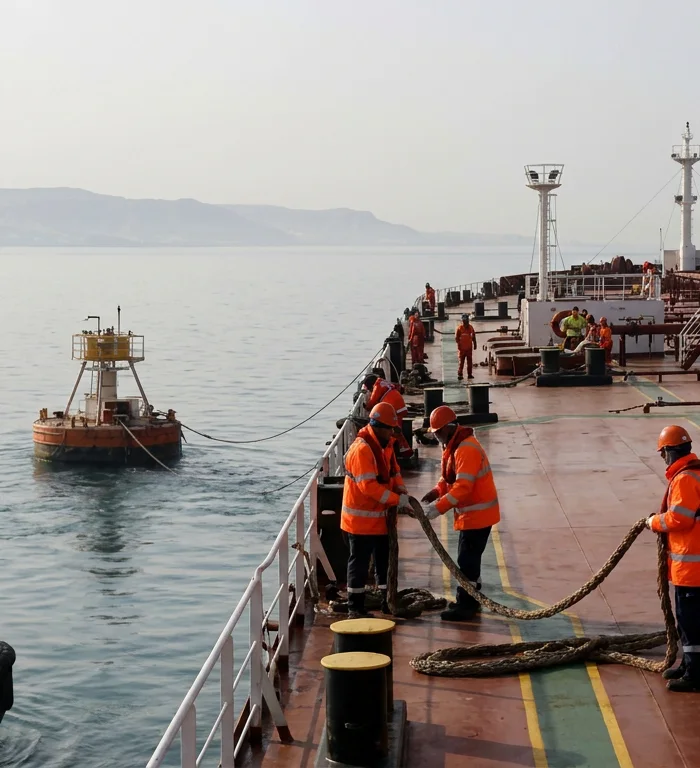
Brent crude fell more than 6% on Monday, an Oct. 26 Euronews article said, retreating to around $110 a barrel as President Donald Trump weighed an Iran deal.
The drop pulled Brent back from about $117.4 at Friday’s close, its highest since March 19, while prices remained far above the roughly $72 a barrel seen before the Iran conflict.
U.S. benchmark West Texas Intermediate fell about 2% to $101.5 a barrel on Monday morning. Brent’s Friday close was about 2% below the $119.5 peak reached in early March, when the war began.
Trump framed the choice over Iran in stark terms in a Fox News interview on Sunday. He asked, “do I make a deal with them, or do I finish them off?”
The diplomatic track appeared to broaden over the weekend. Qatari mediators travelled to Tehran on Sunday in coordination with Washington, while Saudi Arabia’s defence minister, Pakistan’s army chief and Turkey’s intelligence chief were due in the Iranian capital on Monday for regional security talks.
The market retreat followed a sharp rise last week after Yemen’s Houthi rebels, an Iran-aligned armed group, attacked airports and energy facilities in Saudi Arabia. Saudi Arabia is the world’s largest oil exporter.
Supply risks remain difficult to price. The Houthis said they struck Saudi airports and energy sites again over the weekend, while Riyadh reported intercepting more missiles and drones.
Trump also pointed to oil flows through the Strait of Hormuz, a chokepoint that carried about one-fifth of global oil before the war. Citing the Wall Street Journal at a campaign event in Port Huron, Michigan, Trump said “oil coming out of the Strait of Hormuz is now topping what it was before the war [...] our navy has been incredible.”
Gulf crude exports excluding Iran returned to pre-war levels in September, citing ship-tracking firm Kpler. About 40% of those exports now avoid the strait through pipelines, compared with 17% before the conflict.
European stocks rose as oil fell. The pan-European Stoxx 600 and the Euro Stoxx 50 traded more than 0.6% above Friday’s close, while the FTSE 100, DAX, CAC 40, FTSE MIB and SMI gained between 0.3% and 1%, with Germany’s DAX leading. Spain’s IBEX 35 and the Netherlands’ AEX were little changed.
French assets also received support after Moody’s kept France’s Aa3 rating on Friday evening, a decision the article said was unexpected. In the U.S., S&P 500 futures rose 0.3%, and Nasdaq 100 futures also advanced.
Earnings season is concentrated this week, with about one in three S&P 500 companies due to report, including Alphabet, Microsoft and Amazon. In Europe, BP and Shell are scheduled to update investors.
The Federal Reserve announces its rate decision on Wednesday, Oct. 28. It is widely expected to hold rates at 3.75% to 4%, before a possible increase in December.
The European Central Bank announces its decision on Thursday, Oct. 29, with France’s bond-market strains in focus. The Bank of Japan announces its policy decision on Friday, Oct. 30.
More stories
- Anthropic faces $265.6bn purchase commitments in IPO push
- Anthropic faces $800bn compute burden before Nasdaq IPO
- Anthropic seeks IPO after $16.3bn revenue, $9bn AI spend
- Ireland's transport budget deal targeted 20% fare-cut reversal
- EU faces budget fight before France and Spain votes
- Hyperscalers face up to $1 trillion AI depreciation by 2030
- Oura IPO seeks $3 billion as smart-ring maker eyes listing
- Dollar rally gains as US targets Iran financial links abroad
Latest news
- GE Vernova lifts 2026 free-cash-flow outlook to $16bn-$17bn
- South African parties split over Cape Town's 30,000-home annual gap
- Kinross Gold faces Q3 test after 2%-3% output cut
- Ruto seeks Russian investment in Kenya's $380m trade push
- Sudan teachers seek 20% budget share with 8m children outside school
- Spain rail network faces scrutiny after 64 killed near Toledo
- Private equity firms face scrutiny over third of methadone clinics
- Spain reports at least 30 dead in high-speed train crash