

Hyperscalers face up to $1 trillion AI depreciation by 2030
Benzinga cited Capital Gearing Asset Management and Morgan Stanley estimates showing delayed AI costs could weigh on reported earnings after a record profit…
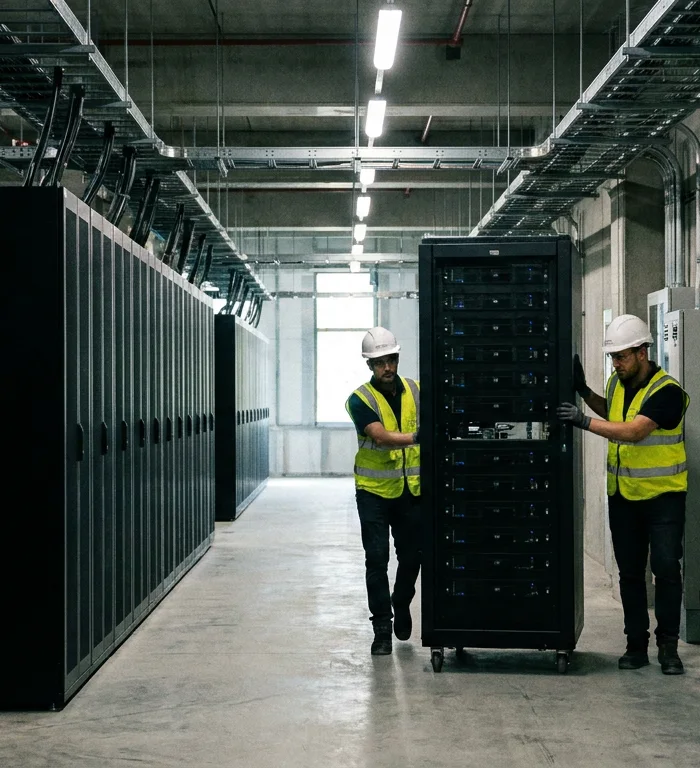
Hyperscalers’ annual AI-related depreciation charges could reach $500 billion to $1 trillion by 2030, Capital Gearing Asset Management said in a Benzinga article published Oct. 25.
The warning cuts against a record profit backdrop: WNYC, cited by Benzinga, put U.S. corporate profits at $4.7 trillion in the 12 months through mid-year, up 17%.
Hyperscalers are the largest cloud platforms funding much of the AI infrastructure build-out. BCA Research’s Peter Berezin and Minack Advisors’ Gerard Minack framed the profit surge as an accounting-timing issue, rather than only an AI productivity story. “Nvidia earns a big profit whenever it sells a GPU,” Berezin wrote, according to Benzinga.
The buyer’s treatment differs because chips and data-center equipment are booked as capital expenditure, meaning costs are expensed gradually rather than immediately. “Whoever buys that chip, however, does not incur an immediate cost because the purchase is treated as capital spending,” Berezin wrote.
Jefferies strategist Christopher Wood, cited by Reuters and Benzinga, described the effect in stronger terms. “This is probably the most earnings accretive capex boom in history,” Wood said.
The issue is most visible before new data centers start operating. Morgan Stanley estimates as much as 40% of 2026 AI capital spending will not be operational until 2027 to 2029, according to Benzinga. Depreciation, the accounting charge that spreads an asset’s cost across its useful life, begins only after those assets enter service.
WNYC said 42 AI-related companies accounted for around two-thirds of the S&P 500’s gains since early 2024, according to Benzinga. That concentration matters because the reported profit expansion and equity-market leadership are tied to a narrow group of AI infrastructure suppliers, cloud platforms and related companies.
Benzinga also pointed to paper gains in private AI holdings. In the four quarters through mid-2026, annualized earnings at Alphabet, Amazon.com, Microsoft and Meta Platforms rose by $222 billion, while their other non-operating income rose by $224 billion, the article said. The piece said that increase accounted for all of their reported profit growth over the period.
The financing picture adds another pressure point. Benzinga said hyperscalers are putting almost all operating cash flow into capital expenditure this year, have issued about $225 billion of unsecured bonds, equal to roughly 30% of full-year capital spending, and carry $1.1 trillion in lease commitments that remain off balance sheet.
Morgan Stanley forecasts the group will have about $550 billion of negative free cash flow in 2027, according to Benzinga. Negative free cash flow means cash spending exceeds cash generated after capital investment, increasing reliance on financing or asset sales if conditions tighten.
The article did not show that AI spending will fail to produce future revenue, and it did not include responses from the named companies. Its central risk is narrower: if capital spending slows, private AI valuations fall or price competition compresses margins, reported profits could lose the accounting support that has accompanied the build-out.
Financial historian Edward Chancellor made that point for Reuters Breakingviews, according to Benzinga. “The bubble is in profits, not valuations,” Chancellor said.
2027 cash-flow test
In 2027, Morgan Stanley’s forecast of about $550 billion of negative free cash flow for the group will be tested against reported cash-flow statements and capital-spending disclosures. A smaller deficit, or a shift away from debt-funded spending, would weaken the pressure case.
From 2027 to 2029, Morgan Stanley’s estimate that as much as 40% of 2026 AI capital spending will become operational gives investors a window to track when depreciation starts moving through income statements. The checkable items are data-center commissioning, depreciation expense and whether revenue growth offsets those charges.
By 2030, Capital Gearing Asset Management’s estimate of $500 billion to $1 trillion in annual hyperscaler depreciation charges is the threshold to watch. The accounting concern is most relevant if those charges rise while AI-related pricing or utilization fails to support margins.
More stories
- Tema Oil Refinery weighs listing over $517m debt
- Microsoft and peers file 22 objections to OKXICE tokens
- Bank of America warns 200bp AI spreads may pressure stocks in 2027
- Agenus colon combo shows no cancer in 72% of trial patients
- Bulgaria votes as Iotova leads presidential race with 41%-47%
- Cramer backs index funds over Berkshire for inheritance
- US 10-Year Treasury Yield Hits 5.04% Ahead of Fed Decision
- Hedge funds win fresh capital as AI trade lifts returns
Latest news
- Microsoft faces $90.6bn AI spending test in earnings
- South Africa records 76,922 HIV prevention jab initiations
- B vitamins can turn urine fluorescent yellow
- Three Elections Today. A Global Political Test Ahead.
- Rayner backs Burnham over UK-EU free-movement debate
- Netflix usage slips as subscriber growth masks slowdown
- Machado returns to Venezuela, testing Rodríguez’s opening
- Portugal police remove 171 housing protest structures