

Ireland’s transport budget deal targeted 20% fare-cut reversal
Public-expenditure officials warned a delayed 10% increase would leave about €40 million short of the 2026 budget position.
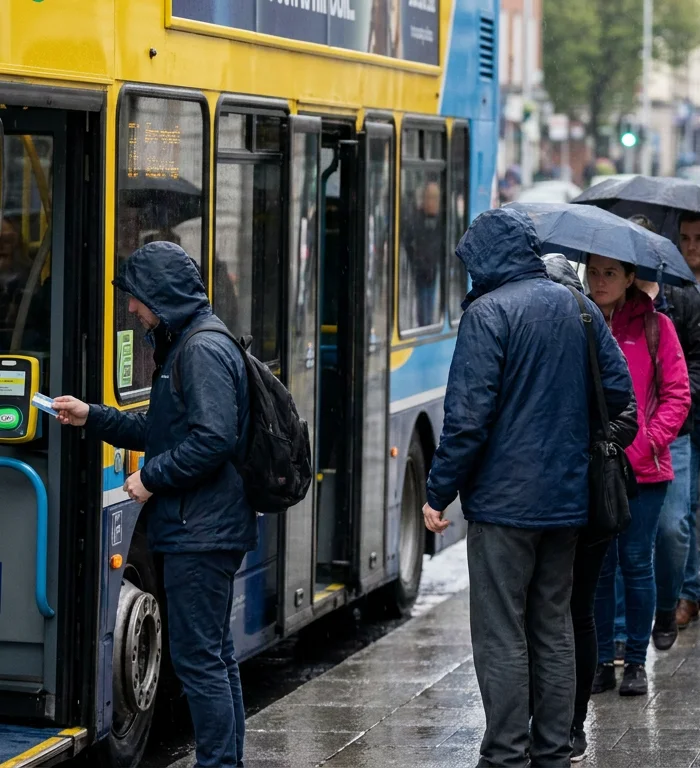
Ireland’s Department of Public Expenditure believed on Oct. 3, 2025, that a budget deal would reverse a 20% public-transport fare cut from June 1, 2026, newly released official documents reported by The Irish Times showed.
In the documents, DPER said a 10% fare rise introduced in August would raise about €17 million in 2026, about €40 million below the budgeted position, exposing pressure on transport funding.
The papers give a clearer view of how Ireland’s budget process treated lower bus and rail fares: as a temporary support that officials expected to unwind. Five days after the Oct. 3 budget correspondence, Transport Minister Darragh O’Brien announced a €940 million Exchequer subvention for bus and rail services and said future increases were possible as part of a more “sustainable” funding model.
By April 21, DPER officials told the Department of Transport that the October understanding had included “an implementation date of 1 June 2026” because that would give time for preparations. They also said communication with the National Transport Authority appeared to have been delayed, leaving the authority unable to implement the increase on that date.
The Department of Transport replied two days later that it remained committed to the budget agreement, according to the documents. It added that “the implementation of a fare’s adjustment in the context of the ongoing geopolitical situation has become much more challenging”.
DPER escalated the concern on April 24 in correspondence to Ken Spratt, the secretary general at the Department of Transport. The department said it had been informally told an increase might not arrive until August and that a 10% rise was being considered.
“On the basis of the information provided to us, a 10 per cent increase implemented in August would yield only c.€17 million in 2026, leaving a shortfall of approx €40 million against the budgeted position,” DPER wrote. It said that outcome would “be very difficult to accommodate” after a government decision the previous week to restrain spending growth.
The dispute sits inside a larger shift in Irish transport finances. Most public transport services do not operate commercially and depend on state funding, while recent policy aimed to make travel cheaper and expand eligibility for discounted or free journeys.
The last broad fare increase took effect in December 2018. In 2022, then-transport minister Eamon Ryan cut fares by 20%; subsequent measures included free travel for children aged five to eight, a wider Young Adult Leap card for people up to 25 and companion travel for people over 70 with free travel passes.
Those measures reduced fare income while staff and fuel costs rose, according to The Irish Times account of the documents. The Exchequer subvention exceeded €900 million by Budget 2026 and is due to increase to €1.042 billion in 2027.
The documents do not establish that the June increase went ahead, nor do they show a final Cabinet decision on the size or timing of any rise. They show that public-expenditure officials considered the timing and scale of fare increases material to the 2026 spending framework.
Source: official documents reported by The Irish Times, Oct. 26, 2026
More stories
- Anthropic faces $265.6bn purchase commitments in IPO push
- Anthropic faces $800bn compute burden before Nasdaq IPO
- Anthropic seeks IPO after $16.3bn revenue, $9bn AI spend
- Brent crude falls more than 6% as Trump weighs Iran deal
- EU faces budget fight before France and Spain votes
- Hyperscalers face up to $1 trillion AI depreciation by 2030
- Federal Reserve hike resets path for Treasury yields now
- Brookfield ACME investment targets green fuel buildout push
Latest news
- GE Vernova lifts 2026 free-cash-flow outlook to $16bn-$17bn
- South African parties split over Cape Town's 30,000-home annual gap
- Kinross Gold faces Q3 test after 2%-3% output cut
- Ruto seeks Russian investment in Kenya's $380m trade push
- Sudan teachers seek 20% budget share with 8m children outside school
- Spain rail network faces scrutiny after 64 killed near Toledo
- Private equity firms face scrutiny over third of methadone clinics
- Spain reports at least 30 dead in high-speed train crash