

EU faces budget fight before France and Spain votes
Catherine De Vries argues domestic unrest could complicate EU budget, defence and industrial choices, even as youth polling shows support for deeper…
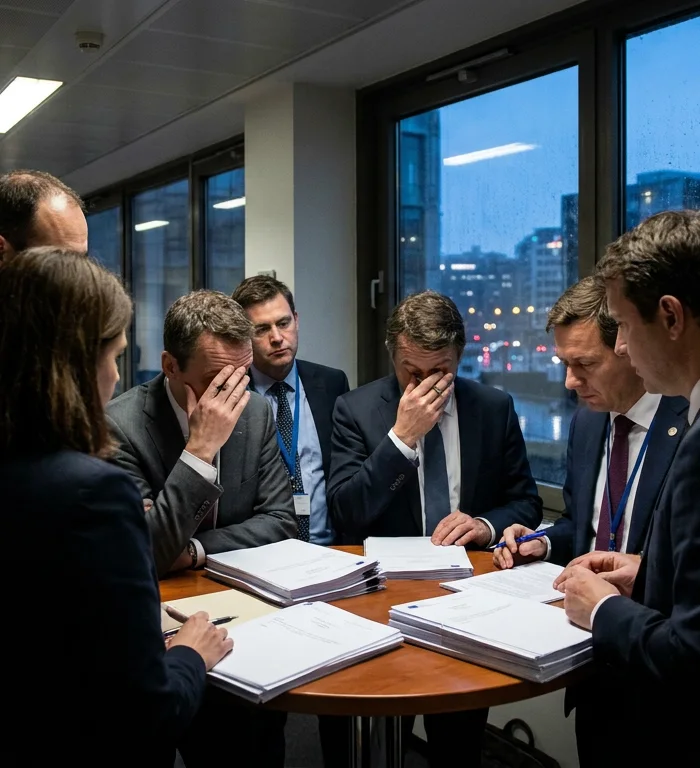
EU governments are negotiating an almost €2 trillion seven-year budget before Spain votes in November and France starts a presidential contest in April, Catherine De Vries said in a Guardian opinion article on Oct. 26.
The opinion article argues that the European Union’s 27 members need more joint capacity on security and competitiveness, with a 450 million-person market and almost €19 trillion economy compared with Germany’s 84 million people.
The article links protests in Paris, Milan and Madrid to frustration over housing, wages, living costs and public services. De Vries, a professor of political science at IE University in Madrid, said national governments face rising public demands while their ability to act alone is shrinking.
“If the EU did not exist, Europeans would have every reason to invent it,” De Vries wrote. She said the bloc’s scale gives member states weight in a world shaped by tariffs, export controls and competition among larger powers.
The budget talks are the immediate institutional test. De Vries said governments broadly accept the need for greater European security and economic competitiveness, but remain divided over funding. France is pressing for new EU-wide taxes, according to the article, while other countries oppose that approach.
The political calendar raises the pressure on those negotiations. Spain called a snap election after parliament rejected housing reforms, the article said. France starts the process of choosing a new president in April, while Poland, Italy and several smaller countries are due to hold votes before the end of 2027.
De Vries cited President Emmanuel Macron’s call for EU leaders to reach a budget agreement by Christmas. He warned, according to the article, that room for political compromise would narrow in the new year if Marine Le Pen were to succeed him.
The article said Le Pen no longer advocates taking France out of the euro or holding a Brexit-style referendum. It said her programme would still weaken the EU internally by favouring a “Europe of Nations” and threatening reductions in France’s EU budget contribution.
De Vries’s argument is not that public anger has already become broad anti-EU sentiment. The article cited recent polling showing young Europeans remain among the bloc’s strongest supporters, with 90% favouring greater unity among member states and 78% wanting the EU to have more resources to act.
That support gives EU leaders political space, but also raises expectations. De Vries wrote that the bloc has repeatedly survived crises, including Brexit, the pandemic and energy shocks, but said cooperation must deliver more visible gains for citizens if unrest is not to turn against the EU itself.
She framed the issue as one of “effective sovereignty”: the practical capacity to shape outcomes on energy, trade, migration or defence that no European state can fully control alone. The article said this is different from nominal sovereignty, or the formal right to decide alone.
Election pressure points
Spain holds its snap election in November after parliament voted down housing reforms, a test of whether discontent over living costs and housing reshapes national politics.
Macron urged EU leaders to strike a budget deal by Christmas, according to the article; the observable is whether governments announce agreement on the almost €2 trillion seven-year plan.
France begins the process of electing a new president in April, with De Vries presenting the contest as a major constraint on EU budget and integration choices.
Source: opinion article, The Guardian, Oct. 26, 2026
More stories
- Anthropic faces $265.6bn purchase commitments in IPO push
- Anthropic faces $800bn compute burden before Nasdaq IPO
- Anthropic seeks IPO after $16.3bn revenue, $9bn AI spend
- Brent crude falls more than 6% as Trump weighs Iran deal
- Ireland's transport budget deal targeted 20% fare-cut reversal
- Hyperscalers face up to $1 trillion AI depreciation by 2030
- Tema Oil Refinery weighs listing over $517m debt
- Chris Rokos plans Greece move as UK tax debate intensifies
- Beijing faces yuan pressure as reserves top forecasts again
Latest news
- GE Vernova lifts 2026 free-cash-flow outlook to $16bn-$17bn
- South African parties split over Cape Town's 30,000-home annual gap
- Kinross Gold faces Q3 test after 2%-3% output cut
- Ruto seeks Russian investment in Kenya's $380m trade push
- Sudan teachers seek 20% budget share with 8m children outside school
- Spain rail network faces scrutiny after 64 killed near Toledo
- Private equity firms face scrutiny over third of methadone clinics
- Spain reports at least 30 dead in high-speed train crash