White House access restored for journalists in Trump case
A federal judge ordered temporary White House access restored for three news organizations, finding the badge removals likely lacked adequate due process.
Jurgen Goldmeier ·
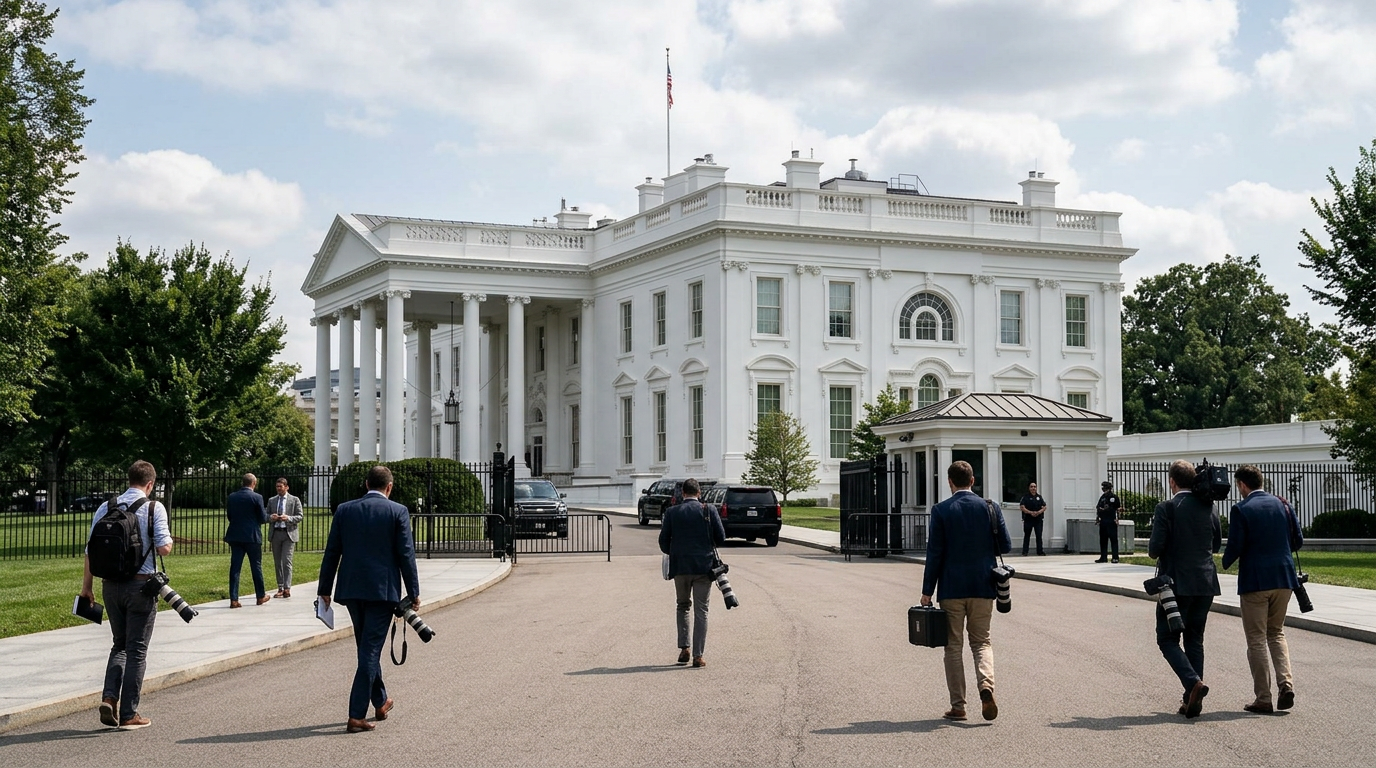
A federal judge ordered 14 days of White House access restored for journalists at three organizations after finding likely due process flaws.
Judge Timothy Kelly issued the temporary restraining order early Thursday in Washington, handing the news organizations an initial court victory in their fight with President Trump’s administration. Kelly said the government had offered limited support for its national-security rationale and had instead emphasized what Trump called unfair and negative coverage.
Kelly questions security rationale
The ruling does not resolve the lawsuit, but it requires the administration to restore access while the case proceeds unless a higher court intervenes. Kelly, who was appointed by Trump, said the badge removals were likely imposed without procedures adequate under the Constitution.
The order runs for 14 days, the temporary period specified by the court. Access, however, did not appear to resume immediately for every journalist covered by the ruling, according to accounts from affected staff cited in the case record.
Theodore Boutrous, a lawyer for the news organizations, framed the decision as a defense of press freedom and procedural rights. The White House had no immediate comment in the source material, and Trump had said earlier in the week that he would probably comply with an adverse ruling while considering an appeal.
Badge removals followed Friday post
Trump announced the access restrictions in a social-media post on Friday, pointing to what he described as unfair coverage of his administration. He did not identify a single story as the basis for the action, instead referring to cumulative coverage over the past two years.
Representatives for the affected organizations said their journalists were turned away from White House grounds early Saturday. The following day, reporters from one of the organizations were removed from a scheduled pool assignment tied to the United Nations General Assembly in New York.
The organizations sued Monday, arguing that the government cannot decide which journalists may enter official spaces on the basis of their reporting. Their complaint placed the dispute in First Amendment terms, while also challenging the process used to revoke credentials.
At a Wednesday hearing, Boutrous argued that Trump may criticize journalists but may not use government authority to punish unfavorable expression. Michael Velchik, representing the government, argued that White House access is a privilege and that courts should not second-guess presidential judgments tied to security.
Press access fight widens
The case comes after a series of confrontations between the administration and media organizations during Trump’s second term. Those actions included defamation suits against several outlets, limits on access to certain presidential events and subpoenas directed at reporters.
The administration has also tightened rules at the Pentagon, where restrictions on newsgathering led several major media organizations to surrender credentials rather than accept the terms. First Amendment lawyers and media executives have described the broader pattern as an effort to pressure newsrooms and deter confidential sources, though the administration has defended its authority over access to secure government spaces.
The immediate company-level effect is operational: if the restraining order is honored, the affected newsrooms regain the ability to station credentialed reporters inside White House-controlled areas during a key phase of the lawsuit. If access remains uneven or delayed, the plaintiffs are likely to press the court for enforcement while preserving their broader constitutional claims.
For the wider press corps, the mechanism is precedent rather than revenue. A ruling that credentials cannot be removed without adequate process would make future access restrictions harder to impose quickly; a successful government appeal would strengthen executive discretion over spaces tied to presidential security.
The global stakes are institutional rather than macroeconomic. If Kelly’s order stands, it gives foreign governments and news organizations a fresh reference point for US judicial limits on executive retaliation against the press; if it is narrowed, the administration’s security argument may become the operative test in future credential disputes.
The next legal step is whether the White House seeks emergency appellate relief before the 14-day order expires. The open question is not only who enters the briefing spaces this week, but how much process the government must provide before excluding a reporter whose coverage the president condemns.