

Liberia seeks bigger US exports as AGOA runs to 2028
Officials said access covers 6,500 products, but firms must meet certification, origin, food-safety and documentation rules before shipments can qualify.
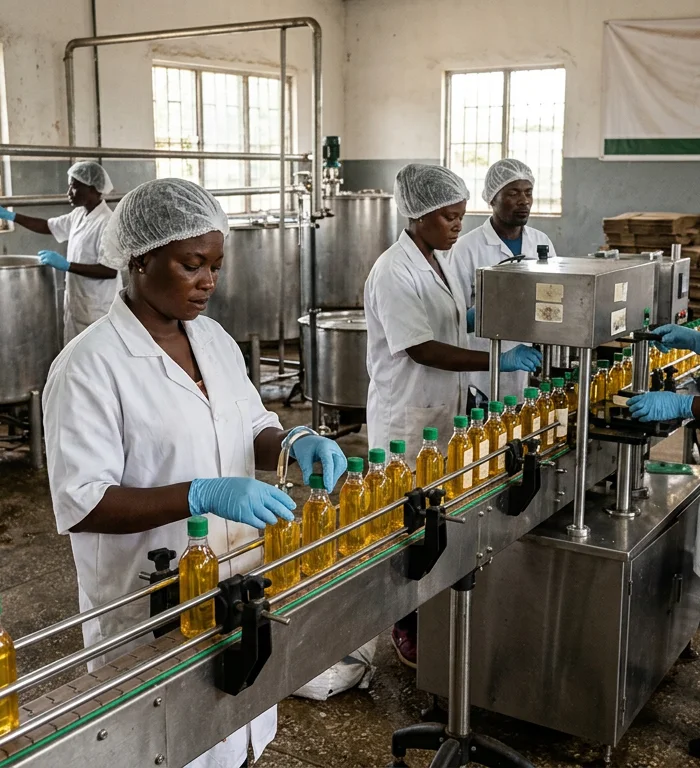
Liberia used a Monrovia business forum on Thursday to press exporters to target the U.S. market after AGOA duty-free access was extended through Dec. 31, 2028, The Liberian Investigator reported Nov. 20.
The push matters because U.S. Embassy Chargé d'Affaires Kristin Gilmore said 6,500 products can enter the U.S. duty-free, while Kenya sells about $500 million of textiles and apparel there annually.
The forum, held during Global Entrepreneurship Week at the Liberia Chamber of Commerce, gathered small and medium-sized businesses with agencies overseeing customs, standards, food safety and commodity regulation.
"There are currently 6,500 products that can come into the United States 100% duty free," Gilmore said, urging Liberian entrepreneurs to study whether their goods can meet U.S. buyer and regulatory requirements.
"The United States wants to do more business with Liberia. Liberia has more to offer to the American market than I think many people realize," Gilmore said.
AGOA, the African Growth and Opportunity Act, gives eligible African countries preferential U.S. market access. Liberia remains eligible in 2026, including for textile and apparel provisions, according to the report.
Gilmore cited Madagascar's estimated $355 million in annual textile and apparel exports to the U.S. and Lesotho's exports of more than $100 million. She also pointed to J-Palm, a Liberian palm-oil business already exporting to the U.S. under AGOA.
The main constraint described at the forum was not tariff access but export readiness. Rep. Rugie Yatu Barry of Montserrado County District No. 1 said her cassava-flour business faced quality problems, including sand in an early batch and bacteria later traced to well water used in processing.
Barry said export packaging required barcodes, expiry dates, nutrition information, ingredients and composition details. She also described U.S. Food and Drug Administration registration, certificates of origin and phytosanitary documents among the requirements she encountered.
One shipment was delayed after a phytosanitary certificate problem, leaving the business exposed to almost $11,000 in storage charges, Barry said. Her account underscored that duty-free treatment does not remove inspection, storage, certification or logistics costs.
Saa Saamoi, commissioner of customs at the Liberia Revenue Authority, said AGOA eligibility depends on rules of origin, meaning goods must genuinely qualify as products of an eligible country. Relabeling goods made elsewhere is not enough if origin requirements are not met.
Saamoi cited a time-release study showing average port cargo clearance of 12 days and 19 hours. He said about 65% of cargo could be cleared within zero to five days, while some delays arise when businesses cannot mobilize funds for customs charges and related costs.
Goods left uncleared for 90 days can be auctioned under the law, Saamoi said. He also said a fully electronic customs payment system is planned from Jan. 1, 2027, and a National Trade Single Window is expected within 15 months.
Stephen Yongar Mambu, director general and CEO of the Liberia Standards Authority, said the agency is preparing a Market Access Unit to guide firms on AGOA requirements, product readiness, testing and certification. He also said an Exporter Help Desk and an initial briefing are planned within the next three months.
Source: news article, The Liberian Investigator via AllAfrica, Nov. 20, 2026
More stories
- SAF-RSF fighting worsens 10-year oil pollution crisis, groups say
- Spain opens 200m-voter test for Europe's right
- Saudi event season faces EASA airspace warning to Jan. 31
- EU housing costs outpace incomes after home prices rise 70%
- Middle powers pursue trade links beyond Trump diplomacy
- South Africa's preschool subsidies face repair-cost barrier
- AI giants compete for Europe capital after $250bn bond wave
- EU ministers face deadlock over heat aid for 50 million Europeans
Latest news
- Fidelity bars Anthropic IPO flippers for six months
- Paul seeks 20%-30% federal credit for U.S. film shoots
- Rwanda women-owned exports fall 51% from 2021 peak
- Strictly expands stage for 8 couples in Blackpool return
- TikTok dementia videos mislead in 66.4% of sample, researchers say
- Staff notice in Commission cyberattack tests EU response