Hegseth says Hasan execution will be open to public view
Defense Secretary Pete Hegseth says Hasan's December 3 execution will be publicly viewable; the Army has not disclosed its procedures.
Lauren Collins ·
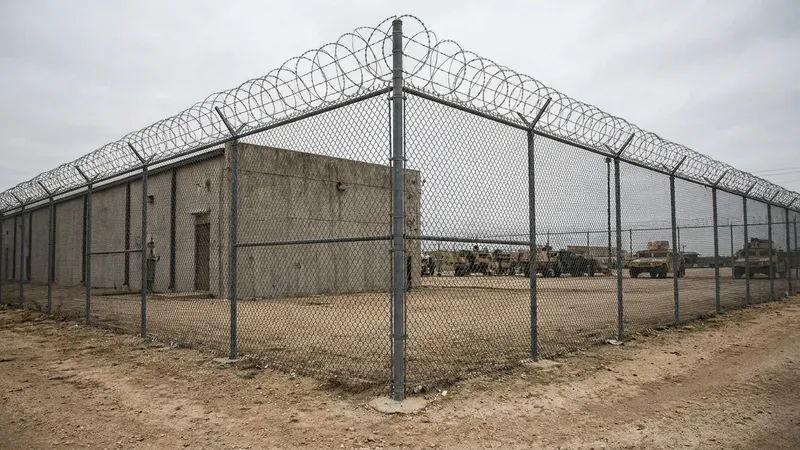
Defense Secretary Pete Hegseth says Hasan's December 3 execution will be publicly viewable; the Army has not disclosed its procedures.
Nidal Hasan, convicted of murdering 13 people during the 2009 attack at Fort Hood, is scheduled to face a firing squad at the installation near Killeen, Texas. Hegseth's announcement adds a public-access commitment to a punishment the military has not carried out since 1961.
Hegseth promises access without specifying arrangements
Speaking in an interview Thursday, Hegseth said soldiers would conduct the execution. He also committed to allowing the public to witness it: "We'll make sure that people are able to watch it. That it's public."
The Pentagon has said a livestream is planned, although it has not identified a hosting platform. The Department of Defense separately declined to elaborate on Hegseth's remarks, leaving the scope of that commitment unresolved.
Those positions leave a distinction between announcing a broadcast and explaining how it would work. The Army has released no operational details, and Hegseth did not specify whether spectators would be admitted, television coverage permitted or viewing restricted to particular individuals.
The Pentagon uses X and YouTube to distribute speeches and other video material. Neither platform has been identified as the destination for the execution broadcast, so the department's existing online presence does not settle where viewers would obtain access.
Military punishment crosses a historical divide
The planned execution would end an interval stretching back to 1961, when the military last carried out a death sentence. Its most recent use of a firing squad dates further back, to the 1945 execution of Pvt. Eddie Slovik in France for desertion.
Civilian authorization of the method is also limited. The Death Penalty Information Center identifies five states that permit it: Idaho, Mississippi, Oklahoma, South Carolina and Utah.
That state-level authorization is separate from the military proceeding involving Hasan. It provides a measure of how narrowly the method is authorized, rather than an explanation of the Army's planned procedures or the rules governing public access.
The country's most recent public execution occurred in Kentucky in 1936. Rainey Bethea, a Black man convicted of raping a white woman, was hanged there; Hegseth's proposal now places public viewing alongside a military punishment unused for decades.
Livestream plans leave viewing conditions unresolved
A broadcast and an execution attended by public spectators would offer different forms of access. If the Pentagon proceeds with streaming alone, its platform announcement would establish where remote audiences could watch, but would not establish whether anyone could attend in person.
If spectators are also permitted, the military would need to explain admission arrangements separately from any broadcast plan. For now, the unresolved issue is how the Pentagon will translate Hegseth's promise into disclosed procedures before December 3, including the viewing platform and any limits on access.