
White House sees beef prices as November inflation risk
President Trump’s beef prices push aims to ease grocery strain, but farm-state Republicans and agriculture groups say it caught them off guard.
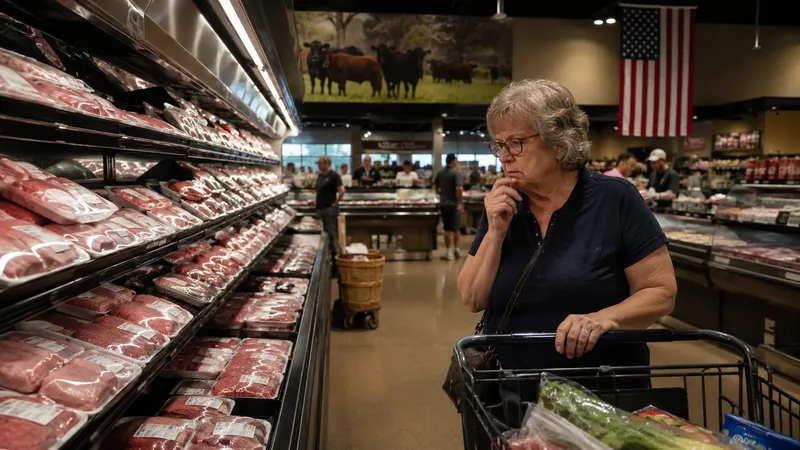
President Trump is pressing to lower beef prices as grocery costs weigh on voters and unsettle Republicans before November.
The effort marks a late push by the White House to show movement on household costs, one of the clearest points of contact between inflation data and daily politics. Beef has become the focus of the latest price initiative, according to the account of the administration’s move.
The announcement has also exposed a split inside the Republican coalition. Farm-state Republicans and agriculture industry groups objected to the step, saying they were “blindsided” by a move aimed at consumers but felt immediately by producers and their allies.
Farm states bristle at price bid
The political tension is direct: shoppers gain if prices at the meat counter fall, while ranchers, processors and farm-state lawmakers are positioned to absorb the first questions about how the lower-price push will work. The source material did not specify the policy mechanism, leaving the industry reaction centered on the announcement itself rather than a detailed proposal.
Trump has often treated “affordability” as a Democratic attack line, but the beef initiative indicates that the White House still views grocery prices as a vulnerability. In retail politics, the issue is unusually visible, since consumers can compare a weekly basket against memory without needing an official inflation release.
Grocery costs meet November math
The concern described inside the White House is that stubborn inflation could damage Republican prospects in November. The risk is not only that prices remain high, but that voters continue to associate higher grocery bills with the party controlling the presidency.
That makes beef a narrow product category with broader political weight. A move that lowers prices for consumers can help the White House’s affordability argument, while the same move can alienate Republicans from states where agriculture is an economic base and a political identity.
The reaction from farm-state Republicans matters because they are not natural opponents of Trump. Their public anger gives Democrats a line of attack on grocery costs while also forcing the White House to manage complaints from a constituency that usually sits inside the Republican column.
Three paths for beef fight
If the administration can lower retail beef prices without putting visible pressure on producers, the White House gains a concrete example for its affordability message. The macro effect would likely run through food-inflation expectations rather than a single product, while the agriculture sector would watch whether the pricing move expands beyond beef.
If farm-state opposition hardens, the policy problem becomes a coalition problem. Trump would face pressure to prove that the move helps consumers without undercutting producers, and agriculture groups would have an incentive to press for consultation before any further food-price action.
If inflation remains stubborn through November, beef prices may become one piece of a larger argument over who bears the cost of living squeeze. In that scenario, the White House would have to defend its grocery agenda, the Republican campaign would carry more exposure to voter frustration, and the broader food industry would remain in the middle of a fight between retail relief and producer margins.
More stories
- Trump urges Ukraine to replace Zelensky over stalled deal
- Harris builds political team but leaves 2028 run undecided
- Isaias leaves 840,000 without power as rain risks persist
- Zelensky criticizes Trump over Russian fuel supply deal
- Katie Zacharia Selected as White House Press Secretary
- Michigan Senate rivals clash over health care and Israel
- Iran war poll shows Trump approval stuck at 33% record low
- US Reopens Arizona Border for Mexican Cattle Imports
- GOP Senate spending talks near deal as hemp vote waits ahead
- FCC ends 39% TV ownership cap in 2–1 vote
Latest news
- Will the Rally Survive? Wall Street Braces for CPI, Earnings and Missiles Over Riyadh
- Ukraine support splits Europe as US rift widens over Kyiv
- iFi prices Up Play Bluetooth dongles at $59 and $89
- US, China discuss reciprocal nuclear-facility visits
- MSI prices RTX Spark convertible laptop from $3,299
- Burnham says Brexit vote faced Russian meddling in 2016
- Goldman and CPI lead week with 3.6% inflation estimate
- Russian strikes hit Ukraine plants after Trump ceasefire statement