

Burnham says Brexit vote faced Russian meddling in 2016
Prime Minister Andy Burnham alleges Russian interference in Britain's 2016 Brexit referendum, without disclosing supporting evidence.
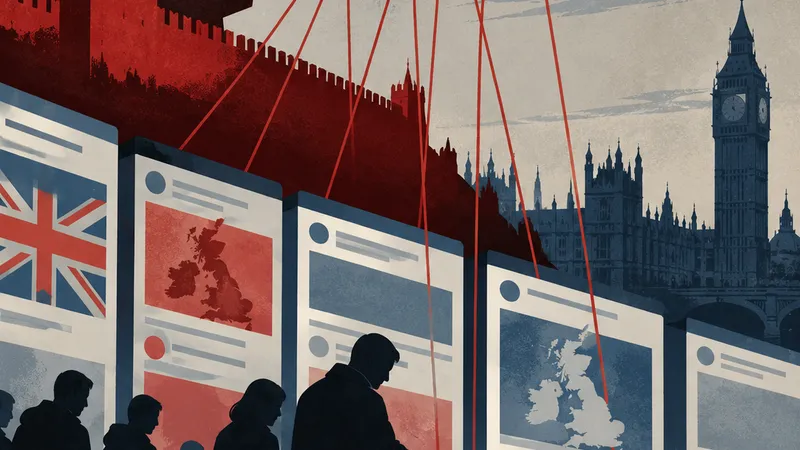
Prime Minister Andy Burnham alleges Russian interference in Britain's 2016 Brexit referendum, without disclosing supporting evidence.
Speaking on The Rest Is Politics podcast in an interview released October 11, 2026, Burnham said he had received confirmation after becoming prime minister. He also urged French and German voters to recognize what he described as Russian attempts to shape their countries' politics.
The allegation changes the position expressed by Boris Johnson, who maintained in 2020 that evidence did not support Russian involvement. It also comes as Burnham considers whether to campaign for Britain to return to the European Union.
Burnham leaves the evidence unspecified
Burnham said he sought an assessment when he entered office in July. His account establishes what he says he was told, but leaves unanswered who supplied that assessment and what information supported it.
"I asked the question coming to Downing Street, was there interference in the 2016 referendum from Russia? And I've had the clear answer that yes, there was," Burnham said.
He provided neither a description of the alleged activity nor the evidence behind his conclusion. The comments therefore offer no basis for determining its scale, identifying those responsible or assessing whether it affected the result.
Russia has denied involvement in the Brexit ballot, portraying British accusations as hostility toward Moscow. No immediate embassy response to the new allegation was available, leaving the earlier denial as Russia's stated position.
Parliament identified an earlier investigative gap
A 2020 report from parliament's Intelligence and Security Committee concluded that British authorities had not determined whether Moscow intervened in the EU membership referendum. That finding concerned a failure to establish what happened, rather than a conclusion that no intervention occurred.
The committee separately reported Russian attempts to influence the Scottish independence ballot held in 2014. Scotland voted against independence; the committee's finding about that contest was distinct from its assessment of the government's handling of Brexit.
The 2016 EU referendum produced a 52% majority for departure, against yüzde 48 favoring continued membership. That result establishes the voting margin, not whether any foreign activity changed voters' decisions.
EU membership returns to Burnham's agenda
Burnham said in September that he might campaign for renewed EU membership at Britain's next national election. That places his interference allegation alongside a separate political question: whether Britain should seek to reverse its departure.
His warning to France and Germany extended the argument beyond Britain's past vote. Burnham said European electorates needed clearer information about political disruption, identifying Russia as responsible for some of the activity he described.
If the government releases the underlying assessment, its contents would allow closer examination of the alleged methods and the distinction between attempted influence and demonstrated effects. Without that disclosure, the central unresolved issue is the evidence supporting Burnham's claim, not an established explanation for the referendum result.
More stories
- Russian strikes hit Ukraine plants after Trump ceasefire statement
- Saudi flights divert after Dammam airport targeted
- US said to threaten Ukraine weapons, intelligence aid
- Riyadh airport hit again as Trump weighs US role
- Houthis hit Riyadh airport after 12 killed
- Yemen Cabinet backs Houthi terrorist label after 12 deaths
- Microsoft at $518: The Case For and Against a Stock Split
- Galaxy Digital: $387.5M Bitget Hack Reveals Core Infrastructure Risk