

COP31 climate talks collapse over fossil fuels and funds
COP31 climate talks collapsed in Antalya after parties failed to agree on fossil fuel language and climate finance for poorer countries.
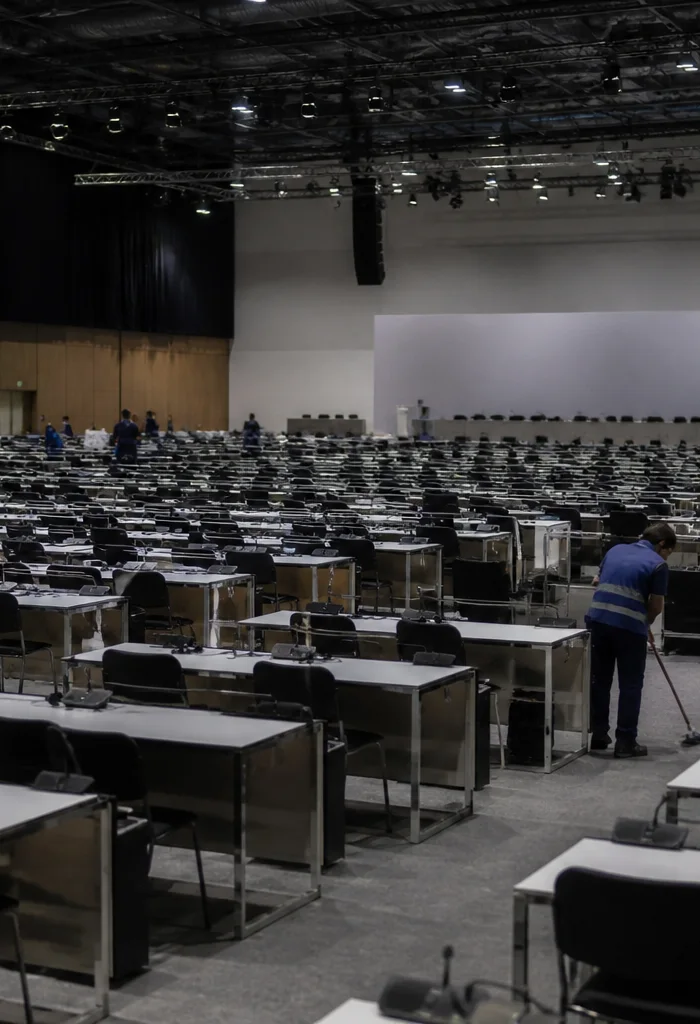
COP31 climate talks in Antalya collapsed Sunday without a closing declaration, the first such failure since 2009, after disputes over fuels and finance.
Antalya pact loses coalition support
The breakdown followed two extra days of negotiations beyond the scheduled close, according to the account provided. The absence of a final declaration separates Antalya from most United Nations climate conferences, which typically end with at least a negotiated consensus text.
The proposed Antalya pact did not explicitly mention a transition away from fossil fuels, language opponents sought because fossil fuels are identified in the account as the main driver of climate change. The text also failed, in their view, to address promised funding from wealthy economies for mitigation and adaptation in lower-income countries.
EU and poorer countries refuse text
The coalition that rejected the pact included the European Union and roughly 40 lower-income countries. The same account says the text was backed by fossil fuel-producing states led by Saudi Arabia, with support from Russia, Iran and Qatar.
The split shows how two disputes now sit at the center of climate diplomacy: whether final texts should name fossil fuels directly, and whether richer economies will provide finance at a scale poorer governments consider credible. For the EU, the dispute centered on the integrity of climate language; for lower-income countries, money determines how quickly they can fund emissions cuts and defenses against climate damage.
Finance fight narrows deal space
Climate finance is not a secondary issue in these negotiations. If wealthy economies do not supply support already promised, lower-income governments face a harder choice between borrowing, delaying projects or redirecting domestic budgets toward climate adaptation.
The fossil fuel language is the other mechanism. A declaration that omits an explicit transition gives producer states more room to defend future oil, gas and coal investment, while countries seeking faster decarbonization lose a shared diplomatic reference point.
The account describes the outcome as being framed by some observers as evidence that the United Nations-backed climate process has been captured by fossil fuel interests. That broader claim is not independently verified here; what is documented is that producer-aligned states supported a text opponents considered inadequate, and opponents withheld consensus.
Antalya revives the 2009 echo
The comparison with Copenhagen matters because 2009 remains the last cited case in which parties failed to adopt a closing declaration. Antalya now carries the same procedural marker: negotiations continued into overtime, but governments still could not package the trade-offs needed for agreement.
The failure does not mean climate policy stops. It does mean the multilateral process enters its next phase with less shared language on fossil fuels and no recorded breakthrough on finance, two tools used by governments, investors and development institutions to align energy plans.
Three routes after Antalya
If the dispute hardens, the global macro effect would come through slower policy coordination rather than an immediate market shock. Fossil fuel producers would retain more diplomatic space, while clean-energy developers and climate finance channels would face weaker common signals from the UN process.
If a revised compromise emerges in a later round, the mechanism would be different: stronger finance language could give lower-income countries a clearer basis for project planning, while a direct fossil fuel reference would preserve pressure on producer states. That path would not settle national energy strategies, but it would restore a negotiating floor.
If governments shift more effort away from the United Nations process, national and regional policy would matter more. That route could favor countries with fiscal capacity and large internal markets, while smaller or poorer economies would face more fragmented funding channels and less predictable signals for energy investment.
The immediate test is whether governments treat Antalya as a procedural rupture or a bargaining reset before the next round. The open questions are who can offer finance assurances, whether any text can name fossil fuels directly, and whether producer states will accept language that constrains future negotiations.
More stories
- Russian military faces 1,087 recorded suicides in Ukraine war
- US faces China, Russia in Africa minerals contest
- Russian war deaths top 460,000, Guardian says
- Monrovia mayor-designate seeks $14.5m city budget
- Iran's attacks hit 25 tankers near Strait of Hormuz
- Russia strikes Ukraine as Odesa faces electricity strain
- Shenzhen trilateral brings Trump, Putin, Xi together at APEC
- South Korea’s Top Court Overturns Ex-PM Han Duck-soo’s Martial Law Conviction
Latest news
- Macy’s parade faces balloon limits as storm winds approach
- Highly diversified investors report 91% confidence in retirement
- Nvidia board gets Trump input on Jensen Huang return as CEO
- Rwanda faces budget strain from 85% electricity access push
- ICE arrests at Seattle airport draw protests and scrutiny
- AI doubts leave Asian stocks facing a new investment test
- EU rejects COP31 deal as fossil fuel divisions block pact