

Nvidia board gets Trump input on Jensen Huang return as CEO
President Trump said he spoke with Nvidia’s board about Jensen Huang’s CEO reinstatement and national security concerns.
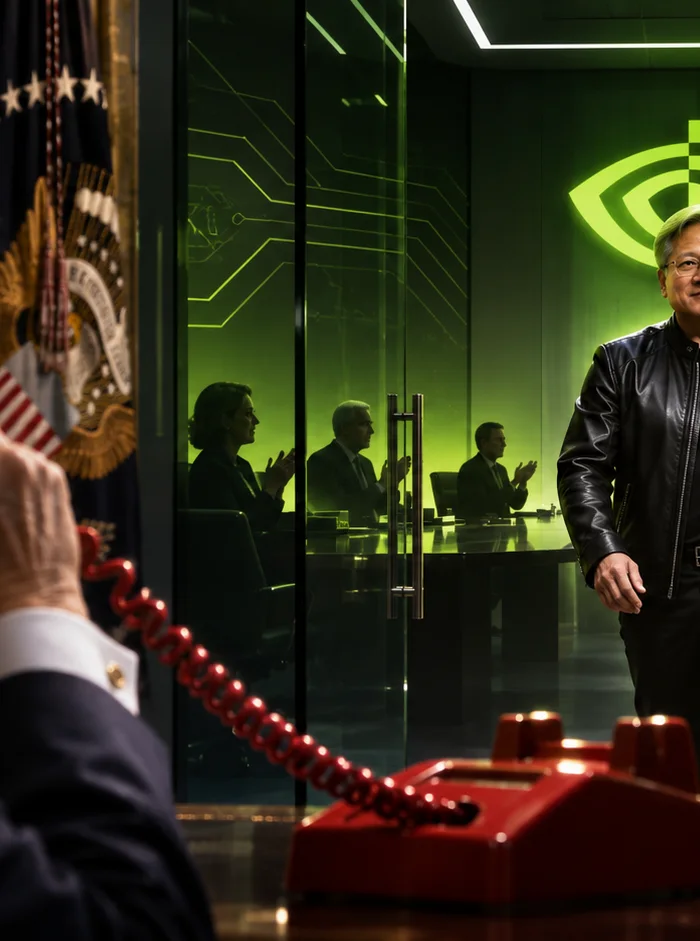
The Nvidia board heard from President Trump before reinstating Jensen Huang as CEO, a rare White House role in a major corporate decision. Trump said Monday that he told directors Huang did not pose a national security problem.
The episode puts Nvidia’s governance, Washington’s AI policy interests and investor confidence in the same frame. Huang’s reinstatement was followed by gains in Nvidia’s stock after a broader market slide last week.
Trump describes board outreach
Trump said in a Monday televised interview that he had spoken with Nvidia’s board through more than one channel. “I’ve been speaking to the board directly and indirectly, and I felt very strongly about it,” Trump said.
He linked his involvement to Nvidia’s importance to the United States. “And I felt more strongly as I saw what was happening with the company, because that was, to me, a very important part of our country,” Trump said.
Nvidia had earlier said its board received government input before deciding Huang could return to the top job. “In the process of reaching its decision, the Board received input from senior levels of the United States government, and based on that input, the Board is confident that Mr. Huang’s reinstatement poses no national security risk,” the company said.
Security question stays unresolved
The company’s statement did not name Trump, but his comments identified him as part of the administration’s outreach. The supplied material does not establish the full basis for the security concerns, the scope of any review or whether other agencies gave formal advice.
Trump said the board wanted reassurance on one central issue: whether Huang created a national security problem. He said the administration reviewed the matter and answered no, after what he described as more than a couple of days of attention to an issue that had been active for weeks.
That leaves the governance record incomplete. Nvidia said the board relied on input from senior government levels, while Trump said he spoke to directors directly and indirectly; neither account provides a written process, a named agency assessment or the criteria used to assess the risk.
Nvidia investors parse the signal
For investors, the immediate fact is that Huang’s return removed one leadership uncertainty at a company central to the artificial intelligence market. The source material says Nvidia’s reinstatement of Huang was followed by a rise in stocks after the market had fallen the prior week, but it did not provide percentage moves or closing prices.
The more durable issue is whether government reassurance strengthens confidence or creates a new governance risk. A board decision shaped by national security input may calm one set of concerns while inviting closer scrutiny from lawmakers who already view advanced AI companies through a security lens.
The stakeholders have different incentives. Nvidia’s board sought confidence that reinstalling Huang would not create a security problem; Trump presented the company as nationally important; lawmakers and other officials remain concerned with security exposure; investors are watching whether leadership stability offsets political risk.
AI sector faces two paths
If the government’s assurance holds and lawmakers do not press for further action, the immediate effect would be to stabilize Nvidia’s leadership story. At the macro level, that would support confidence in the AI investment cycle; for Nvidia, it would keep management continuity intact; for the sector, it would signal that security concerns can be resolved through direct government engagement.
If scrutiny continues instead, the mechanism changes. A prolonged fight could make corporate boards in AI and chipmaking more cautious about executive appointments, deepen Washington’s role in company-level decisions and add a political risk premium to a sector already tied to national security policy.
The next open questions are specific: whether Nvidia discloses more about the board process, whether lawmakers seek records from the company or the administration, and whether any agency publicly explains the security review. Until then, Trump’s comments clarify his involvement without settling how far the government’s role extended.
More stories
- Rwanda faces budget strain from 85% electricity access push
- AI doubts leave Asian stocks facing a new investment test
- Singapore core inflation eases to 1.5% in October
- Greece targets 2.3% growth in 2027 budget
- US stocks face Goldman warning on further forced selling
- Bitcoin falls below $57,742 as investors seek other bets
- Sweden's 176-seat left bloc stalls in government talks
- AEye revenue grows ninefold as loss hits $10 million
Latest news
- ICE arrests at Seattle airport draw protests and scrutiny
- EU rejects COP31 deal as fossil fuel divisions block pact
- Deal Sheet: Fortis shutdown costs over 400 jobs
- Germany to pay about $11 a month into child pension accounts
- Monrovia mayor-designate seeks $14.5m city budget
- Laura Brand curbs prison messages after YouTube dispute
- Nigeria's family-planning budget falls 97%
- Peter Attia reviews cold therapy claims on longevity