

Nigeria’s family-planning budget falls 97%
Nigeria Health Watch links weaker funding to contraceptive shortages, youth-service gaps and risks to the country’s health and development goals.
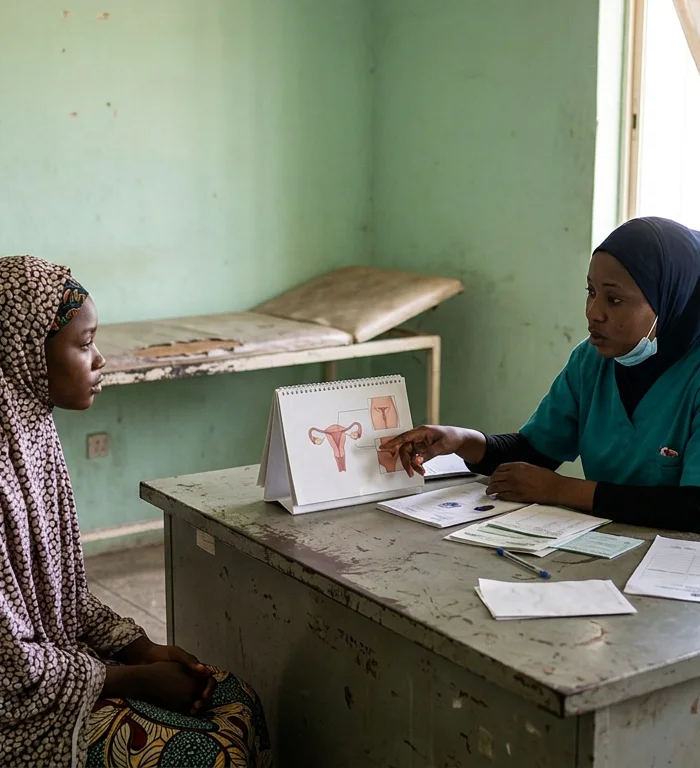
Nigeria’s national family-planning budget fell 97% to ₦66.39 million in 2025 from ₦2.225 billion in 2024, Nigeria Health Watch said in a Nov. 22 blog.
The cut matters because modern contraceptive prevalence was 14% among married women in the 2023 Nigeria Demographic and Health Survey, compared with 3.3% among girls aged 15-19.
Sexual and reproductive health and rights, or SRHR, covers access to contraception, maternal care, reproductive-health information and related services. Nigeria Health Watch said the issue is tied to the Sustainable Development Goals on health, education, gender equality and inequality.
Vivianne Ihekweazu, managing director at Nigeria Health Watch, framed the issue as economic as well as medical. “Universal Health Coverage cannot be attained without universal SRHR access,” she said, according to the blog.
Nigeria Health Watch cited evidence that every additional US$1 invested in meeting unmet need for modern contraception reduces health-care costs by US$3. It said Nigeria’s youthful population, estimated at about 70% of the country, makes access to youth-friendly services more urgent.
The 2023 survey put unmet need for family planning at 15.8% among adolescents aged 15-19, including married and sexually active unmarried adolescents. The rate rose to 21% for women aged 20-24 and 22% for women aged 30-34.
Officials described efforts to close funding gaps. Dr Binyerem Ukaire, director of the Department of Family Health at the Federal Ministry of Health and Social Welfare, said “through the Presidential Initiative for Unlocking the Healthcare Value Chain, the Medipool is deploying 6 million U.S dollars for procurement of family planning products and ensuring good logistics supply management system for these commodities.”
Nigeria Health Watch said several states are testing local financing models. Kano State has created its first budget line for family planning and uses a health trust fund that pools contributions from its 44 local governments and internally generated revenue, according to Pharmacist Aminu Bashir, permanent secretary of the Kano State Ministry of Health.
Ogun State receives $0.04 per capita in donor support, compared with Kano’s $1.07, the blog said. Dr Tomi Coker, Ogun State’s commissioner for health, said, “My strategy is to use what is existing to fund what is essential, and one thing that we tend to ignore, that is existing, is the Basic Health Care Provision Fund.”
The funding mechanisms do not remove operational risks. Dr Taiwo, country director of The Challenge Initiative Nigeria, said a budget line does not ensure money is approved, released or used effectively, while procurement delays and fragmented supply chains can leave facilities without commodities.
She said “we look at the logistics management information system and see that some states have 60-70% stock out of family planning commodities.” Nigeria Health Watch said such shortages weaken service quality and public trust.
The blog also pointed to efforts to reduce stigma for young people. Healthtracka uses discreet self-testing kits for sexually transmitted infections, and Testimony Adeyemi, its marketing lead, said “by partnering with the largest pharmacy chain, girls can access tests simply by asking for lemon -- no questions asked.”
Nigeria Health Watch said the education and health ministries are working on comprehensive SRHR education through the Family Life and HIV Education curriculum, with trained teachers giving classroom instruction and health providers visiting schools.
Source: Blog, Nigeria Health Watch via AllAfrica, Nov. 23, 2026.
More stories
- Peter Attia reviews cold therapy claims on longevity
- Dietitians advise small swaps for plant-based eating
- TikTok dementia videos mislead in 66.4% of sample, researchers say
- Aberdeen Royal Infirmary faces police inquiry call over 19 deaths
- Bariatric surgery group loses 28.2% after GLP-1 use
- TOFA boosts mouse energy use 18% while preserving muscle
- Fructose may weaken ovarian cancer cell bonds after chemotherapy
- High-intensity sports raise bone markers by up to 46%
Latest news
- Singapore core inflation eases to 1.5% in October
- Social Security raises 2027 benefits 3.6%
- Hull City 2–0 Brighton: When Resilience Beat Reputation
- David Parr House to honor Victorian art-workman with blue plaque
- Iran's attacks hit 25 tankers near Strait of Hormuz
- FCC approves prison cellphone jamming despite 2.5-mile warning
- Russia strikes Ukraine as Odesa faces electricity strain
- Bahrain reports two injuries after Iranian aerial attacks