

Dietitians advise small swaps for plant-based eating
The guidance comes against climate data linking meat and animal agriculture to a substantial share of food-related emissions.
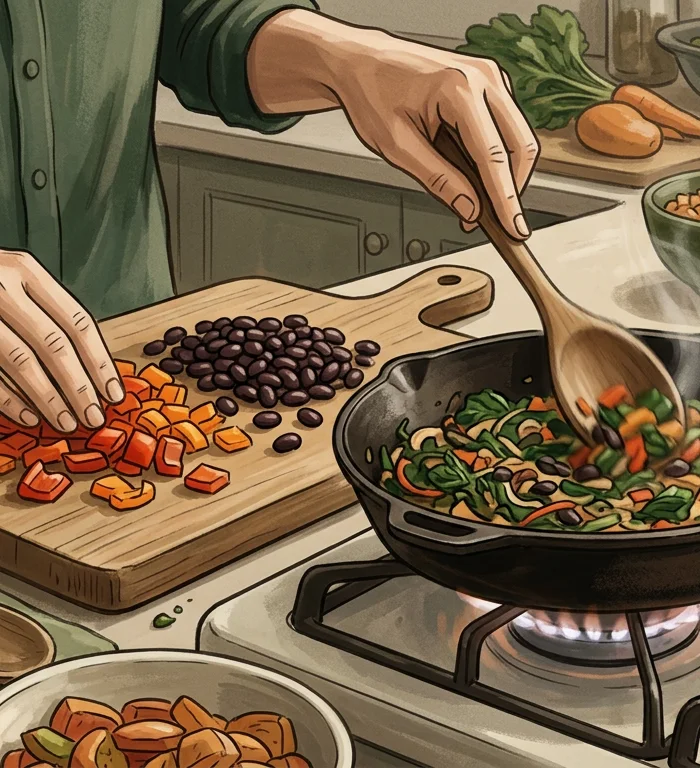
Dietitians cited by The Guardian Health on Nov. 19 said people moving toward plant-based eating should start with small food swaps, as fewer than 5% of U.S. and U.K. adults identify as vegetarian or vegan.
The advice matters because the United Nations describes shifting away from meat-heavy diets as one way to reduce a personal carbon footprint, while a 2021 study linked meat to nearly 60% of greenhouse gases from food production.
“Adopting a whole new lifestyle can feel daunting, especially when you’ve been eating a certain way your entire life,” Alyssa Fontaine, a registered dietitian and nutritionist and founder of Plant-Based Dietitians USA & Canada, said in the article.
Fontaine said people often fear they will lose essential nutrients or foods tied to habit and tradition. Her view, as reported by The Guardian Health, is that the change does not have to mean either outcome.
A plant-based diet, as described in the article, centers meals on foods such as vegetables, fruits, legumes, nuts, seeds and whole grains. It is not identical to veganism, which Taylor Wolfram, a registered dietitian and longtime vegan, described as a broader ethical position, not only a food pattern.
The health claims in the article are mostly based on association, not proof that the diet alone reduces disease risk. The cited evidence linked plant-based diets with lower cardiovascular disease risk, lower type 2 diabetes risk and lower likelihood of some cancers, including prostate, breast and colorectal cancer.
The article also said plant-based diets tend to contain less saturated fat and cholesterol and more fiber, antioxidants and phytochemicals. Fontaine said fiber intake is often the biggest dietary change she sees when clients replace meat with plant proteins such as legumes, nuts and seeds.
Protein is a common concern, but Sue-Ellen Anderson-Hayes, a spokesperson for the Academy of Nutrition and Dietetics, said inadequate protein intake is not a concern on a vegan or plant-based diet when it is properly planned. She added that nutrition deficiencies can occur in any eating pattern without planning.
The nutrient issue the article singled out most clearly was vitamin B12, which Damien Watson, a spokesperson for the Vegan Society, said vegans need to consider because plants do not make it. Anderson-Hayes also pointed to iodine, vitamin D and calcium, including through sea vegetables and fortified foods such as nutritional yeast and soy milk.
For people who want a lower-friction start, the experts suggested replacing some animal foods rather than changing everything at once. Wolfram cited examples such as black bean tacos, soy milk in cereal and tofu stir-fries.
Fontaine also suggested building a personal list of 10 vegan meals and repeating them until they become familiar. Anderson-Hayes said planning ahead for restaurants can help, including by checking menus for items such as black bean burgers, hummus and falafel.
The study evidence cannot show that every plant-based diet is automatically healthy, or that every person has the same nutritional needs. Fontaine said a plant-based diet can be healthy, nutritious and sustainable, but is not one-size-fits-all.
People with specific nutritional needs, life-stage concerns or restricted food access may need individualized help. Wolfram said a registered dietitian can be useful, and pointed to reputable free online resources when paid support is not in budget.
Source: The Guardian Health article, Nov. 19.
Atlas360 reports health research and does not provide medical advice.
More stories
- TikTok dementia videos mislead in 66.4% of sample, researchers say
- Aberdeen Royal Infirmary faces police inquiry call over 19 deaths
- Bariatric surgery group loses 28.2% after GLP-1 use
- TOFA boosts mouse energy use 18% while preserving muscle
- ICO probes NHS therapy notes accessible to up to 140,000 staff
- Singapore healthcare institutions record 4,200 abuse reports
- Energy drinks show 11-fold cardiac-arrest reporting signal
- Children with higher ultra-processed intake show stronger reward signals
Latest news
- FCC approves prison cellphone jamming despite 2.5-mile warning
- Russia strikes Ukraine as Odesa faces electricity strain
- Bahrain reports two injuries after Iranian aerial attacks
- Congress tests Black Democrats' growing policy influence
- Baltic responders fight Sparta II fire after drone strike
- Europe faces attribution gap after 16 cyber, physical incidents
- Cotton faults Lutnick over AI chips allegedly sent to China
- Young adults overestimate life insurance costs by 10 times