

Congress tests Black Democrats’ growing policy influence
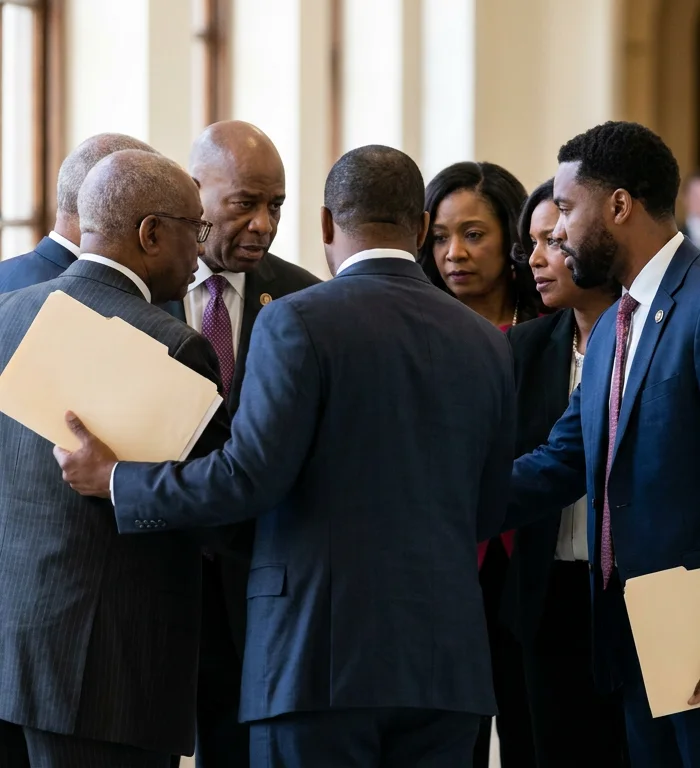
Black Democrats will send 13 newcomers to Congress in January, their largest incoming group since 1993, House historian data show.
The incoming lawmakers face an institutional test: securing committee positions and assembling coalitions to advance their priorities. Congressional Black Caucus chair Yvette Clarke, a New York Democrat, identifies affordability as the central concern constituents want members to address.
The caucus is set to expand to a record 64 members from 62, with Democrats accounting for its entire membership. That increase does not amount to an unrestricted mandate: major bills generally need support from both parties in the Senate, while President Donald Trump retains veto authority.
Committee seats turn numbers into influence
Emory University professor Andra Gillespie, whose research covers Black political leadership, describes committee representation as an important route to influence. She says persuading congressional leaders to assign Black lawmakers to influential panels was among the reasons the caucus was established.
House historian data put the incoming group below the 16 Black newcomers seated when Congress opened in 1993; that earlier cohort reached 17 during the session. Five among today's six most senior Black House lawmakers began serving in either 1991 or 1993.
Dedrick Asante-Muhammad, president of the Joint Center for Political and Economic Studies, points to that earlier expansion as evidence that representation can yield influence over decades. The comparison places the January arrivals within a longer process of building seniority, rather than suggesting immediate control over legislation.
Senate gains contrast with House losses
Victories by Juliana Stratton in Illinois and Scott Colom in Mississippi bring Black Senate representation to seven, a record. Colom is set to become Mississippi's first Black senator in over 140 years.
The House tally moves in the opposite direction: Black candidates have secured 58 seats, compared with 61 Black members in the outgoing chamber. Two Louisiana runoffs remain unresolved, making the Senate milestone and the growth in Democratic newcomers distinct from an overall House increase.
Louisiana voters return on December 12, when Democrat Chauna Banks faces Republican Blake Miguez and Democrat Patricia Moore competes against Republican Gabe Firment. Both Democratic candidates are Black women, and their contests will determine the remaining seats in the state's delegation.
Jeffries faces competing Democratic priorities
The newcomers also broaden the delegation's age range: four incoming Black House Democrats are no older than 34, while senior members include Maxine Waters, 88, and Bennie Thompson, 78. Colorado's Melat Kiros, 29, joins Darializa Avila Chevalier and Adrian Boafo, both 32, and Donavan McKinney, 34.
University of Maryland political science professor Periloux Peay expects pressure on Democratic leaders from members seeking a different direction. Clarke, however, expresses confidence in Hakeem Jeffries, the New York Democrat favored to become speaker, and says her priority is bringing the party's progressive and moderate wings together.
Senator Raphael Warnock, a Georgia Democrat who supported Colom's campaign, wants lawmakers to prepare their agenda before January. His priorities include reversing tariffs and reinstating tax credits intended to lower healthcare expenses.
If the delegation secures influential committee assignments and agreement across Democratic factions, its larger caucus could gain greater scope to shape legislation. If those efforts stall, the increased membership alone will not settle the bipartisan negotiations and presidential approval needed to enact its priorities.
More stories
- FCC approves prison cellphone jamming despite 2.5-mile warning
- Cotton faults Lutnick over AI chips allegedly sent to China
- Vance declines to back Iran strikes as Trump defends war
- Paul seeks 20%-30% federal credit for U.S. film shoots
- Trump targets data centers abroad with tax threat to firms
- Cao faces Senate scrutiny over $32.5m-a-day Iran blockade estimate
- Gordie Howe Bridge opens as tariffs strain auto trade ties
- Trump plans US tariffs on 60 more nations as Friday nears
Latest news
- Russia strikes Ukraine as Odesa faces electricity strain
- Bahrain reports two injuries after Iranian aerial attacks
- Baltic responders fight Sparta II fire after drone strike
- Dietitians advise small swaps for plant-based eating
- Europe faces attribution gap after 16 cyber, physical incidents
- Young adults overestimate life insurance costs by 10 times
- Estonia to close 5 Russia road crossings for six months
- Greece targets 2.3% growth in 2027 budget