Trump plans US tariffs on 60 more nations as Friday nears
US tariffs could expand to 60 more countries as Trump presses new levies, raising trade risks while inflation and hardened partners limit escalation.
Lauren Collins ·
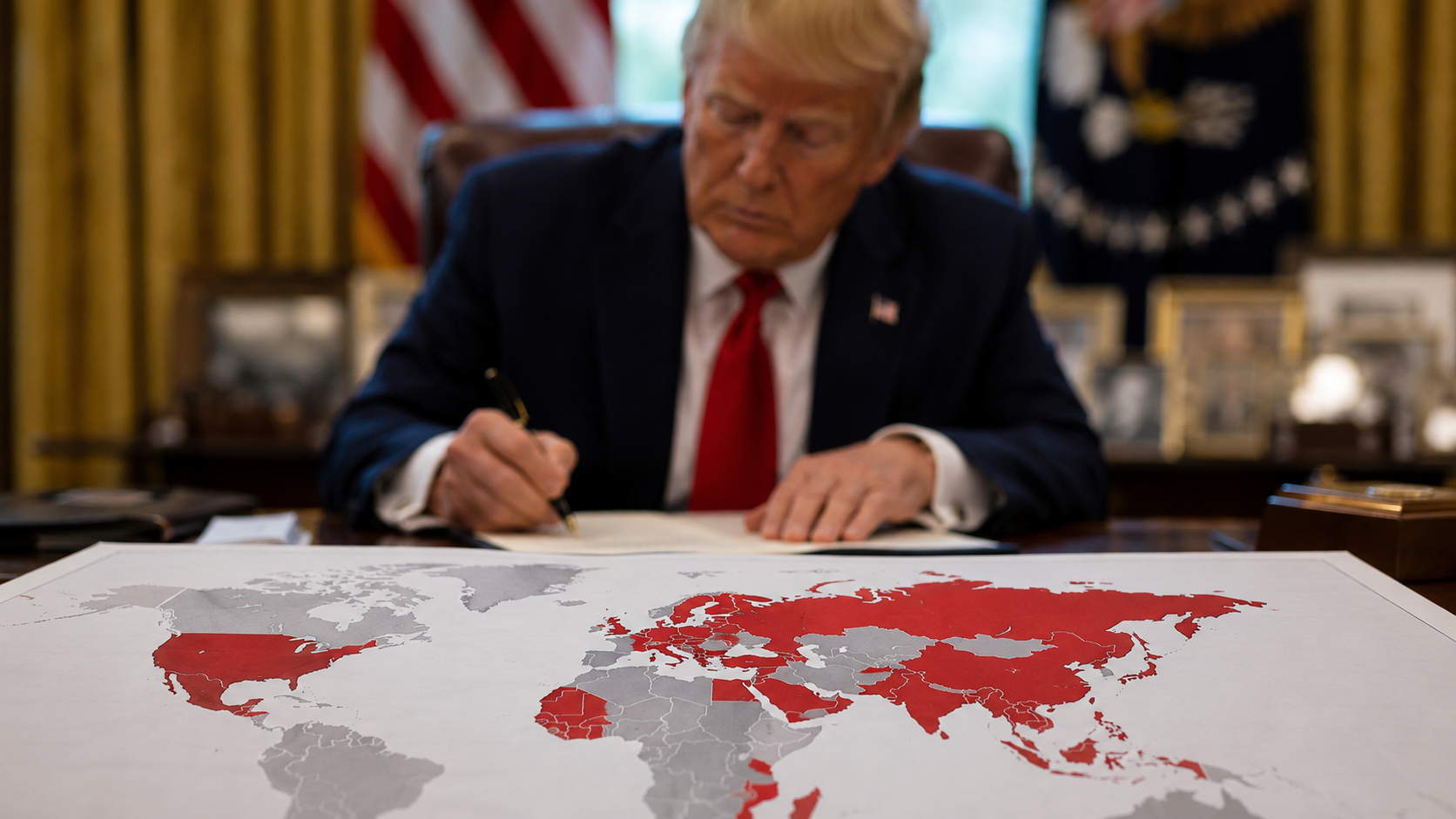
US tariffs could soon extend to 60 more countries as President Donald Trump prepares another trade push. The plan risks a wider trade clash.
The US trade representative said Tuesday, "We do expect action soon," according to the supplied account. The same account said the next duties could be set between 10% and 12.5%, though no official tariff schedule was provided.
Trump has already imposed fresh levies on Canada and Brazil, making the possible Friday action part of a broader escalation rather than an isolated measure. The new round would widen the number of governments facing direct tariff pressure while several trade talks remain unsettled.
Friday deadline widens tariff risk
The timing matters because tariff threats are being used while Washington is still negotiating over the US-Mexico-Canada Agreement. Trump has indicated he wants to exit that pact, according to the source, a position that would add pressure to North American trade flows already facing policy uncertainty.
The source also refers to the total effective US tariff rate since January 2025 but does not provide a verified figure. Without a primary data table or official release, the rate cannot be quantified here without risking an unsupported number.
A 10% to 12.5% tariff band would still be material for importers even if it fell short of the most extreme trade-war tools. Duties at that level can force companies to choose between raising prices, absorbing costs, delaying shipments, or shifting suppliers.
Canada and Brazil already hit
Canada and Brazil are the clearest named targets so far because both have already been hit with new levies. For those governments, the immediate question is whether to negotiate around the measures or answer with their own restrictions.
Trading partners are not approaching this fight as they did during earlier tariff rounds. Canada’s former deputy prime minister wrote, "In a trade war, fighting back works," a line that captures why retaliation risk is central to the next stage.
That experience limits Trump’s room to escalate without cost. If other governments believe countermeasures can change Washington’s calculation, a tariff announcement can quickly become a cycle of reciprocal duties rather than a one-sided pressure campaign.
Inflation narrows Trump’s room
The macro constraint is inflation, which the source links to pressures from the Iran war. Tariffs can add to that strain because import taxes are paid at the border and then move through supply chains as higher consumer prices or lower corporate margins.
If the new duties stay in the reported 10% to 12.5% range and negotiations continue, the global effect would likely work through uncertainty rather than an immediate rupture. The Trump administration would gain leverage, while import-heavy sectors would probably slow orders, review contracts and seek exemptions where available.
If affected countries retaliate, the mechanism changes. Global trade conditions would tighten, the US policy gain would be offset by pressure on exporters, and industries exposed to cross-border supply chains would face higher compliance costs and less predictable pricing.
If the USMCA exit signal hardens, North American producers would face a different risk: the loss of a rules-based framework that has guided regional sourcing decisions. No individual company is named in the source, so direct company-level exposure cannot be assessed without adding unsupported claims.
The key uncertainties are the final country list, the tariff rate, any exemptions, and whether trading partners answer with countermeasures. Those details will decide whether the next step is a bargaining tactic, a broader tariff regime, or another round of trade retaliation.