Trump Targets China Over 2020 Vote, Adding Risk to Xi Summit
Lauren Collins ·
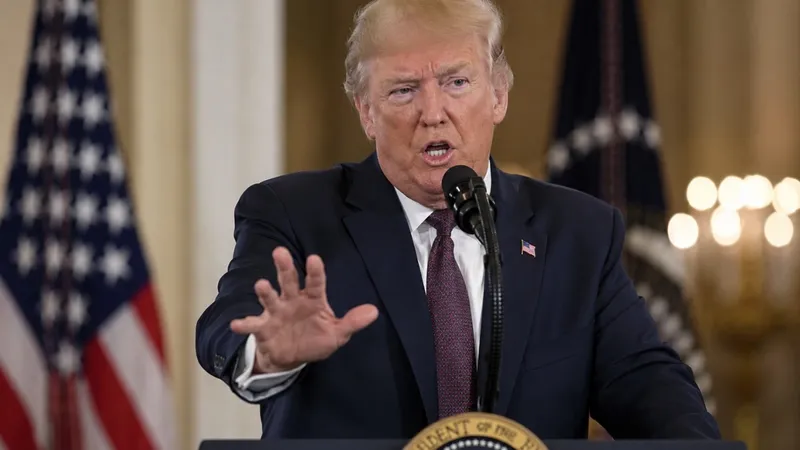
President Donald Trump used a White House address Thursday to accuse China of obtaining information linked to roughly 220 million American voters during the 2020 campaign period, portraying the episode as a broad threat to election security and alleging that officials failed to brief him fully at the time. The president said the material included voter-registration information and argued that Beijing possessed data that could be exploited for political or cyber operations, but he did not demonstrate that Chinese actors changed registrations, produced valid ballots or affected vote totals. Documents released alongside the speech included intelligence reports, correspondence and investigative records, some of which concerned information already obtainable from public agencies or commercial sources. That distinction is central: possession of voter data may create a security concern, but it does not by itself establish manipulation of an election result.
SAVE Act, Now Center Stage
The address also gave Trump a national platform for his campaign to enact the SAVE America Act before the November congressional elections. The White House-backed proposal would require documentary evidence of citizenship for federal voter registration, impose identification rules and sharply limit postal voting to specified groups, including military personnel, travellers and people unable to vote in person because of illness or disability. The measure has faced resistance from Democrats and some Republican senators, leaving the administration without a clear path to passage despite months of public pressure. By connecting the legislation to an alleged foreign data operation, Trump shifted the argument from conventional disputes over voter eligibility to national security, even though tighter registration requirements would not directly resolve every cyber vulnerability raised in his speech.
A 2021 Judgment Pushes Back
The government’s principal public assessment of foreign activity during the 2020 contest reached a different conclusion from the narrative Trump presented. A report issued by the Office of the Director of National Intelligence in March 2021 said analysts found no sign that an overseas actor had changed registration systems, ballot casting, tabulation or the communication of results; it also expressed high confidence that Beijing chose not to run an operation designed to determine the winner. The assessment did contain an important qualification: the National Intelligence Officer for Cyber believed China had taken limited steps, mainly through messaging and public statements, that could have weakened Trump’s reelection prospects. Yet even that minority analysis said there was no information indicating that China attacked the mechanics of voting, a separation between influence activity and technical interference that remains essential to evaluating the new accusations.
Costs Shift to Local Officials
Trump’s claims will place fresh pressure on the state and county authorities that operate American elections, because the country has no single national voting network that an adversary could capture in one operation. Registration databases, voting equipment, ballot procedures and audits vary by jurisdiction, creating uneven security standards but also making coordinated, undetected alteration across the country harder to execute. The 2021 intelligence review said monitoring, intelligence collection and post-election checks would make manipulation on a decisive scale difficult to conceal, while acknowledging that state and municipal computer networks routinely face reconnaissance and intrusion attempts. The policy tension is that the administration is demanding stronger protection while proposing a $707 million reduction for the Cybersecurity and Infrastructure Security Agency, which assists election offices and defends government systems against overseas attacks.
Rare Earths Meet Election Politics
The diplomatic consequences extend beyond electoral policy because Washington and Beijing are operating under a set of commercial arrangements that depend on continued political restraint. Under the administration’s account of the November 2025 agreement, China suspended several retaliatory tariffs and eased restrictions affecting rare earths, graphite, gallium and other industrial inputs, while the US delayed higher reciprocal duties on Chinese goods until November 10, 2026. Beijing also committed to purchases of at least 25 million metric tons of American soybeans annually from 2026 through 2028, and both sides agreed to suspend measures affecting semiconductor companies, shipping businesses and critical supply chains. A further package announced after Trump’s May trip to Beijing included an initial order for 200 Boeing aircraft, annual agricultural purchases valued at no less than $17 billion and new bilateral forums for trade and investment discussions.
Xi’s Fall Visit Loses Cushion
Those commitments were intended to create predictability before Chinese President Xi Jinping’s return visit to the United States, which the White House has said will take place during the fall and which Trump has indicated could occur in September. The May summit had produced agreements on commercial access, critical minerals and regular government-level consultations, offering companies a period of relative calm after repeated tariff increases, export controls and retaliation. Trump’s election allegations do not automatically cancel those arrangements, and neither government has announced new economic restrictions in response to the speech. They do, however, reduce the political space for compromise: any concession to Beijing can now be attacked domestically as accommodation of an accused election adversary, while Chinese officials may resist negotiations conducted under a public allegation that they regard as false.
Evidence Sets the Ceiling
The durability of the truce will depend first on whether the newly released files support Trump’s strongest assertions and whether investigators can connect the acquisition of voter information to an operation aimed at changing an electoral outcome. China’s embassy rejected the accusation and repeated Beijing’s position that it does not intervene in American presidential contests, while Democratic lawmakers said the speech contradicted the intelligence community’s published findings. Congress must now decide whether the address supplies a persuasive case for the SAVE legislation, and election officials will have to separate genuine cyber exposures from unsupported claims about altered votes. The immediate markers are the response to the declassified material, progress or failure of the voting bill, Xi’s planned visit and the November expiration date for several tariff suspensions; deterioration on any one of those fronts could turn a domestic election dispute into a renewed trade confrontation.