Trump tightens Chinese journalist visas in DHS proposal
The Trump administration proposed 90-day Chinese journalist visas, drawing Beijing’s objection and widening efforts to cap foreign reporter stays.
Lauren Collins ·
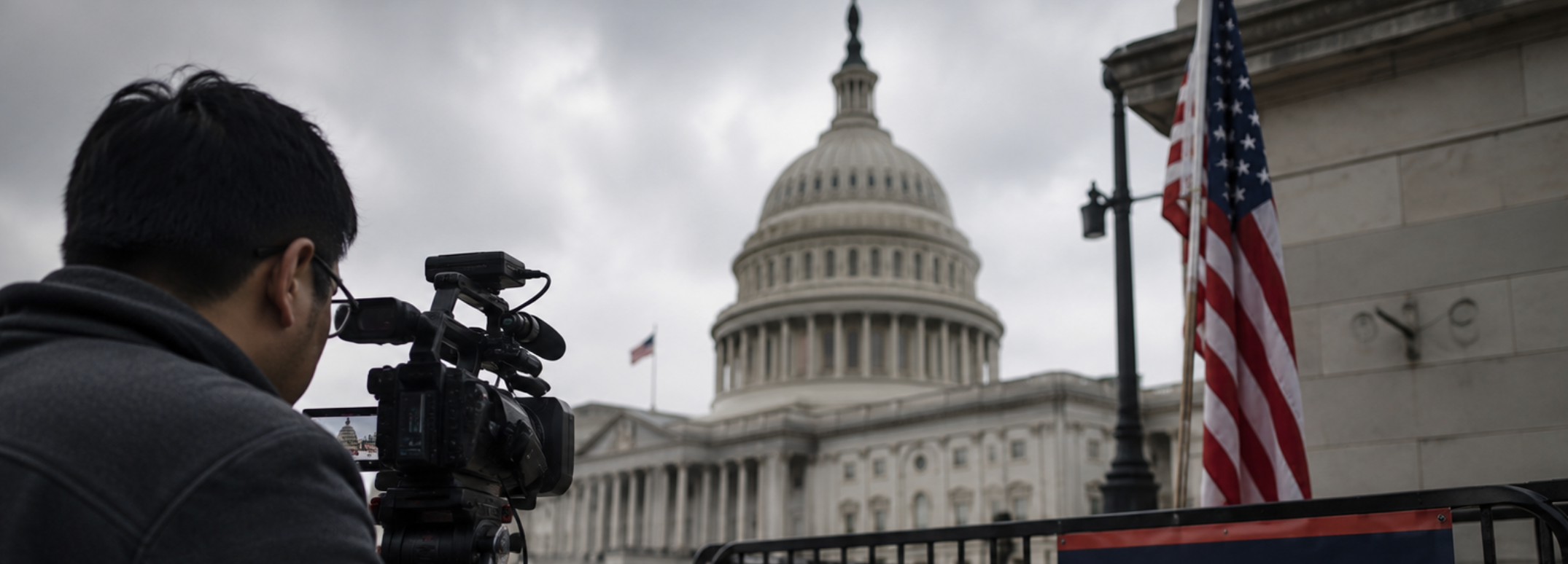
Chinese journalist visas would be capped at 90 days under a Trump administration proposal that drew Beijing’s objection and widened visa limits.
The Department of Homeland Security released the proposal this week, setting a shorter stay for mainland Chinese reporters than for journalists from other countries. The plan would replace the current system, under which foreign journalists may remain in the US for the duration of their assignment.
A 90-day clock for reporters
Under the proposed rule, journalists who are citizens of mainland China would receive an initial stay of up to 90 days, with extensions possible. Reporters from other countries would face a 240-day cap, also with an option to seek more time.
The change would revive a restriction President Donald Trump pursued late in his first term. Former President Joe Biden dropped that proposal before it took effect, and the new version now enters a 30-day public comment period.
Beijing objected through Chinese Foreign Ministry spokesman Guo Jiakun, who said China opposed “discriminatory practices taken by the US against specific countries.” The statement frames the dispute as unequal treatment by nationality, while US officials have long argued that China permits fewer American reporters than the US allows Chinese journalists.
Students added to visa limits
The same DHS proposal also targets foreign students and exchange visitors, capping their stays at a maximum of four years. The department said open-ended admission periods had encouraged abuse, though the proposal itself will still have to move through the comment process before any final rule can take effect.
DHS defended the shift in unusually broad terms, saying, “For too long, past Administrations have allowed foreign students and other visa holders to remain in the US virtually indefinitely, posing safety risks, costing untold amount of taxpayer dollars, and disadvantaging US citizens.” The department’s language links journalist, student and exchange visas to the administration’s wider immigration enforcement agenda.
China sits at the center of the political pressure around that agenda. Secretary of State Marco Rubio said earlier this year that the US would “aggressively” revoke visas for Chinese students tied to the ruling Communist Party or studying in sensitive fields, according to the source text.
Trump has also sent a different signal on Chinese students. Earlier this week, he said the US would allow 600,000 Chinese students into the country and described that as “very important,” creating uncertainty over how far the administration intends to push restrictions across education, media and research channels.
Newsrooms face planning risk
For Chinese media organizations with staff in the US, a 90-day limit would make routine coverage more dependent on repeated extension requests. That could complicate planning for elections, courts, business regulation and diplomacy, where assignments often run longer than three months.
For the wider media sector, the 240-day limit would be a shift even for countries outside China. International outlets now rely on assignment-based stays; a fixed duration would add compliance costs and increase the risk that coverage plans depend on immigration processing timelines rather than editorial needs.
The industry effect would not be limited to journalism. Universities, exchange programs and employers tied to academic research would have to adjust to the four-year student and exchange visitor cap, especially where degrees, training programs or research placements run longer or require status renewals.
Two paths after comments
If DHS adopts the proposal largely intact, the immediate effect would be tighter administrative control over foreign reporters and students. For the global picture, that could add friction to US-China relations; for Chinese news organizations, it would shorten operating certainty; for the media and education sectors, it would make visa renewals a bigger planning variable.
If the rule is narrowed after public comments, the administration could preserve some enforcement goals while reducing disruption for universities and newsrooms. In that scenario, the macro effect would be less diplomatic strain, Chinese outlets would still face closer scrutiny, and the wider sector would watch how extension standards are written.
The open questions are specific: how DHS will judge extension requests, whether China responds with limits on American reporters, and how the student cap will be reconciled with Trump’s statement on 600,000 Chinese students. Those details will determine whether the proposal becomes a targeted visa rule or a broader reset of US access for foreign media and students.