Traffic Stops Resume as Trump Reverses ICE Pullback Order
Trump told ICE to keep using traffic stops for immigration arrests, restoring a disputed tactic after fatal enforcement encounters in Maine and Houston.
Lauren Collins ·
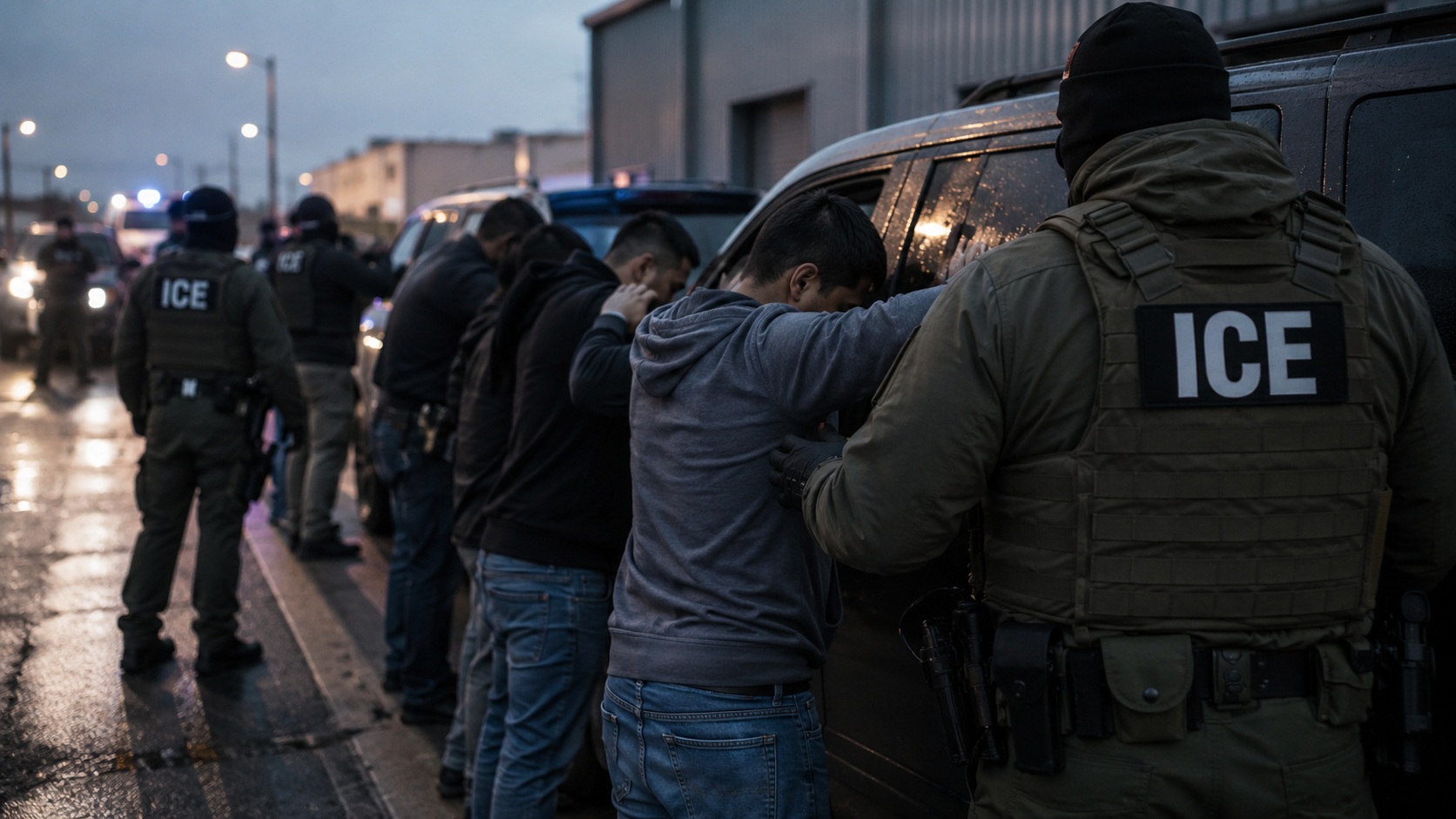
President Trump told ICE to keep using traffic stops for immigration arrests, reversing an agency pullback after two fatal operations.
The instruction came in a Truth Social post on Wednesday, where Trump described vehicle stops as one of ICE’s key crime-fighting tools. His message effectively overrode guidance issued earlier in the week by agency leadership.
Trump reopens ICE tactic
Trump urged officers to be judicious, fair and smart while returning to the work he said they needed to do. The post reframed the agency’s short-lived restriction as a public-safety setback rather than a risk-control measure.
Department of Homeland Security Secretary Markwayne Mullin did not directly address the president’s reversal in the statement included in the source material. Mullin said the department’s top goal was protecting officers and removing criminals from the streets, while warning people in the country illegally to leave.
Fatal vehicle encounters reshape debate
The prior ICE guidance had told officers not to stop moving vehicles to arrest or question people inside, according to officials with present or past ICE roles and knowledge of the instruction. That change followed two deadly incidents tied to immigration-enforcement operations.
In Biddeford, Maine, DHS said officers were carrying out an operation connected to a final order of removal at a residence. Officers tried to stop a person who was leaving the home in a vehicle, and DHS said an officer fired after becoming concerned about public safety.
A separate fatal encounter occurred last week during an immigration operation in Houston, federal authorities said. DHS initially said the man had used his vehicle as a weapon and that an immigration officer fired in self-defense.
Lawmakers in Maine and Texas said neither man who died was the planned target of the operations. That detail matters because it shifts scrutiny from the immigration status of the targets to the tactical choices made during enforcement actions involving vehicles.
Operational risks widen
Traffic stops give immigration officers speed and flexibility, but they also compress decision-making into seconds. A vehicle can become a safety risk for officers, occupants and bystanders, especially when an arrest team is trying to act outside a controlled setting.
For ICE, the immediate effect is a return to a broader enforcement toolkit after a brief internal pause. For DHS, the decision raises the burden of explaining how officers will manage vehicle encounters while limiting the chances of another fatal confrontation.
The wider enforcement sector will read the reversal through training, liability and coordination with local authorities. Detention, transport and legal-service providers may see downstream effects if vehicle-based arrests increase, though the source material does not include data showing how many arrests rely on traffic stops.
The global macro channel is indirect. Immigration enforcement can affect labor availability, household behavior and local business planning, but the source material provides no verified labor-market figures tied to this directive, so any numeric macro claim would be unsupported.
If Trump’s instruction becomes the operating standard, ICE gains more field discretion and the enforcement system may process more arrests from mobile encounters. The macro effect would likely run through labor and community confidence rather than financial markets, while the sector faces sharper demands for training and documentation.
If courts, internal reviews or new safety protocols narrow the tactic again, ICE may shift more activity toward residences and planned operations. That path would reduce roadside exposure for officers and occupants, but it could also slow some arrests and push the enforcement industry toward more surveillance, planning and interagency coordination.
The key uncertainty is whether DHS will issue written operational standards that reconcile Trump’s directive with recent safety concerns. Without that detail, officers, local officials and affected communities are left watching how the policy is applied in the next vehicle stop.